• Fri frakt över 249 kr
  • •
  • Snabba leveranser
  • •
  • Billiga böcker
Kundservice

Du är på sajten för privatpersoner.

Företag, bibliotek eller offentlig verksamhet?

Du handlar på classic.bokus.com, där alla dina funktioner finns intakta.
Till classic.bokus.com
Bokus logotyp. Gå till startsidan.
  • Erbjudanden
  • Nyheter
  • Student
  • Topplistor
  • Barn & ungdom
  • Bokus Play
  • E-böcker
  • Pocketböcker
  • Spel & pussel

10% rabatt på allt med kod NYSTART10 →

Sidfot

Mina sidor

    Hjälp

    • Kundservice
    • Vanliga frågor och svar
    • Frakt och leverans
    • Retur vid ångerrätt
    • Reklamera vara
    • Betalning
    • Köpvillkor
    • Allmänna villkor
    • Information om webbplatsens tillgänglighet

    Om Bokus

    • Om oss
    • Pressrum
    • För studenter
    • För företag
    • För bibliotek och offentlig verksamhet
    • För leverantörer
    • Hållbarhet

    Populärt

    • Aktuella erbjudanden
    • Presentkort
    • Studentlitteratur
    • Nya böcker
    • Topplistor
    • Signerade böcker
    • Engelska böcker

    Inspiration

    • Boktips
    • BookTok
    • Populära bokserier
    • Barnbokskaraktärer
    • Populära författare
    Logotyp för Bokus
    Följ oss på Facebook (extern länk)Följ oss på Instagram (extern länk)Följ oss på YouTube (extern länk)Följ oss på TikTok (extern länk)
    bokus @ CookiesAnpassa cookiesIntegritetspolicyKöpvillkor
    Till Citymail hemsida (extern länk)Till Budbee hemsida (extern länk)Till Postnord hemsida (extern länk)Till Schenker hemsida (extern länk)Till Early Bird hemsida (extern länk)Till Walleys hemsida (extern länk)
    1. Samhälle och politik
    2. Samhälle och kultur
    3. Kultur och medier
    4. Referensverk och tvärvetenskap

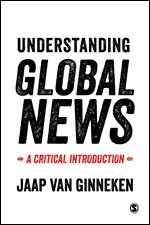
    Understanding Global News

    A Critical Introduction

    AvJaap van Ginneken

    Häftad, Engelska, 1997

    1 461 kr

    Beställningsvara. Skickas inom 3-6 vardagar. Fri frakt över 249 kr.

    Fler format och utgåvor

    Inbunden

    3 091 kr

    E-bok

    622 kr

    Beskrivning

    A lively and critical introduction to the news media, this book has been written specifically for media students and trainee journalists. Understanding Global News invites the reader to explore contemporary journalistic practice, and questions the assumption that the media provide a mere window on the world.

    Challenging the often unquestioned notions of media objectivity, the author turns the classic questions: Who? What? When? and Why? onto the news media. By employing a range of theoretical perspectives and a large variety of examples, the author demonstrates the way in which our perceptions of the world are constructed by the news media.

    Produktinformation

    • Utgivningsdatum:1997-12-08
    • Mått:156 x 234 x 16 mm
    • Vikt:430 g
    • Format:Häftad
    • Språk:Engelska
    • Antal sidor:256
    • Upplaga:1
    • Förlag:SAGE Publications
    • ISBN:9780761957096

    Utforska kategorier

    • Referensverk och tvärvetenskap inom Samhälle och politik

    Mer om författaren

    Jaap van Ginneken is Assistant Professor in the Communication Department, Amsterdam University.

    Recensioner i media

    `Understanding Global News looks at how North American and Western European media report world affairs and how they shape news definintion on other continents. It provides an eminently readable, lively and critical introduction to news media′- Educational Media International`Jaap van Ginneken′s book invites us to problematize the phenomenon we call "news" and to reflect on the conditions which shape its production, circulation and reception. Wide-ranging, highly accessible and lucid; students in both professional and academic studies will find this book engaging and useful′ - Peter Dahlgren, Lund University, Sweden`The book is an effective introduction to the world of critical media theory, full of references and paradox, familiarizing the reader with the rather specific difficulties of this theoretical field′ - European Journal of Cultural StudiesQuotes from the original Dutch edition`[It is] a book which should be read by TV journalists in particular′ - NCR Handelsblad`Van Ginneken′s book might be dismissed as leftist old hat. But reading it, one comes across just a few too many examples which command consideration′ - De Journalist`Van Ginneken wrote an intriguing book... I finished reading the one hundred and eighty pages in one and the same breath′ - Comma`It is a very readable and provocative book. It makes clear that it is not censorship and propaganda which slant a news item, but all kinds of ingrained automatisms, stereotypes and presuppositons′ - Politieke en sociale vorming`The scientific treatment is clear and the examples are vivid. Absolutely recommended to anyone striving for a better understanding of these problems′ - Wereldzaken`Whenever one looks at the news or reads the paper, it is imperative always to bear in mind that one hears and sees only part of the truth and of the reality. Anyway wanting to understand more thoroughly, should indeed read Jaap van Ginneken′s book′ - Frontaal`The book remains highly readable, in spite of a rather detailed approach here and htere and hte huge list of literature referred to. Not in the least for the great number of practical examples.... As far as I am concerned it forms obligatory reading for every (aspiring) journalist′ - Kruispunt

    Innehållsförteckning

    • IntroductionWhat is News and What is `Nothing New′? The Philosophy of the Notable and the InconspicuousWhich are the World′s Most Influential Media? The Economics of Rich and Poor Media MarketsWho are Journalists and How do they Work? The Sociology of Professionals and LaymenWho Gets to Speak in the World News? The Politics of Loud and Whispering VoicesWhen Does Something Become World News? The History of Ruptures and ContinuitiesWhere Does World News Come From? The Geography of Centres and PeripheriesHow are Messages Formulated? The Linguistics of Lines and between the LinesHow Do Images Come About? The Semiology of What is Seen and OverseenWhat Effects do Media Have? The Psychology of Compassion and MisunderstandingConclusionUs, We and `Them′