• Fri frakt över 249 kr
  • •
  • Snabba leveranser
  • •
  • Billiga böcker
Kundservice

Du är på sajten för privatpersoner.

Företag, bibliotek eller offentlig verksamhet?

Du handlar på classic.bokus.com, där alla dina funktioner finns intakta.
Till classic.bokus.com
Bokus logotyp. Gå till startsidan.
  • Erbjudanden
  • Nyheter
  • Student
  • Topplistor
  • Barn & ungdom
  • Bokus Play
  • E-böcker
  • Pocketböcker
  • Spel & pussel

10% rabatt på allt med kod NYSTART10 →

Sidfot

Mina sidor

    Hjälp

    • Kundservice
    • Vanliga frågor och svar
    • Frakt och leverans
    • Retur vid ångerrätt
    • Reklamera vara
    • Betalning
    • Köpvillkor
    • Allmänna villkor
    • Information om webbplatsens tillgänglighet

    Om Bokus

    • Om oss
    • Pressrum
    • För studenter
    • För företag
    • För bibliotek och offentlig verksamhet
    • För leverantörer
    • Hållbarhet

    Populärt

    • Aktuella erbjudanden
    • Presentkort
    • Studentlitteratur
    • Nya böcker
    • Topplistor
    • Signerade böcker
    • Engelska böcker

    Inspiration

    • Boktips
    • BookTok
    • Populära bokserier
    • Barnbokskaraktärer
    • Populära författare
    Logotyp för Bokus
    Följ oss på Facebook (extern länk)Följ oss på Instagram (extern länk)Följ oss på YouTube (extern länk)Följ oss på TikTok (extern länk)
    bokus @ CookiesAnpassa cookiesIntegritetspolicyKöpvillkor
    Till Citymail hemsida (extern länk)Till Budbee hemsida (extern länk)Till Postnord hemsida (extern länk)Till Schenker hemsida (extern länk)Till Early Bird hemsida (extern länk)Till Walleys hemsida (extern länk)
    1. Samhälle och politik
    2. Politik och statsskick

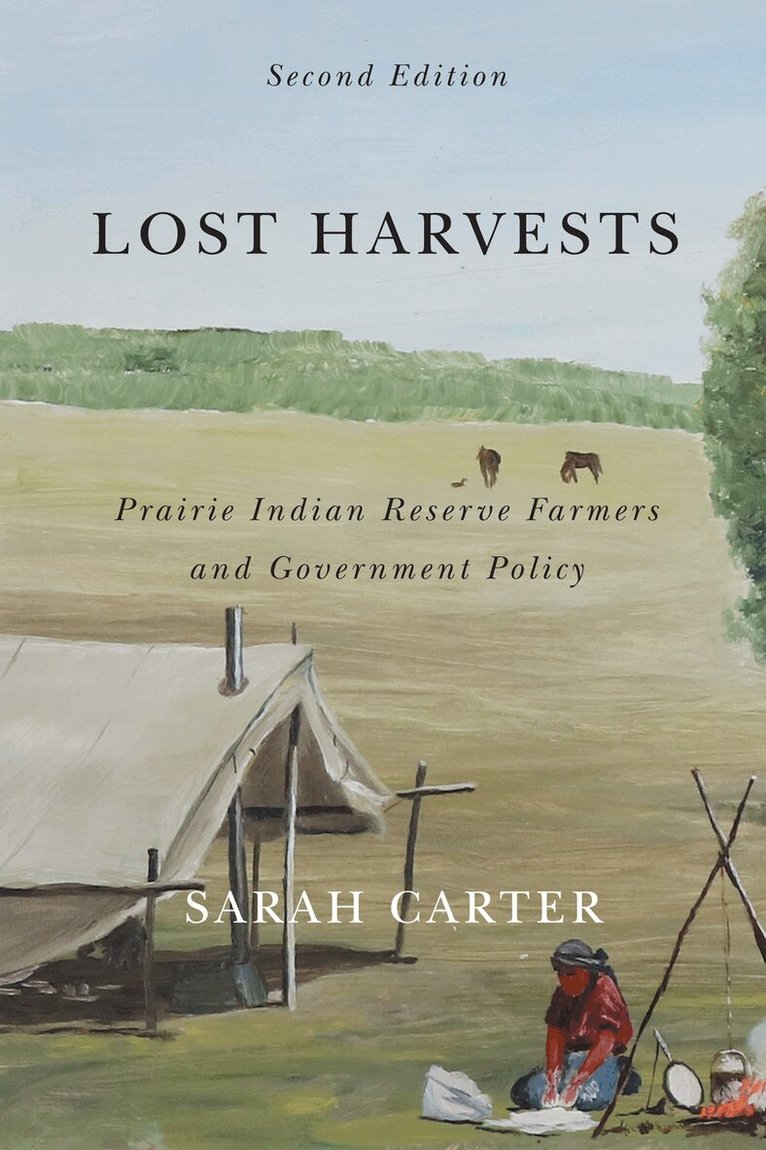
    Lost Harvests

    Prairie Indian Reserve Farmers and Government Policy, Second Edition

    AvSarah Carter

    Häftad, Engelska, 2019

    Del i serien McGill-Queen's Indigenous and Northern Studies

    438 kr

    Beställningsvara. Skickas inom 10-15 vardagar. Fri frakt över 249 kr.

    Fler format och utgåvor

    E-bok

    373 kr

    Beskrivning

    Agriculture on Plains Indian reserves is generally thought to have failed because the Indigenous people lacked either an interest in farming or an aptitude for it. In Lost Harvests Sarah Carter reveals that reserve residents were anxious to farm and expended considerable effort on cultivation; government policies, more than anything else, acted to undermine their success. Despite repeated requests for assistance from Plains Indians, the Canadian government provided very little help between 1874 and 1885, and what little they did give proved useless. Although drought, frost, and other natural phenomena contributed to the failure of early efforts, reserve farmers were determined to create an economy based on agriculture and to become independent of government regulations and the need for assistance. Officials in Ottawa, however, attributed setbacks not to economic or climatic conditions but to the Indians' character and traditions which, they claimed, made the Indians unsuited to agriculture. In the decade following 1885 government policies made farming virtually impossible for the Plains Indians. They were expected to subsist on one or two acres and were denied access to any improvements in technology: farmers had to sow seed by hand, harvest with scythes, and thresh with flails. After the turn of the century, the government encouraged land surrenders in order to make good agricultural land available to non-Indian settlers. This destroyed any chance the Plains Indians had of making agriculture a stable economic base. Through an examination of the relevant published literature and of archival sources in Ottawa, Manitoba, Saskatchewan, and Alberta, Carter provides an in-depth study of government policy, Indian responses, and the socio-economic condition of the reserve communities on the prairies in the post-treaty era. The new introduction by the author offers a reflection on Lost Harvests, the influences that shaped it, and the issues and approaches that remain to be explored.

    Produktinformation

    • Utgivningsdatum:2019-09-19
    • Mått:152 x 229 x 29 mm
    • Vikt:539 g
    • Format:Häftad
    • Språk:Engelska
    • Serie:McGill-Queen's Indigenous and Northern Studies
    • Antal sidor:348
    • Upplaga:2
    • Förlag:McGill-Queen's University Press
    • ISBN:9780773557444

    Utforska kategorier

    • Politik och statsskick inom Samhälle och politik
    • Etnicitet inom Samhälle och politik

    Mer om författaren

    Sarah Carter is professor and Henry Marshall Tory Chair in the Department of History and Classics and the Faculty of Native Studies at the University of Alberta.

    Recensioner i media

    "Lost Harvests is a work of critical history that should withstand the blasts of even the most artful anti-critical criticism and, therefore, serve as an enduring model for anyone seeking a realistic approach to native policy in Canada." D.N. Sprague, Manitoba History "This tight, informative work will blow apart many misconceptions about the involvement of natives in agriculture, or rather, the lack of it ... The beauty of Carter's work is that one tends to forget the statistics -- though the numbers are provided -- and focus on the story of a people who tried, against all obstacles, to live off the land that belonged to them." Sarath Peiris, Saskatoon Star-Phoenix "Sarah Carter takes a long, hard look at Canada's policies and native responses over the past century as they apply to western agricultural development. Her book succeeds in dispelling the myths of indolence and cultural inferiority that pervade attitudes towards the failures of native farmers." Daniel Ray, Edmonton Journal "Fascinating ... superb ... beautifully written ... By 1920, as is well-known, the condition of Indians throughout Canada reached a nadir. Carter's splendid work explains only too clearly how this happened." Boyce Richardson, The Beaver "Thoroughly researched, lucidly written ... Lost Harvests provides us with a Canadian perspective on Indian policy that has universal significance. Historians of the American West will find it fascinating not only because it is insightful and well-written, but because it contributes to the understanding of prairie imperialism in the late nineteenth-century." Robert W. Righter, Western Historical Quarterly