Häftad, Engelska, 2004
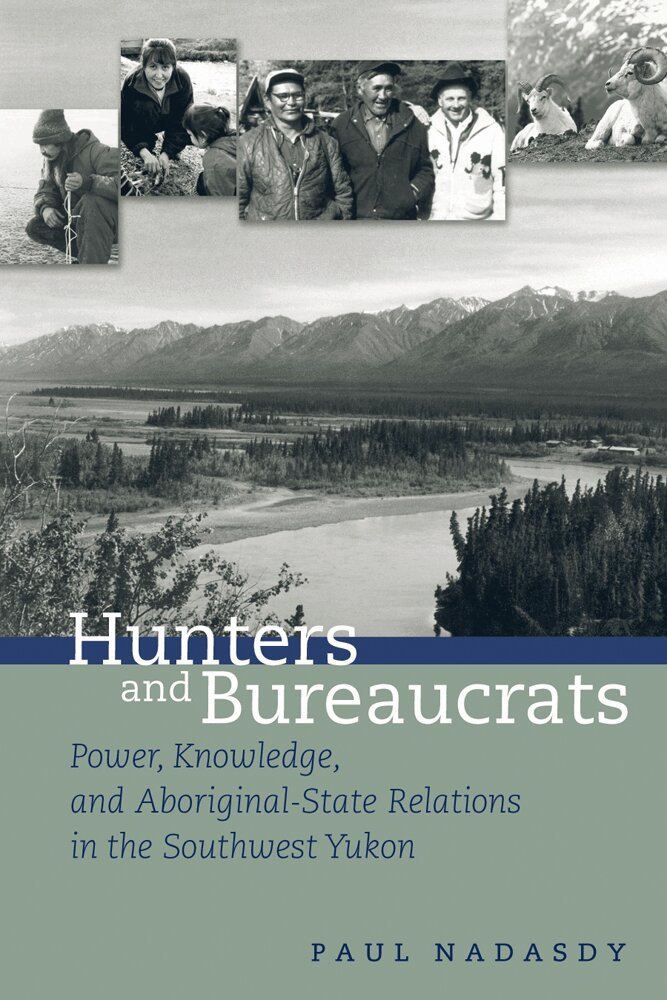
Hunters and Bureaucrats
Av Paul Nadasdy
414 kr
Beställningsvara. Skickas inom 5-8 vardagar. Fri frakt över 249 kr.
Beskrivning
Based on three years of ethnographic research in the Yukon, this book examines contemporary efforts to restructure the relationship between aboriginal peoples and the state in Canada. Although it is widely held that land claims and co-management – two of the most visible and celebrated elements of this restructuring – will help reverse centuries of inequity, this book challenges this conventional wisdom, arguing that land claims and co-management may be less empowering for First Nation peoples than is often supposed.
The book examines the complex relationship between the people of Kluane First Nation, the land and animals, and the state. It shows that Kluane human-animal relations are at least partially incompatible with Euro-Canadian notions of "property" and "knowledge." Yet, these concepts form the conceptual basis for land claims and co-management, respectively. As a result, these processes necessarily end up taking for granted – and so helping to reproduce – existing power relations. First Nation peoples' participation in land claim negotiations and co-management have forced them – at least in some contexts – to adopt Euro-Canadian perspectives toward the land and animals. They have been forced to develop bureaucratic infrastructures for interfacing with the state, and they have had to become bureaucrats themselves, learning to speak and act in uncharacteristic ways. Thus, land claims and co-management have helped undermine the very way of life they are supposed to be protecting.
This book speaks to critical issues in contemporary anthropology, First Nation law, and resource management. It moves beyond conventional models of colonialism, in which the state is treated as a monolithic entity, and instead explores how "state power" is reproduced through everyday bureaucratic practices – including struggles over the production and use of knowledge.
Produktinformation
- Utgivningsdatum: 2004-07-01
- Mått: 152 x 229 x 25 mm
- Vikt: 480 g
- Format: Häftad
- Språk: Engelska
- Antal sidor: 328
- Förlag: University of British Columbia Press
- ISBN: 9780774809849
Utforska kategorier
Betyg & recensioner
0 recensioner
Inga recensioner tillgängliga.