• Fri frakt över 249 kr
  • •
  • Snabba leveranser
  • •
  • Billiga böcker
Kundservice

Du är på sajten för privatpersoner.

Företag, bibliotek eller offentlig verksamhet?

Du handlar på classic.bokus.com, där alla dina funktioner finns intakta.
Till classic.bokus.com
Bokus logotyp. Gå till startsidan.
  • Erbjudanden
  • Nyheter
  • Student
  • Topplistor
  • Barn & ungdom
  • Bokus Play
  • E-böcker
  • Pocketböcker
  • Spel & pussel

10% rabatt på allt med kod NYSTART10 →

Sidfot

Mina sidor

    Hjälp

    • Kundservice
    • Vanliga frågor och svar
    • Frakt och leverans
    • Retur vid ångerrätt
    • Reklamera vara
    • Betalning
    • Köpvillkor
    • Allmänna villkor
    • Information om webbplatsens tillgänglighet

    Om Bokus

    • Om oss
    • Pressrum
    • För studenter
    • För företag
    • För bibliotek och offentlig verksamhet
    • För leverantörer
    • Hållbarhet

    Populärt

    • Aktuella erbjudanden
    • Presentkort
    • Studentlitteratur
    • Nya böcker
    • Topplistor
    • Signerade böcker
    • Engelska böcker

    Inspiration

    • Boktips
    • BookTok
    • Populära bokserier
    • Barnbokskaraktärer
    • Populära författare
    Logotyp för Bokus
    Följ oss på Facebook (extern länk)Följ oss på Instagram (extern länk)Följ oss på YouTube (extern länk)Följ oss på TikTok (extern länk)
    bokus @ CookiesAnpassa cookiesIntegritetspolicyKöpvillkor
    Till Citymail hemsida (extern länk)Till Budbee hemsida (extern länk)Till Postnord hemsida (extern länk)Till Schenker hemsida (extern länk)Till Early Bird hemsida (extern länk)Till Walleys hemsida (extern länk)
    1. Samhälle och politik
    2. Samhälle och kultur
    3. Kultur och medier
    4. Referensverk och tvärvetenskap

    Must We Fight?

    From The Battlefield to the Schoolyard - A New Perspective on Violent Conflict and Its Prevention

    AvWilliam L. Ury

    Häftad, Engelska, 2002

    206 kr

    Beställningsvara. Skickas inom 5-8 vardagar. Fri frakt över 249 kr.

    Beskrivning

    In this landmark book, William Ury-- best-selling author and director of the Project on Preventing War at the Program on Negotiation at Harvard Law School-- and a stellar panel of experts from several scientific disciplines debunk the commonly held notion that violence is a predictable part of the human condition and outline an innovative paradigm for preventing violent confrontations. Must We Fight? presents compelling new research and insights into human nature which clearly demonstrate that humankind is not doomed to continue the seemingly endless cycle of violent conflict. With intelligence and sensitivity, Ury describes a brilliant program for personal and community empowerment called The Third Side. As he explains, in most conflicts between two parties there is actually a third entity-the community in which the combatants, and their dispute, are embedded. The Third Side is a proven model for ending conflict that shows how to mobilize communities to stop and, in some cases, prevent individual and group violence.

    Produktinformation

    • Utgivningsdatum:2002-01-09
    • Mått:139 x 203 x 16 mm
    • Vikt:265 g
    • Format:Häftad
    • Språk:Engelska
    • Antal sidor:128
    • Förlag:John Wiley & Sons Inc
    • ISBN:9780787961039

    Utforska kategorier

    • Referensverk och tvärvetenskap inom Samhälle och politik
    • Våld och övergrepp inom Samhälle och politik

    Mer om författaren

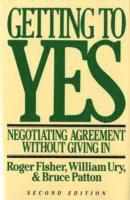
    William L. Ury is director of the Project on Preventing War at the Program on Negotiation at Harvard Law School and a member of its steering committee. He is the coauthor of the best-selling Getting to Yes and author of Getting Past No.

    Recensioner i media

    Ury, co-author of the bestselling Getting to Yes and a director at Harvard Law School's Program on Negotiation, observes that, in most cases, conflict between two parties involves a "third side"-"the community in which the combatants, and their dispute, are embedded." Whether the conflict takes place in inner-city Boston, between Hindus and Muslims in India or in apartheid South Mrica, Ury argues that the solution to "containing, resolving, and preventing" violence lies in activating this third group, whether it means involving independent witnesses, having "community talks" or mobilizing the media and the clergy. Two other writers from different fields contribute to the book's attempt to debunk the commonly held belief that violence and war are part of our primate and prehistoric heritage. Frans de Waal, a Jeading primatoJogist, argues that aggression in primates occurs in a social context and that mechanisms for cooperation are as natural as aggression. Brian Ferguson, an anthropologist of war, asserts that archeological evidence shows a history of limited flare-ups of carefully planned violence that benefit elites rather than a regular constant pattern of violent conflict. While the authors make a strong, persuasive case, arguing for more open societies and community involvement rather than increased policing, the format of the book is disappointing and will limit its audience to academe. The book consists of edited transcripts (including question-and-answer sessions) of two symposia held at Harvard in 1999 and 2000 and one "workbook" section in which readers are asked to put themselves in the place of an administrator faced with a simulated racial incident at a school. (Jan.) (Publishers Weekly)

    Innehållsförteckning

    • Primate behavior and human aggression / Frans de Waal The history of war: fact vs. fiction / R. Brian FergusonThe power of the "third side": community roles in conflict resolution / William L. UryReducing youth violence in Boston : lessons from the 1990s / Christopher WinshipReducing Hindu-Muslim violence in Indian towns : community initiatives / Steven WilkinsonContaining, resolving, and preventing violent conflict : activating the third side in urban communities / William L. UryQuestions, comments, answersSanford High race riot: opportunities and choices for the third side / Joshua Weiss, Brian Blancke, and Chang In Shin