• Fri frakt över 249 kr
  • •
  • Snabba leveranser
  • •
  • Billiga böcker
Kundservice

Du är på sajten för privatpersoner.

Företag, bibliotek eller offentlig verksamhet?

Du handlar på classic.bokus.com, där alla dina funktioner finns intakta.
Till classic.bokus.com
Bokus logotyp. Gå till startsidan.
  • Erbjudanden
  • Nyheter
  • Student
  • Topplistor
  • Barn & ungdom
  • Bokus Play
  • E-böcker
  • Pocketböcker
  • Spel & pussel

10% rabatt på allt med kod: NYSTART10 →

Sidfot

Mina sidor

    Hjälp

    • Kundservice
    • Vanliga frågor och svar
    • Frakt och leverans
    • Retur vid ångerrätt
    • Reklamera vara
    • Betalning
    • Köpvillkor
    • Allmänna villkor
    • Information om webbplatsens tillgänglighet

    Om Bokus

    • Om oss
    • Pressrum
    • För studenter
    • För företag
    • För bibliotek och offentlig verksamhet
    • För leverantörer
    • Hållbarhet

    Populärt

    • Aktuella erbjudanden
    • Presentkort
    • Studentlitteratur
    • Nya böcker
    • Topplistor
    • Signerade böcker
    • Engelska böcker

    Inspiration

    • Boktips
    • BookTok
    • Populära bokserier
    • Barnbokskaraktärer
    • Populära författare
    Logotyp för Bokus
    Följ oss på Facebook (extern länk)Följ oss på Instagram (extern länk)Följ oss på YouTube (extern länk)Följ oss på TikTok (extern länk)
    bokus @ CookiesAnpassa cookiesIntegritetspolicyKöpvillkor
    Till Citymail hemsida (extern länk)Till Budbee hemsida (extern länk)Till Postnord hemsida (extern länk)Till Schenker hemsida (extern länk)Till Early Bird hemsida (extern länk)Till Walleys hemsida (extern länk)
    1. Samhälle och politik
    2. Social välfärd och brottslighet
    3. Brottslighet och kriminologi
    4. Kriminalvård och straff

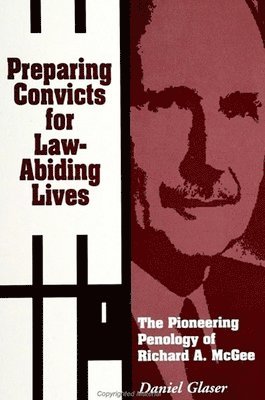
    Preparing Convicts for Law-Abiding Lives

    The Pioneering Penology of Richard A. McGee

    AvDaniel Glaser

    Häftad, Engelska, 1995

    Del i serien SUNY series in New Directions in Crime and Justice Studies

    389 kr

    Tillfälligt slut

    Beskrivning

    This analysis of corrections' pioneer Richard A. McGee draws upon his many lucid writings, on comments by those who worked closely with him, and on interviews with McGee himself and others. This book interprets his efforts, accomplishments, and limitations in their historical context, yet relates them all to current possibilities and problems in crime control.In 23 years of directing California corrections, and in his national leadership that included 16 active years following retirement, McGee promoted both reformation and control of convicts. His efforts helped make staffing prisons a non-political career service, improved inmate academic and vocational education, divided large prisons into quite autonomous smaller units, expanded treatment for drug addicts, fostered prisoner contacts with their families, and encouraged new types of counseling. He also developed more intensive supervision and assistance for both parolees and probationers. And, perhaps most importantly, he created a golden age for rigorous evaluation research in corrections, including assessment of practices by controlled experiments. He brilliantly gained both bipartisan support for these innovations and for changes in criminal laws.

    Produktinformation

    • Utgivningsdatum:1995-11-16
    • Mått:150 x 227 x 14 mm
    • Vikt:290 g
    • Format:Häftad
    • Språk:Engelska
    • Serie:SUNY series in New Directions in Crime and Justice Studies
    • Antal sidor:236
    • Förlag:State University of New York Press
    • ISBN:9780791426968

    Utforska kategorier

    • Kriminalvård och straff inom Samhälle och politik

    Mer om författaren

    Daniel Glaser , Professor Emeritus at the University of Southern California, is Past President of the American Society of Criminology, of the Illinois Academy of Criminology, and of California's Association for Criminal Justice Research.

    Recensioner i media

    "This work provides an interesting historical perspective on some of the most recurring and controversial issues in corrections (i.e. drug and alcohol treatment, conjugal visits, recidivism, and rehabilitation). Glaser develops these with current comparisons that allow the reader to appreciate not only the way things have changed, but the way things remain the same. Throughout these discussions, the author adds interesting comments on the personal side of McGee. This is perhaps what makes the work so enjoyable to read."—Marilyn D. McShane, California State University

    Innehållsförteckning

    • Tables Figures and Photographs Foreword 1. Traditional Government Reactions to Criminals The Evolution of Penalties Before 1944Political Favoritism and CorruptionCalifornia's Pre-1944 Correction History 2. The Career of Richard A. McGee: An Overview 3. McGee's Initiatives in California Prisons Staffing PrisonsInmate Employment and TrainingInmate SchoolingPrison ArchitectureCoping with Criminogenic Chemical Addictions Alcoholism and DrunkennessAddictions to Other Psychoactive Drugs Increasing and Improving Visits to InmatesExpanding Inmate Counseling Programs Group CounselingIndividual Counseling Managing Mentally Ill OffendersSummary and Conclusion 4. McGee's Initiatives in California Community Corrections Increasing Both Aid and Control for ParoleesThe Community Treatment ProjectSome Other Parole Innovations Controlled Experiments in Parole SupervisionWork-Unit StudiesOther Parole-Supervision Research Halfway Houses and Community CentersProbation SubsidySummary and Conclusion 5. Evaluation Research as Correctional Auditing Lay Initiation of Post-World War II Correctional ResearchMcGee on ResearchThe Delusion That "Nothing Works"Deficiencies of Research on Promoting Jobs for Ex-prisoners Vocational Training in PrisonUnemployment Compensation for Newly-released Offenders Summary and Conclusion The Need to Routinize Evaluation Research 6. Coordinating Total Criminal Justice Systems Starting with Jails: An Optimum Division of Criminal Justice LaborProbation—A Public Function in TroubleImproving Penalty DeterminationCapital Punishment as Seen by a Prison AdministratorSummary and Conclusion 7. McGee's Forecasts, and the Future of Corrections Reduced ConfinementIncreased Preparation of Prisoners for Post-release LifeSmall Size and Urban Locations for Correctional InstitutionsBlurring of Distinctions Between Institutional and Community CorrectionsReplacement of Parole Boards by More Professional Release TribunalsConsolidation of Community-based Correctional ProgramsMore Computerized Criminal Justice Information SystemsIncreased Guidance by Empirical ResearchThe "New Corrections" as Less Elusive for Offenders and More Protective of the PublicChanges that McGee Failed to Foresee Notes References Index