• Fri frakt över 249 kr
  • •
  • Snabba leveranser
  • •
  • Billiga böcker
Kundservice

Du är på sajten för privatpersoner.

Företag, bibliotek eller offentlig verksamhet?

Du handlar på classic.bokus.com, där alla dina funktioner finns intakta.
Till classic.bokus.com
Bokus logotyp. Gå till startsidan.
  • Erbjudanden
  • Nyheter
  • Student
  • Topplistor
  • Barn & ungdom
  • Bokus Play
  • E-böcker
  • Pocketböcker
  • Spel & pussel

Må bättre, för mindre! Upp till 50% rabatt på hälsoböcker

Sidfot

Mina sidor

    Hjälp

    • Kundservice
    • Vanliga frågor och svar
    • Frakt och leverans
    • Retur vid ångerrätt
    • Reklamera vara
    • Betalning
    • Köpvillkor
    • Allmänna villkor
    • Information om webbplatsens tillgänglighet

    Om Bokus

    • Om oss
    • Pressrum
    • För studenter
    • För företag
    • För bibliotek och offentlig verksamhet
    • För leverantörer
    • Hållbarhet

    Populärt

    • Aktuella erbjudanden
    • Presentkort
    • Studentlitteratur
    • Nya böcker
    • Topplistor
    • Signerade böcker
    • Engelska böcker

    Inspiration

    • Boktips
    • BookTok
    • Populära bokserier
    • Barnbokskaraktärer
    • Populära författare
    Logotyp för Bokus
    Följ oss på Facebook (extern länk)Följ oss på Instagram (extern länk)Följ oss på YouTube (extern länk)Följ oss på TikTok (extern länk)
    bokus @ CookiesAnpassa cookiesIntegritetspolicyKöpvillkor
    Till Citymail hemsida (extern länk)Till Budbee hemsida (extern länk)Till Postnord hemsida (extern länk)Till Schenker hemsida (extern länk)Till Early Bird hemsida (extern länk)Till Walleys hemsida (extern länk)
    1. Filosofi och religion
    2. Filosofi
    3. Filosofiska discipliner

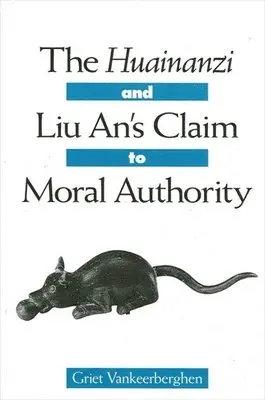
    Huainanzi and Liu An's Claim to Moral Authority

    AvGriet Vankeerberghen

    Häftad, Engelska, 2001

    Del i serien SUNY series in Chinese Philosophy and Culture

    389 kr

    Tillfälligt slut

    Beskrivning

    An innovative analysis both of the Huainanzi, a text from China's Han period, and of the events that surrounded this work.This innovative study explores both the Huainanzi, the text written at the court of Liu An, king of Huainan, and presented to Emperor Wu in 139 B.C.E., and the events that led up to the death of Liu An in 122 B.C.E. Author Griet Vankeerberghen provides a fresh treatment of the Huainanzi, which she establishes as a unified work with a coherent moral philosophy. She shows that rather than defending any particular school of thought, as is often claimed, the Huainanzi was the primary means by which Liu An displayed his vision of the good and advertised his readiness to be a ruler. By 123 B.C.E. Liu An was accused of plotting rebellion and was forced to commit suicide a year later, but the disloyalty he was accused of may have had more to do with his independent intellectual stance than with a military plot. The book goes on to explore the relationship of moral, intellectual, and political authority in the first century of the Han dynasty, a period when the regime sought to monopolize all moral and intellectual authority.

    Produktinformation

    • Utgivningsdatum:2001-10-25
    • Mått:153 x 229 x 12 mm
    • Vikt:327 g
    • Format:Häftad
    • Språk:Engelska
    • Serie:SUNY series in Chinese Philosophy and Culture
    • Antal sidor:233
    • Förlag:State University of New York Press
    • ISBN:9780791451489

    Utforska kategorier

    • Filosofiska discipliner inom Filosofi och religion

    Mer om författaren

    Griet Vankeerberghen is Assistant Professor in the History Department at California State Polytechnic University, Pomona.

    Recensioner i media

    "The topic is significant and central to the continuing debate over the nature of Han texts and the geopolitical context of their creation. Vankeerberghen's unpacking of Liu An's moral philosophy and the symbolism used in its structure will be helpful in further understanding the nature of the Huainanzi. Vankeerberghen's analysis of Liu An's relationship to the Han emperor is particularly interesting in the context of the changing structure of Han government." — Constance A. Cook, coeditor of Defining Chu: Image and Reality in Ancient China

    Innehållsförteckning

    • Acknowledgments Introduction Introduction to Part I 1. Conflicting Views of Morality The Intellectual Climate at the Beginning of Emperor Wu's ReignThe King of Huainan's Place in the Intellectual SceneMoral ConflictGongsun Hong, Zhang Tang, and Events in Huainan after 124 B.C.Contemporaries' Reactions to the Huainan TrialTerror after 122 B.C. 2. The Triangle of Power: Emperor, Kings, and Officials The Kings: A Political HistoryThe Kings: An Alternative HistoryRelations between Emperor Wu and the King of Huainan before 123 B.C.The Events of 123-122 B.C. RevisitedConclusion 3. The Official Representation of the 123-122 B.C. Events Cycles in Emperor Wu's Reign: The Capture of the UnicornThe Transition from "Old" to "New"Liu An's Biography in Shi ji and Han shu Introduction to Part 2 4. The Goals of Human Action The ArcherAdjusting the ScaleRoots and BranchesWuwei 5. Following Nature On XingSages and NonsagesHumans' Tranforming PowerThe VirtuesWho Should Become a Sage?The Huainanzi and Dong Zhongshu's Memorials 6. Evaluating the Sage: Fate, History, and Human Responsibility The First Model: "Heaven Has No Favorites"The Second Model: The Case of Bo YiConclusion: Evaluations of Liu An and the Huainanzi Table 1. Chronology of Main Events in the Life of Liu AnTable 2. The Liu Kings, 202-120 B.C.Appendix 1. A Comparison of Liu An's Biographies in Shi ji 118 and Han shu 44 with a Preposed Reconstruction of Two Layers of Text NotesBibliographyIndex