Griet Vankeerberghen – författare
Visar alla böcker från författaren Griet Vankeerberghen. Handla med fri frakt och snabb leverans.
9 produkter
Place and Performance in Ancient Greece, Rome, and China
Av Griet Vankeerberghen, Hans Beck
E-bok, 2024
1930 kr
Lägg i varukorg
Place and Performance in Ancient Greece, Rome, and China
Av Hans Beck, Griet Vankeerberghen
Inbunden, 2024
1945 kr
Lägg i varukorg
This book examines the construction of space and place in early China and the ancient Mediterranean through the lens of performances conducted in specific locations. It highlights conceptions of place and performance, seeing both as crucial to the production of cultural meaning and communal …
Place and Performance in Ancient Greece, Rome, and China
Av Griet Vankeerberghen, Hans Beck
E-bok, 2024
1930 kr
Lägg i varukorg
Rulers and Ruled in Ancient Greece, Rome, and China
Av Hans Beck, Griet Vankeerberghen
Inbunden, 2021
2314 kr
Lägg i varukorg
Situated on opposite flanks of Eurasia, ancient Mediterranean and Han-Chinese societies had a hazy understanding of each other's existence. But they had no grounded knowledge about one another, nor was there any form of direct interaction. In other words, their historical trajectories were …
Rulers and Ruled in Ancient Greece, Rome, and China
Av Griet Vankeerberghen, Hans Beck
E-bok, 2021
756 kr
Lägg i varukorg
Situated on opposite flanks of Eurasia, ancient Mediterranean and Han-Chinese societies had a hazy understanding of each other''s existence. But they had no grounded knowledge about one another, nor was there any form of direct interaction. In other words, their historical trajectories were …
Rulers and Ruled in Ancient Greece, Rome, and China
Av Griet Vankeerberghen, Hans Beck
E-bok, 2021
756 kr
Lägg i varukorg
Situated on opposite flanks of Eurasia, ancient Mediterranean and Han-Chinese societies had a hazy understanding of each other''s existence. But they had no grounded knowledge about one another, nor was there any form of direct interaction. In other words, their historical trajectories were …
Rulers and Ruled in Ancient Greece, Rome, and China
Av Hans Beck, Griet Vankeerberghen
Häftad, 2022
787 kr
Lägg i varukorg
Situated on opposite flanks of Eurasia, ancient Mediterranean and Han-Chinese societies had a hazy understanding of each other's existence. But they had no grounded knowledge about one another, nor was there any form of direct interaction. In other words, their historical trajectories were …
Chang'an 26 BCE
An Augustan Age in China
Av Michael Nylan, Griet Vankeerberghen
Inbunden, 2014
1232 kr
Tillfälligt slut
During the last two centuries BCE, the Western Han capital of Chang'an, near today's Xi'an in northwest China, outshone Augustan Rome in several ways while administering comparable numbers of imperial subjects and equally vast territories. At its grandest, during the last fifty years or so before …
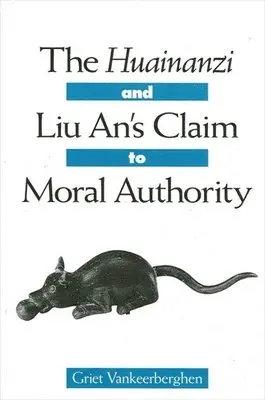
Huainanzi and Liu An's Claim to Moral Authority
Häftad, 2001
401 kr
Tillfälligt slut
An innovative analysis both of the Huainanzi, a text from China's Han period, and of the events that surrounded this work.This innovative study explores both the Huainanzi, the text written at the court of Liu An, king of Huainan, and presented to Emperor Wu in 139 B.C.E., and the events that led …