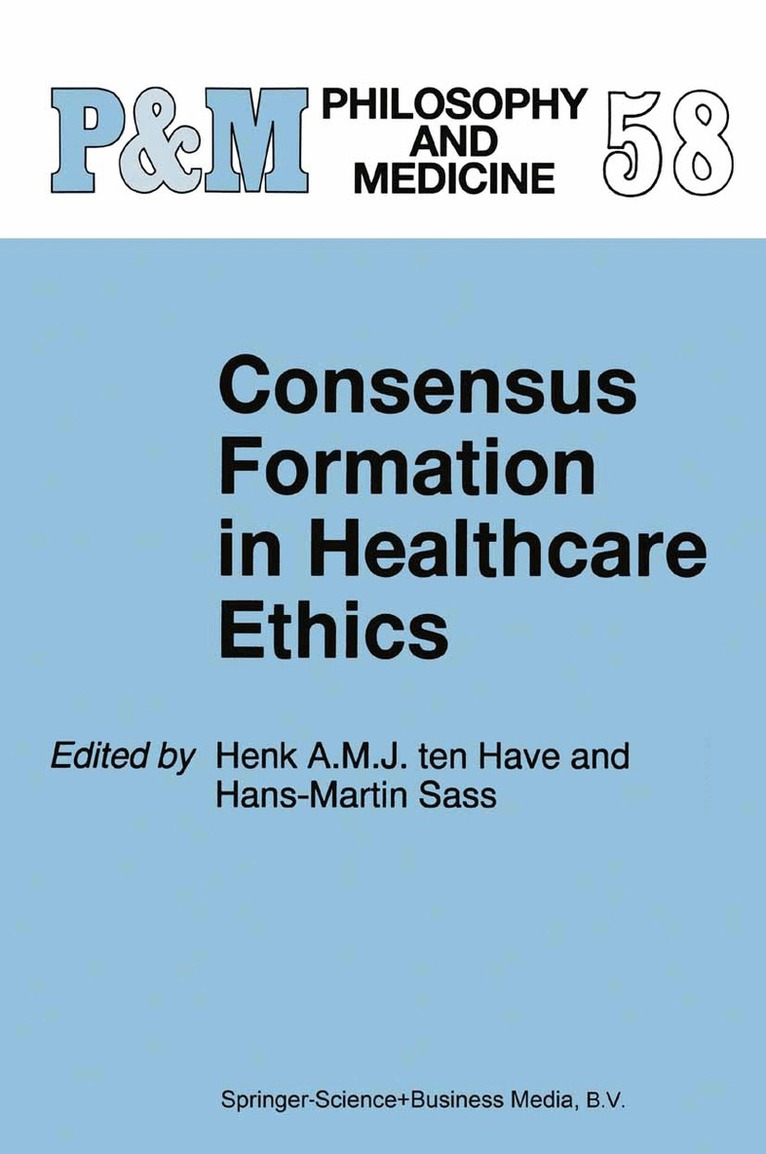
Inbunden, Engelska, 1998
Consensus Formation in Healthcare Ethics
Av H.A. Ten Have, Hans-Martin Sass
1136 kr
Skickas inom 10-15 vardagar
Beskrivning
debating (and possibly ratifying) the Convention at the national level [13]. The Convention identified basic principles necessary for the applica tion of medicine and the life sciences. It set out to protect the dignity and identity of all human beings: ''The interests and welfare of the human being shall prevail over the sole interest of society or science" (art. 2). It also requests that appropriate measures be taken to provide equitable access to healthcare of appropriate quality. The principle of respecting the free and informed consent of the person is clearly stressed. The issue of interventions on persons unable to provide an informed consent has been controversial for a long time; in the first draft, the exact formulation of the relevant article remained open. Now it states that interventions may be carried out on persons with impaired decision-making capacities, but only for their benefit, and only if minimal risks and minimal burdens are imposed. Consensus apparently exists over a broad range of issues. Privacy and free access to information are defined as rights, in article 10. Discrimination against a person on the basis of his or her genetic heritage is prohibited. Sex selection in medically assisted procreation is prohibited (except to avoid serious hereditary, sex-related diseases). Financial gain from using the human body and its parts is explicitly prohibited. The more controversial issues in bioethics are not addressed in this Convention, however. An exception is research on embryos in vitro.
Produktinformation
- Utgivningsdatum: 1998-04-30
- Mått: 155 x 235 x 20 mm
- Vikt: 527 g
- Format: Inbunden
- Språk: Engelska
- Antal sidor: 264
- Förlag: Kluwer Academic Publishers
- Serie: Philosophy and Medicine (del 58)
- ISBN: 9780792349440
Utforska kategorier
Betyg & recensioner
0 recensioner
Inga recensioner tillgängliga.