• Fri frakt över 249 kr
  • •
  • Snabba leveranser
  • •
  • Billiga böcker
Kundservice

Du är på sajten för privatpersoner.

Företag, bibliotek eller offentlig verksamhet?

Du handlar på classic.bokus.com, där alla dina funktioner finns intakta.
Till classic.bokus.com
Bokus logotyp. Gå till startsidan.
  • Erbjudanden
  • Nyheter
  • Student
  • Topplistor
  • Barn & ungdom
  • Bokus Play
  • E-böcker
  • Pocketböcker
  • Spel & pussel

10% rabatt på allt med kod: NYSTART10 →

Sidfot

Mina sidor

    Hjälp

    • Kundservice
    • Vanliga frågor och svar
    • Frakt och leverans
    • Retur vid ångerrätt
    • Reklamera vara
    • Betalning
    • Köpvillkor
    • Allmänna villkor
    • Information om webbplatsens tillgänglighet

    Om Bokus

    • Om oss
    • Pressrum
    • För studenter
    • För företag
    • För bibliotek och offentlig verksamhet
    • För leverantörer
    • Hållbarhet

    Populärt

    • Aktuella erbjudanden
    • Presentkort
    • Studentlitteratur
    • Nya böcker
    • Topplistor
    • Signerade böcker
    • Engelska böcker

    Inspiration

    • Boktips
    • BookTok
    • Populära bokserier
    • Barnbokskaraktärer
    • Populära författare
    Logotyp för Bokus
    Följ oss på Facebook (extern länk)Följ oss på Instagram (extern länk)Följ oss på YouTube (extern länk)Följ oss på TikTok (extern länk)
    bokus @ CookiesAnpassa cookiesIntegritetspolicyKöpvillkor
    Till Citymail hemsida (extern länk)Till Budbee hemsida (extern länk)Till Postnord hemsida (extern länk)Till Schenker hemsida (extern länk)Till Early Bird hemsida (extern länk)Till Walleys hemsida (extern länk)
    1. Samhälle och politik
    2. Politik och statsskick
    3. Statsskick och politiska processer

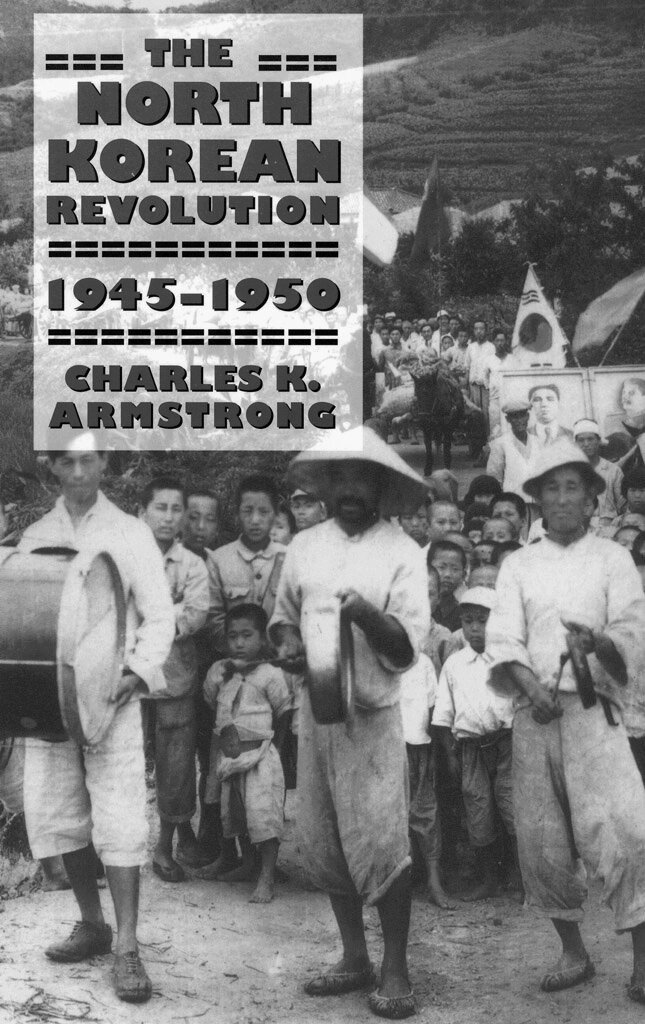
    North Korean Revolution, 1945–1950

    AvCharles K. Armstrong

    Inbunden, Engelska, 2002

    Del i serien Studies of the Weatherhead East Asian Institute, Columbia University

    722 kr

    Beställningsvara. Skickas inom 10-15 vardagar. Fri frakt över 249 kr.

    Fler format och utgåvor

    Häftad

    293 kr

    Beskrivning

    North Korea, despite a shattered economy and a populace suffering from widespread hunger, has outlived repeated forecasts of its imminent demise. Charles K. Armstrong contends that a major source of North Korea's strength and resiliency, as well as of its flaws and shortcomings, lies in the poorly understood origins of its system of government. He examines the genesis of the Democratic People's Republic of Korea (DPRK) both as an important yet rarely studied example of a communist state and as part of modern Korean history. North Korea is one of the last redoubts of "unreformed" Marxism-Leninism in the world. Yet it is not a Soviet satellite in the East European manner, nor is its government the result of a local revolution, as in Cuba and Vietnam. Instead, the DPRK represents a unique "indigenization" of Soviet Stalinism, Armstrong finds. The system that formed under the umbrella of the Soviet occupation quickly developed into a nationalist regime as programs initiated from above merged with distinctive local conditions.Armstrong's account is based on long-classified documents captured by U.S. forces during the Korean War. This enormous archive of over 1.6 million pages provides unprecedented insight into the making of the Pyongyang regime and fuels the author's argument that the North Korean state is likely to remain viable for some years to come.

    Produktinformation

    • Utgivningsdatum:2002-11-14
    • Mått:152 x 229 x 27 mm
    • Vikt:907 g
    • Format:Inbunden
    • Språk:Engelska
    • Serie:Studies of the Weatherhead East Asian Institute, Columbia University
    • Antal sidor:288
    • Förlag:Cornell University Press
    • ISBN:9780801440144

    Utforska kategorier

    • Statsskick och politiska processer inom Samhälle och politik
    • Asiens historia inom Historia och arkeologi
    • Politisk aktivism inom Samhälle och politik

    Mer om författaren

    Charles K. Armstrong is the Korea Foundation Associate Professor of Korean Studies at Columbia University. He is the editor of Korean Society: Civil Society, Democracy, and the State and coeditor of Korea at the Center: Dynamics of Regionalism in Northeast Asia.

    Recensioner i media

    Armstrong has carefully gone over all of the newly available documents on the founding of the North Korean regime to ask why Pyongyang, in spite of the appalling suffering of its people, remains one of the last holdouts of 'unreformed' Marxism-Leninism.(Foreign Affairs) Charles K. Armstrong takes advantage of new archival materials to rethink the history and character of North Korea. In considering the critical years of North Korea's development prior to the outbreak of the Korean War, Armstrong's The North Korean Revolution, 1945–1950, delivers some surprising, heterodox conclusions.- John Feffer (Korean Quarterly) Charles K. Armstrong's The North Korean Revolution, 1945–1950 is a pioneering work.... This eye-catching book offers a wealth of factual information on the genesis of the North Korean state. It introduces a unique comprehensive perspective for the analysis of postcolonial Korean modernization, communist state formation, and creation of new imagined national and social identities and communities in the North. It is a new classic in Korean studies and a must-read for all aspiring students of Korean history and Korean affairs.- Alexandre Y. Mansourov (Journal of Asian Studies) In a world where the kind of Marxist-inspired, state-directed development embodied by Soviet Russia has long since been discredited as ineffective, the North Korean economy and state management continue to resist the forces of the North Korean people. Armstrong wants to explain this rather counterintuitive longevity of a state whose like can be found nowhere else in the world except in Cuba.... This work will be indispensable for anyone hoping to understand the postwar history of Korea and East Asia.(Choice) This book provides a wealth of factual information and historical background that increases the reader's understanding of North Korea's communist history and present idiosyncrasies.- Jeffrey J. Kuebler (Military Review)

    Innehållsförteckning

    • List of IllustrationsAcknowledgmentsList of AbbreviationsIntroduction1.Revolution on the Margins2. Liberation, Occupation, and the Emerging New Order3. Remaking the People4. Coalition Politics and the United Front5. Planning the Economy6. Constructing Culture7. A Regime of Surveillance8. The People's StateConclusionAppendix A: A Note on SourcesAppendix B: Statements of General Chistiakov on the Soviet Occupation of North Korea, Fall 1945Selected BibliographyIndex