• Fri frakt över 249 kr
  • •
  • Snabba leveranser
  • •
  • Billiga böcker
Kundservice

Du är på sajten för privatpersoner.

Företag, bibliotek eller offentlig verksamhet?

Du handlar på classic.bokus.com, där alla dina funktioner finns intakta.
Till classic.bokus.com
Bokus logotyp. Gå till startsidan.
  • Erbjudanden
  • Nyheter
  • Student
  • Topplistor
  • Barn & ungdom
  • Bokus Play
  • E-böcker
  • Pocketböcker
  • Spel & pussel

10% rabatt på allt med kod: NYSTART10 →

Sidfot

Mina sidor

    Hjälp

    • Kundservice
    • Vanliga frågor och svar
    • Frakt och leverans
    • Retur vid ångerrätt
    • Reklamera vara
    • Betalning
    • Köpvillkor
    • Allmänna villkor
    • Information om webbplatsens tillgänglighet

    Om Bokus

    • Om oss
    • Pressrum
    • För studenter
    • För företag
    • För bibliotek och offentlig verksamhet
    • För leverantörer
    • Hållbarhet

    Populärt

    • Aktuella erbjudanden
    • Presentkort
    • Studentlitteratur
    • Nya böcker
    • Topplistor
    • Signerade böcker
    • Engelska böcker

    Inspiration

    • Boktips
    • BookTok
    • Populära bokserier
    • Barnbokskaraktärer
    • Populära författare
    Logotyp för Bokus
    Följ oss på Facebook (extern länk)Följ oss på Instagram (extern länk)Följ oss på YouTube (extern länk)Följ oss på TikTok (extern länk)
    bokus @ CookiesAnpassa cookiesIntegritetspolicyKöpvillkor
    Till Citymail hemsida (extern länk)Till Budbee hemsida (extern länk)Till Postnord hemsida (extern länk)Till Schenker hemsida (extern länk)Till Early Bird hemsida (extern länk)Till Walleys hemsida (extern länk)
    1. Ekonomi och Ledarskap
    2. Nationalekonomi
    3. Ekonomisk politik

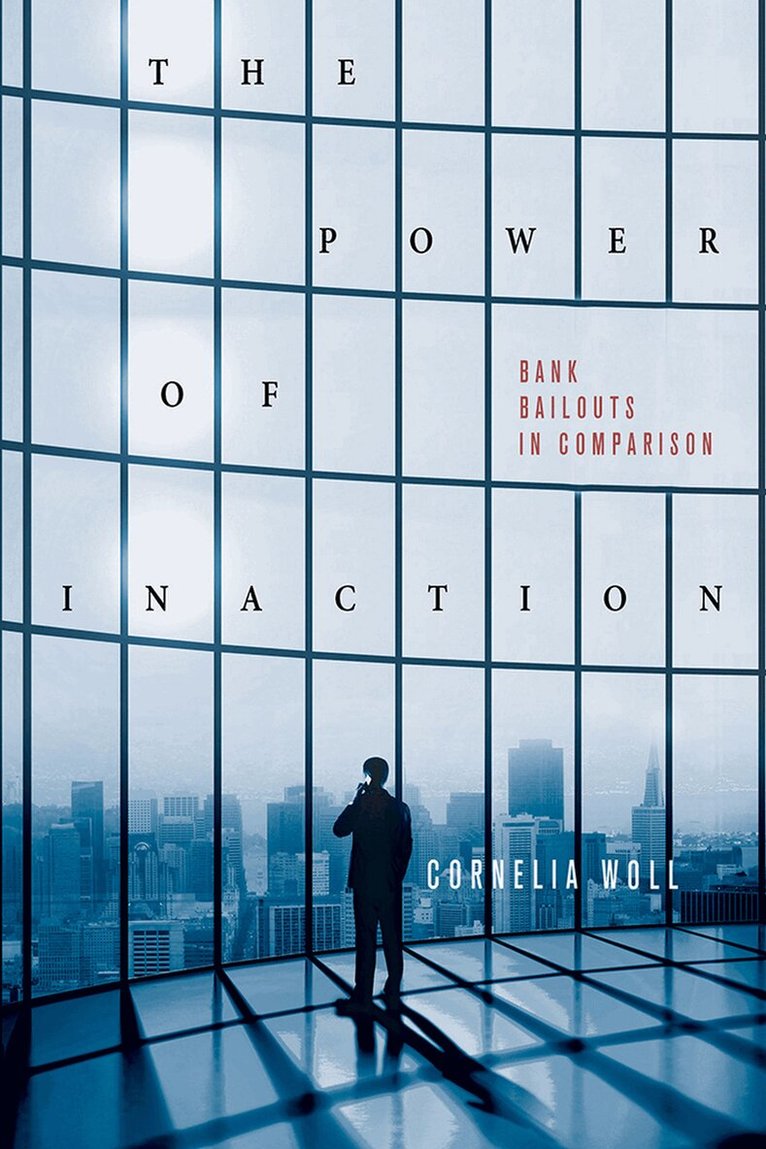
    Power of Inaction

    Bank Bailouts in Comparison

    AvCornelia Woll

    Inbunden, Engelska, 2014

    Del i serien Cornell Studies in Political Economy

    377 kr

    Beställningsvara. Skickas inom 5-8 vardagar. Fri frakt över 249 kr.

    Beskrivning

    Bank bailouts in the aftermath of the collapse of Lehman Brothers and the onset of the Great Recession brought into sharp relief the power that the global financial sector holds over national politics, and provoked widespread public outrage. In The Power of Inaction, Cornelia Woll details the varying relationships between financial institutions and national governments by comparing national bank rescue schemes in the United States and Europe. Woll starts with a broad overview of bank bailouts in more than twenty countries. Using extensive interviews conducted with bankers, lawmakers, and other key players, she then examines three pairs of countries where similar outcomes might be expected: the United States and United Kingdom, France and Germany, Ireland and Denmark. She finds, however, substantial variation within these pairs. In some cases the financial sector is intimately involved in the design of bailout packages; elsewhere it chooses to remain at arm's length. Such differences are often ascribed to one of two conditions: either the state is strong and can impose terms, or the state is weak and corrupted by industry lobbying. Woll presents a third option, where the inaction of the financial sector critically shapes the design of bailout packages in favor of the industry. She demonstrates that financial institutions were most powerful in those settings where they could avoid a joint response and force national policymakers to deal with banks on a piecemeal basis. The power to remain collectively inactive, she argues, has had important consequences for bailout arrangements and ultimately affected how the public and private sectors have shared the cost burden of these massive policy decisions.

    Produktinformation

    • Utgivningsdatum:2014-04-17
    • Mått:155 x 235 x undefined mm
    • Vikt:907 g
    • Format:Inbunden
    • Språk:Engelska
    • Serie:Cornell Studies in Political Economy
    • Antal sidor:224
    • Förlag:Cornell University Press
    • ISBN:9780801452352

    Utforska kategorier

    • Ekonomisk politik inom Ekonomi och Ledarskap
    • Finansiering inom Ekonomi och Ledarskap
    • Statsvetenskap och politisk teori inom Samhälle och politik

    Mer om författaren

    Cornelia Woll is Professor of Political Science at Sciences Po Paris and Co-Director of MaxPo and LIEPP. She is the author of Firm Interests: How Governments Shape Business Lobbying on Global Trade, also from Cornell, and coeditor of Economic Patriotism in Open Economies.

    Recensioner i media

    The book is meticulously researched and cogently written. It speaks to and substantially develops the literature on the power of the financial industry in public policy, providing novel insights into the different relations between the banking industry and national governments across a variety of countries. The narrative is enriched by material gathered through several semi-structured elite interviews with policy-makers and representatives of the financial industry in a variety of countries.... One of the greatest achievements of the book is to draw attention to the (so far overlooked) politics of bank bailouts, rather than the economic conditions in which they took place.- Lucia Quaglia (Journal of Common Market Studies) This book compares bank bailouts across six countries in the wake of the failure of Lehman Brothers in September 2008. Using extensive interviews conducted with bankers, lawmakers, and other key players, the author argues that collective inaction by the financial industry allowed bankers to avoid shouldering more of the bailout, forcing national governments to deal with banks on a piecemeal basis and, ultimately raising the cost to taxpayers.... In all, the book argues persuasively that collective inactivity had important consequences for bailout arrangements and ultimately affected how the public and private sectors shared the cost burden of these massive policy decisions. Summing Up: Recommended. Upper-division undergraduates and above.(Choice)

    Innehållsförteckning

    • 1. Bailout Games2. Crisis Management across the World3. The Power of Collective Inaction4. From Theory to Practice5. The United States and the United Kingdom6. France and Germany7. Ireland and Denmark8. Lessons Learned