• Fri frakt över 249 kr
  • •
  • Snabba leveranser
  • •
  • Billiga böcker
Kundservice

Du är på sajten för privatpersoner.

Företag, bibliotek eller offentlig verksamhet?

Du handlar på classic.bokus.com, där alla dina funktioner finns intakta.
Till classic.bokus.com
Bokus logotyp. Gå till startsidan.
  • Erbjudanden
  • Student
  • Topplistor
  • Barn & ungdom
  • Bokus Play
  • E-böcker
  • Ljudböcker
  • Pocketböcker
  • Spel och pussel

Pocketfynda! Hundratals böcker för 49 kr/st →

Sidfot

Mina sidor

    Hjälp

    • Kundservice
    • Vanliga frågor och svar
    • Frakt och leverans
    • Retur vid ångerrätt
    • Reklamera vara
    • Betalning
    • Köpvillkor
    • Allmänna villkor
    • Information om webbplatsens tillgänglighet

    Om Bokus

    • Om oss
    • Pressrum
    • För studenter
    • För företag
    • För bibliotek och offentlig verksamhet
    • För leverantörer
    • Hållbarhet

    Populärt

    • Aktuella erbjudanden
    • Presentkort
    • Studentlitteratur
    • Nya böcker
    • Topplistor
    • Signerade böcker
    • Engelska böcker

    Inspiration

    • Boktips
    • BookTok
    • Barnbokskaraktärer
    • Populära författare
    Logotyp för Bokus
    Följ oss på Facebook (extern länk)Följ oss på Instagram (extern länk)Följ oss på YouTube (extern länk)Följ oss på TikTok (extern länk)
    bokus @ CookiesAnpassa cookiesIntegritetspolicyKöpvillkor
    Till Citymail hemsida (extern länk)Till Budbee hemsida (extern länk)Till Postnord hemsida (extern länk)Till Schenker hemsida (extern länk)Till Early Bird hemsida (extern länk)Till Walleys hemsida (extern länk)
    1. Samhälle och politik
    2. Samhälle och kultur
    3. Kultur och medier
    4. Medievetenskap

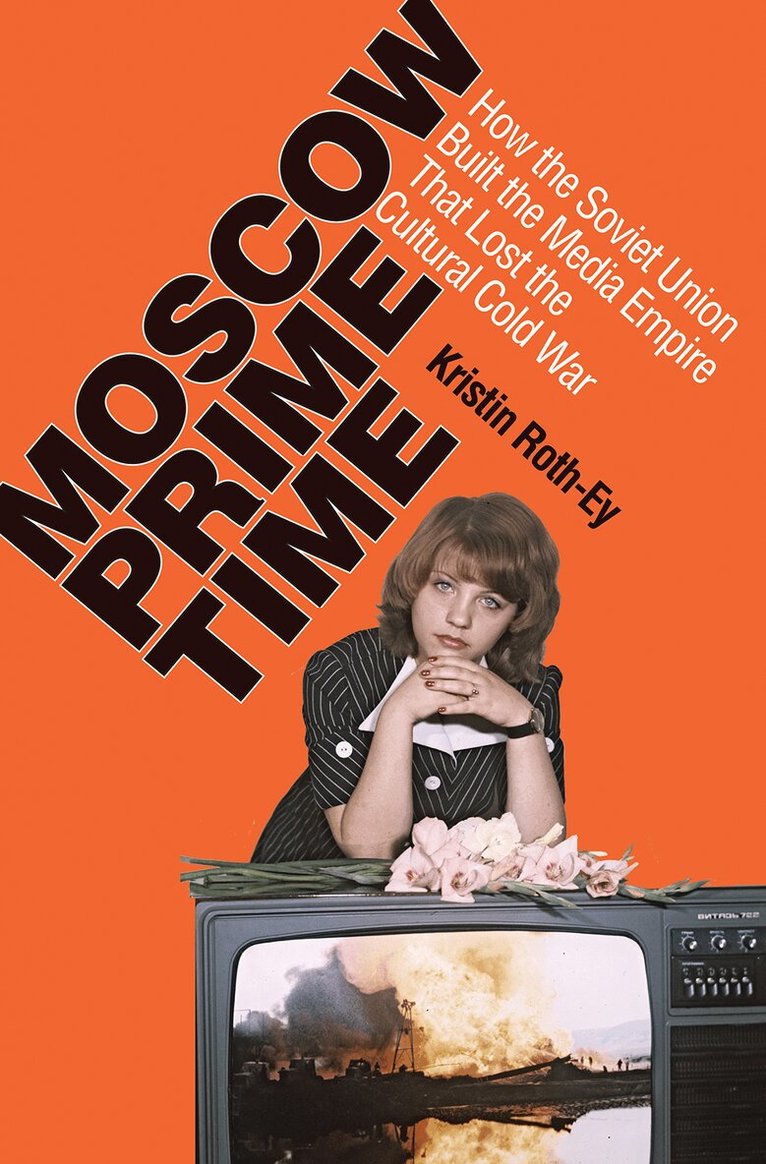
    Moscow Prime Time

    How the Soviet Union Built the Media Empire That Lost the Cultural Cold War

    AvKristin Roth-Ey

    Häftad, Engelska, 2014

    414 kr

    Beställningsvara. Skickas inom 5-8 vardagar. Fri frakt över 249 kr.

    Fler format och utgåvor

    Inbunden

    619 kr

    Beskrivning

    When Nikita Khrushchev visited Hollywood in 1959 only to be scandalized by a group of scantily clad actresses, his message was blunt: Soviet culture would soon consign the mass culture of the West, epitomized by Hollywood, to the "dustbin of history." In Moscow Prime Time, a portrait of the Soviet broadcasting and film industries and of everyday Soviet consumers from the end of World War II through the 1970s, Kristin Roth-Ey shows us how and why Khrushchev's ambitious vision ultimately failed to materialize. The USSR surged full force into the modern media age after World War II, building cultural infrastructures—and audiences—that were among the world's largest. Soviet people were enthusiastic radio listeners, TV watchers, and moviegoers, and the great bulk of what they were consuming was not the dissident culture that made headlines in the West, but orthodox, made-in-the-USSR content. This, then, was Soviet culture's real prime time and a major achievement for a regime that had long touted easy, everyday access to a socialist cultural experience as a birthright. Yet Soviet success also brought complex and unintended consequences. Emphasizing such factors as the rise of the single-family household and of a more sophisticated consumer culture, the long reach and seductive influence of foreign media, and the workings of professional pride and raw ambition in the media industries, Roth-Ey shows a Soviet media empire transformed from within in the postwar era. The result, she finds, was something dynamic and volatile: a new Soviet culture, with its center of gravity shifted from the lecture hall to the living room, and a new brand of cultural experience, at once personal, immediate, and eclectic—a new Soviet culture increasingly similar, in fact, to that of its self-defined enemy, the mass culture of the West. By the 1970s, the Soviet media empire, stretching far beyond its founders' wildest dreams, was busily undermining the very promise of a unique Soviet culture—and visibly losing the cultural cold war. Moscow Prime Time is the first book to untangle the paradoxes of Soviet success and failure in the postwar media age.

    Produktinformation

    • Utgivningsdatum:2014-11-15
    • Mått:155 x 235 x 19 mm
    • Vikt:907 g
    • Format:Häftad
    • Språk:Engelska
    • Antal sidor:328
    • Förlag:Cornell University Press
    • ISBN:9780801479755
    • Utmärkelser:Winner, 2012 AATSEEL Award for Best Book in Litera

    Utforska kategorier

    • Medievetenskap inom Samhälle och politik
    • Europas historia inom Historia och arkeologi
    • Media och underhållning inom Ekonomi och Ledarskap

    Mer om författaren

    Kristin Roth-Ey is Lecturer in Modern Russian History at the UCL School of Slavonic and East European Studies.

    Recensioner i media

    Kristin Roth-Ey's Moscow Prime Time interweaves an analysis of Soviet cinema 'as an industry' with the much-less studied phenomena of Soviet radio and television.... Roth-Ey successfully connects the history of post-Stalinist mass media to the broader struggle for power and influence during the cold war.... Moreover, Roth-Ey's book contributes positively to the growing historiography on the Soviet Union after Stalin with its focus on mid-level institutional actors within the Soviet system, which thankfully takes us beyond the traditional dissident/repressive-state dichotomy of scholarship on this period.- Joshua First (Technology and Culture) Not only does Kristin Roth-Ey provide a wealth of fascinating details about subjects such as Soviet ticket sales for domestic and foreign feature films, she also analyzes the multiple tensions that constrained post-Stalinist mass media production, and develops a consistent, powerful argument. Moscow Prime Time is a meticulous, well-written, and original book, a fascinating read.(Russian Review) This insightful study is a strong addition to the growing body of work concerning Soviet media culture during the Cold War.... It is a compelling, well-documented, articulate examination of the processes, products, and effects of the Soviet film, radio, and television industries. Roth-Ey argues that the Soviets' success at creating an indigenous popular culture became a major part of the USSR's eventual downfall, since the media in which the culture was expressed were inherently skewed toward a non-Soviet worldview.(Choice)

    Innehållsförteckning

    • Introduction: Soviet Culture in the Media Age1. The Soviet Film Industry: Defining Cinematic Success after Stalin2. The New Soviet Movie Culture3. What Was Said When the Muses Were Heard: Foreign Radio in Soviet Contexts4. Finding a Home for Television in the USSR5. Television and Authority in Soviet CultureEpilogueSelected BibliographyAcknowledgmentsIndex