• Fri frakt över 249 kr
  • •
  • Snabba leveranser
  • •
  • Billiga böcker
Kundservice

Du är på sajten för privatpersoner.

Företag, bibliotek eller offentlig verksamhet?

Du handlar på classic.bokus.com, där alla dina funktioner finns intakta.
Till classic.bokus.com
Bokus logotyp. Gå till startsidan.
  • Erbjudanden
  • Nyheter
  • Student
  • Topplistor
  • Barn & ungdom
  • Bokus Play
  • E-böcker
  • Pocketböcker
  • Spel & pussel

10% rabatt på allt med kod NYSTART10 →

Sidfot

Mina sidor

    Hjälp

    • Kundservice
    • Vanliga frågor och svar
    • Frakt och leverans
    • Retur vid ångerrätt
    • Reklamera vara
    • Betalning
    • Köpvillkor
    • Allmänna villkor
    • Information om webbplatsens tillgänglighet

    Om Bokus

    • Om oss
    • Pressrum
    • För studenter
    • För företag
    • För bibliotek och offentlig verksamhet
    • För leverantörer
    • Hållbarhet

    Populärt

    • Aktuella erbjudanden
    • Presentkort
    • Studentlitteratur
    • Nya böcker
    • Topplistor
    • Signerade böcker
    • Engelska böcker

    Inspiration

    • Boktips
    • BookTok
    • Populära bokserier
    • Barnbokskaraktärer
    • Populära författare
    Logotyp för Bokus
    Följ oss på Facebook (extern länk)Följ oss på Instagram (extern länk)Följ oss på YouTube (extern länk)Följ oss på TikTok (extern länk)
    bokus @ CookiesAnpassa cookiesIntegritetspolicyKöpvillkor
    Till Citymail hemsida (extern länk)Till Budbee hemsida (extern länk)Till Postnord hemsida (extern länk)Till Schenker hemsida (extern länk)Till Early Bird hemsida (extern länk)Till Walleys hemsida (extern länk)
    1. Samhälle och politik
    2. Samhälle och kultur
    3. Kultur och medier
    4. Kulturvetenskap

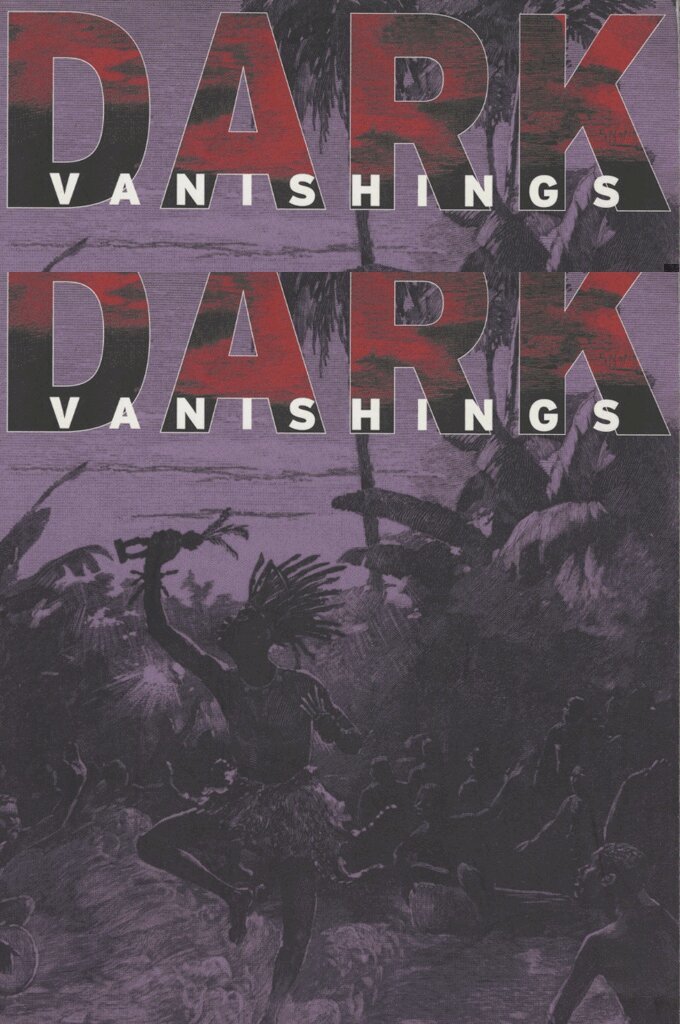
    Dark Vanishings

    Discourse on the Extinction of Primitive Races, 1800–1930

    AvPatrick Brantlinger

    Häftad, Engelska, 2003

    327 kr

    Beställningsvara. Skickas inom 10-15 vardagar. Fri frakt över 249 kr.

    Beskrivning

    Patrick Brantlinger here examines the commonly held nineteenth-century view that all "primitive" or "savage" races around the world were doomed sooner or later to extinction. Warlike propensities and presumed cannibalism were regarded as simultaneously noble and suicidal, accelerants of the downfall of other races after contact with white civilization. Brantlinger finds at the heart of this belief the stereotype of the self-exterminating savage, or the view that "savagery" is a sufficient explanation for the ultimate disappearance of "savages" from the grand theater of world history.Humanitarians, according to Brantlinger, saw the problem in the same terms of inevitability (or doom) as did scientists such as Charles Darwin and Thomas Henry Huxley as well as propagandists for empire such as Charles Wentworth Dilke and James Anthony Froude. Brantlinger analyzes the Irish Famine in the context of ideas and theories about primitive races in North America, Australia, New Zealand, and elsewhere. He shows that by the end of the nineteenth century, especially through the influence of the eugenics movement, extinction discourse was ironically applied to "the great white race" in various apocalyptic formulations. With the rise of fascism and Nazism, and with the gradual renewal of aboriginal populations in some parts of the world, by the 1930s the stereotypic idea of "fatal impact" began to unravel, as did also various more general forms of race-based thinking and of social Darwinism.

    Produktinformation

    • Utgivningsdatum:2003-08-15
    • Mått:152 x 229 x undefined mm
    • Vikt:454 g
    • Format:Häftad
    • Språk:Engelska
    • Antal sidor:272
    • Förlag:Cornell University Press
    • ISBN:9780801488764

    Utforska kategorier

    • Kulturvetenskap inom Samhälle och politik
    • Litteraturvetenskap inom Skönlitteratur
    • Etnicitet inom Samhälle och politik

    Mer om författaren

    Patrick Brantlinger is James Rudy and College Alumni Distinguished Professor (Emeritus) of English and Victorian Studies at Indiana University. He is the author of many books, including Fictions of State, Rule of Darkness, and Bread and Circuses, also from Cornell.

    Recensioner i media

    Dark Vanishings should interest historians of ethnology and of cultural anthropology in general.... Of particular importance is the question of whether the notion of race, however defined, forged Europeans into racists.... The bibliography has value for historians of biology, of economics, and of English literature, not the sort of bedfellows one might have expected before reading Dark Vanishings. Sociologists of science, sure to find in Brantlinger's narrative a sociology of racism in the guise of science, round out the group of scholars who will benefit from reading Dark Vanishings.(Isis) Patrick Brantlinger's argument in Dark Vanishings is straightforward: from 1830 onwards, economists, pioneering anthropologists, natural scientists and literary writers believed that 'primitive' peoples were doomed to extinction.... Belief in the inevitability of the natives' fall assuaged guilt about the depopulating effects of colonialism.... A significant achievement in Dark Vanishings is Brantlinger's partial, conditional rehabilitation of the race theorists, Robert Knox and Alfred Wallace. Brantlinger shows that, although frequently ludicrous and ill-willed, such writers' works need to read with care, as they influenced still-extant concepts about First World superiority.(Times Literary Supplement) The 'dark vanishings' of Patrick Brantlinger's most recent book are the presumed extinctions, especially self-extinguishings, of people not deemed to be, or not deemed to be capable of being, civilized, of those who cannot participate in Western Progress. Dark Vanishings is obviously required reading for anyone interested in Victorian studies of race and empire.(English Literature in Transition)

    Innehållsförteckning

    • 1. Introduction: Aboriginal Matters2. Pre-Darwinian Theories on the Extinction of Primitive Races3. Vanishing Americans4. Humanitarian Causes: Antislavery and Saving Aboriginals5. The Irish Famine6. The Dusk of the Dreamtime7. Islands of Death and the Devil8. Darwin and After9. Conclusion: White TwilightsNotesWorks CitedIndex