• Fri frakt över 249 kr
  • •
  • Snabba leveranser
  • •
  • Billiga böcker
Kundservice

Du är på sajten för privatpersoner.

Företag, bibliotek eller offentlig verksamhet?

Du handlar på classic.bokus.com, där alla dina funktioner finns intakta.
Till classic.bokus.com
Bokus logotyp. Gå till startsidan.
  • Erbjudanden
  • Nyheter
  • Student
  • Topplistor
  • Barn & ungdom
  • Bokus Play
  • E-böcker
  • Pocketböcker
  • Spel & pussel

10% rabatt på allt med kod NYSTART10 →

Sidfot

Mina sidor

    Hjälp

    • Kundservice
    • Vanliga frågor och svar
    • Frakt och leverans
    • Retur vid ångerrätt
    • Reklamera vara
    • Betalning
    • Köpvillkor
    • Allmänna villkor
    • Information om webbplatsens tillgänglighet

    Om Bokus

    • Om oss
    • Pressrum
    • För studenter
    • För företag
    • För bibliotek och offentlig verksamhet
    • För leverantörer
    • Hållbarhet

    Populärt

    • Aktuella erbjudanden
    • Presentkort
    • Studentlitteratur
    • Nya böcker
    • Topplistor
    • Signerade böcker
    • Engelska böcker

    Inspiration

    • Boktips
    • BookTok
    • Populära bokserier
    • Barnbokskaraktärer
    • Populära författare
    Logotyp för Bokus
    Följ oss på Facebook (extern länk)Följ oss på Instagram (extern länk)Följ oss på YouTube (extern länk)Följ oss på TikTok (extern länk)
    bokus @ CookiesAnpassa cookiesIntegritetspolicyKöpvillkor
    Till Citymail hemsida (extern länk)Till Budbee hemsida (extern länk)Till Postnord hemsida (extern länk)Till Schenker hemsida (extern länk)Till Early Bird hemsida (extern länk)Till Walleys hemsida (extern länk)
    1. Historia och arkeologi
    2. Historia
    3. Europas historia

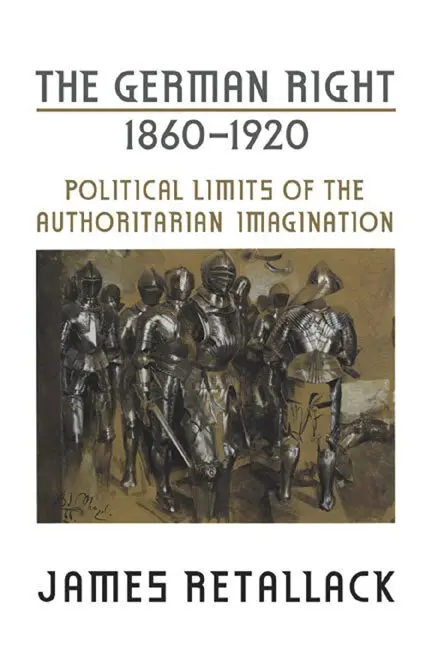
    German Right, 1860-1920

    Political Limits of the Authoritarian Imagination

    AvJames Retallack

    Häftad, Engelska, 2006

    Del i serien German and European Studies

    529 kr

    Beställningsvara. Skickas inom 5-8 vardagar. Fri frakt över 249 kr.

    Fler format och utgåvor

    E-bok

    602 kr

    E-bok

    683 kr

    Beskrivning

    Before the rise of Hitler and the Nazis, Germany was undergoing convulsive socioeconomic and political change. With unification as a nation state under Bismarck in 1871, Germany experienced the advent of mass politics, based on the principle of one man, one vote. The dynamic, diverse political culture that emerged challenged the adaptability of the 'interlocking directorate of the Right.' To serve as a bulwark of the authoritarian state, the Right needed to exploit traditional sources of power while mobilizing new political recruits, but until Emperor Wilhelm II's abdication in 1918 these aims could not easily be reconciled.In The German Right, 1860-1920, James Retallack examines how the authoritarian imagination inspired the Right and how political pragmatism constrained it. He explores the Right's regional and ideological diversity, and refuses to privilege the 1890s as the tipping point when the traditional politics of notables gave way to mass politics. Retallack also challenges the assumption that, if Imperial Germany was modern, it could not also have been authoritarian. Written with clear, persuasive prose, this wide-ranging analysis draws together threads of reasoning from German and Anglo-American scholars over the past 30 years and points the way for future research into unexplored areas.

    Produktinformation

    • Utgivningsdatum:2006-08-26
    • Mått:153 x 229 x 23 mm
    • Vikt:720 g
    • Format:Häftad
    • Språk:Engelska
    • Serie:German and European Studies
    • Antal sidor:416
    • Förlag:University of Toronto Press
    • ISBN:9780802094193

    Utforska kategorier

    • Europas historia inom Historia och arkeologi
    • Politiska ideologier och rörelser inom Samhälle och politik

    Mer om författaren

    James Retallack is a University Professor in the Department of History at the University of Toronto.

    Recensioner i media

    "'James Retallack again demonstrates that his is a powerful and persuasive voice in Modern German history. In The German Right, Retallack stakes out a revisionist argument for understanding the political continuities of the German past, and in the process breathes new life into a deflated debate about Germany's "Sonderweg." What emerges is a new interpretation of modern German history, focusing on a highly contextualized political history of the German right from the middle of the nineteenth century into the maelstrom of the twentieth.' - Helmut Walser Smith, Martha Rivers Ingram Professor of History, Director, Robert Penn Warren Center for the Humanities, Vanderbilt University."