• Fri frakt över 249 kr
  • •
  • Snabba leveranser
  • •
  • Billiga böcker
Kundservice

Du är på sajten för privatpersoner.

Företag, bibliotek eller offentlig verksamhet?

Du handlar på classic.bokus.com, där alla dina funktioner finns intakta.
Till classic.bokus.com
Bokus logotyp. Gå till startsidan.
  • Erbjudanden
  • Nyheter
  • Student
  • Topplistor
  • Barn & ungdom
  • Bokus Play
  • E-böcker
  • Pocketböcker
  • Spel & pussel

10% rabatt på allt med kod NYSTART10 →

Sidfot

Mina sidor

    Hjälp

    • Kundservice
    • Vanliga frågor och svar
    • Frakt och leverans
    • Retur vid ångerrätt
    • Reklamera vara
    • Betalning
    • Köpvillkor
    • Allmänna villkor
    • Information om webbplatsens tillgänglighet

    Om Bokus

    • Om oss
    • Pressrum
    • För studenter
    • För företag
    • För bibliotek och offentlig verksamhet
    • För leverantörer
    • Hållbarhet

    Populärt

    • Aktuella erbjudanden
    • Presentkort
    • Studentlitteratur
    • Nya böcker
    • Topplistor
    • Signerade böcker
    • Engelska böcker

    Inspiration

    • Boktips
    • BookTok
    • Populära bokserier
    • Barnbokskaraktärer
    • Populära författare
    Logotyp för Bokus
    Följ oss på Facebook (extern länk)Följ oss på Instagram (extern länk)Följ oss på YouTube (extern länk)Följ oss på TikTok (extern länk)
    bokus @ CookiesAnpassa cookiesIntegritetspolicyKöpvillkor
    Till Citymail hemsida (extern länk)Till Budbee hemsida (extern länk)Till Postnord hemsida (extern länk)Till Schenker hemsida (extern länk)Till Early Bird hemsida (extern länk)Till Walleys hemsida (extern länk)
    1. Samhälle och politik
    2. Samhälle och kultur
    3. Kultur och medier
    4. Referensverk och tvärvetenskap

    Civilizing Machine

    A Cultural History of Mexican Railroads, 1876-1910

    AvMichael Matthews

    Häftad, Engelska, 2014

    Del i serien Mexican Experience

    438 kr

    Beställningsvara. Skickas inom 10-15 vardagar. Fri frakt över 249 kr.

    Beskrivning

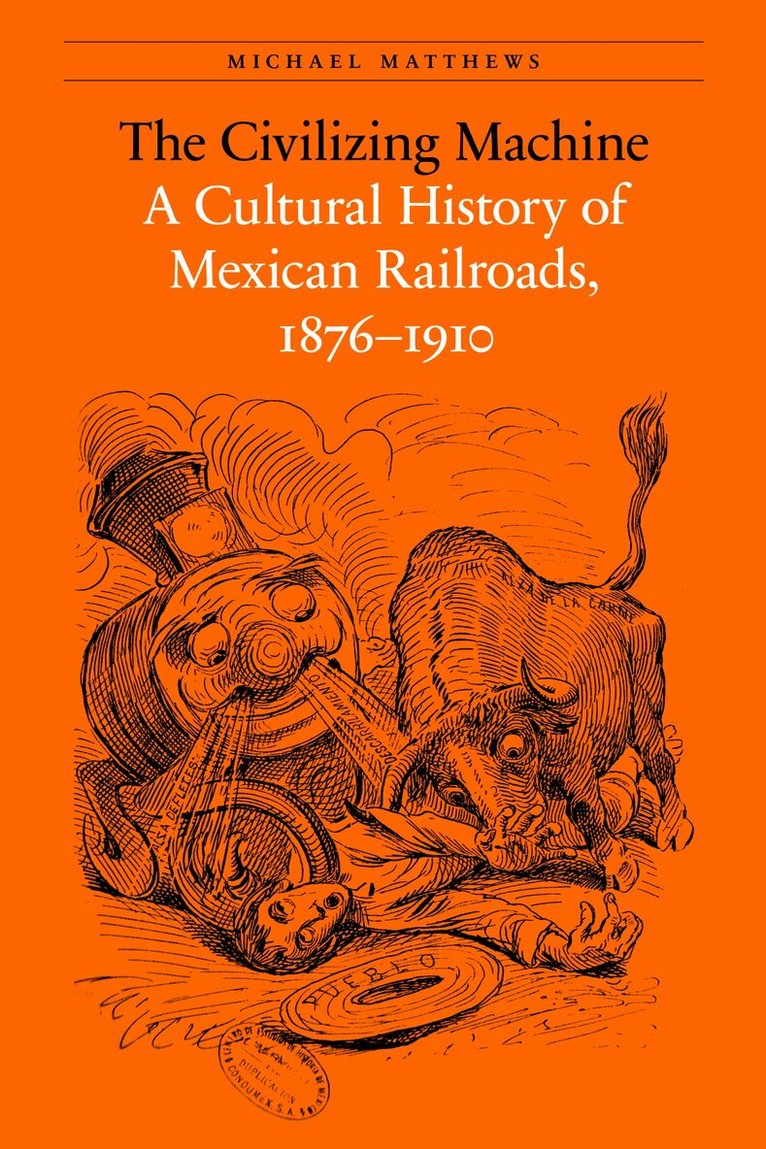
    In late nineteenth-century Mexico the Mexican populace was fascinated with the country's booming railroad network. Newspapers and periodicals were filled with art, poetry, literature, and social commentaries exploring the symbolic power of the railroad. As a symbol of economic, political, and industrial modernization, the locomotive served to demarcate a nation's status in the world. However, the dangers of locomotive travel, complicated by the fact that Mexico's railroads were foreign owned and operated, meant that the railroad could also symbolize disorder, death, and foreign domination.In The Civilizing Machine Michael Matthews explores the ideological and cultural milieu that shaped the Mexican people's understanding of technology. Intrinsically tied to the Porfiriato, the thirty-five-year dictatorship of Gen. Porfirio Díaz, the booming railroad network represented material progress in a country seeking its place in the modern world. Matthews discloses how the railroad's development represented the crowning achievement of the regime and the material incarnation of its mantra, "order and progress." The Porfirian administration evoked the railroad in legitimizing and justifying its own reign, while political opponents employed the same rhetorical themes embodied by the railroads to challenge the manner in which that regime achieved economic development and modernization. As Matthews illustrates, the multiple symbols of the locomotive reflected deepening social divisions and foreshadowed the conflicts that eventually brought about the Mexican Revolution.

    Produktinformation

    • Utgivningsdatum:2014-01-01
    • Mått:152 x 229 x 23 mm
    • Vikt:473 g
    • Format:Häftad
    • Språk:Engelska
    • Serie:Mexican Experience
    • Antal sidor:340
    • Förlag:University of Nebraska Press
    • ISBN:9780803243804

    Utforska kategorier

    • Referensverk och tvärvetenskap inom Samhälle och politik
    • Järnvägar inom Naturvetenskap och teknik

    Mer om författaren

    Michael Matthews is an assistant professor of history at Elon University.

    Recensioner i media

    "This is an original and valuable study that deepens our understanding of Porfirian modernity."-Robert F. Alegre, American Historical Review -- Robert F. Alegre American Historical Review "Matthews's work makes a solid contribution to the growing literature on the Porfiriato."-William Schell, Jr., Americas -- William Schell, Jr. Americas "Matthews supplies overwhelming evidence to show how the railroad engine became a cultural lightning rod. It is difficult to think of a contemporary corollary with such cultural significance, which only underscores the value of this book to understanding the late nineteenth century in Mexico."-Andrew Offenburger, Western Historical Quarterly -- Andrew Offenburger Western Historical Quarterly "This is a fine contribution to the scholarship of nineteenth century Mexico. Very well researched and extremely engaging, the book analyses the significance of railways in the consciousness and outputs of different social groups in Mexico during the three and a half decades of the Porfiriato."-Samantha McDermott, Journal of Transport History -- Samantha McDermott Journal of Transport History "Matthews's insistence on the value of the visual as well as the written and his fluency with many media make for an enjoyable and accessible read."-Casey Lurtz, Hispanic American Historical Review -- Casey Lurtz Hispanic American Historical Review "The first cultural study of railroads in Mexico. Matthews's study is timely ... with lively accounts and interesting analysis."-James A. Garza, associate professor of history and ethnic studies, University of Nebraska-Lincoln -- James A. Garza

    Innehållsförteckning

    • Introduction Chapter 1. The Discourse of Development: The Railway Debate of the Early Porfiriato Chapter 2. De Viaje: Elite Views of Modernity and the Railway Boom Chapter 3. Festivals of Progress: The Railway Ceremony Chapter 4. The Price of Progress: Popular Perceptions of the Railway Accident Chapter 5. La Loco-Matona: The Railway in the Popular and Opposition Press Conclusion