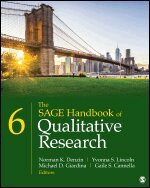
The SAGE Handbook of Qualitative Research
Norman K. Denzin, Yvonna S. Lincoln, Michael D. Giardina, Gaile S. Cannella
Häftad, 2023
1 719 kr

Du är på sajten för privatpersoner.
2 011 kr
Beställningsvara. Skickas inom 3-6 vardagar. Fri frakt över 249 kr.
Denzin analyzes the ideas of society embedded in poststructuralism, postmodernism, feminism, cultural studies and Marxism through the ideas of key theorists like Baudrillard, Barthes, Habermas, Jameson, Bourdieu and Derrida. He relates these to the problematic of the postmodern self as exposed in cinema centering on the decisive performance of race, gender and class.
Norman K. Denzin was Distinguished Emeritus Professor of Communications, College of Communications Scholar, and Research Professor of Communications, Sociology, and Humanities at the University of Illinois at Urbana-Champaign, USA. One of the world’s foremost authorities on qualitative research and cultural criticism, he was the author or editor of more than 30 books, including The Qualitative Manifesto; Qualitative Inquiry Under Fire; Reading Race; Interpretive Ethnography; The Cinematic Society; The Alcoholic Self; and a trilogy on the American West. He was past editor of The Sociological Quarterly, co-editor of six editions of the landmark SAGE Handbook of Qualitative Research, co-editor (with Michael D. Giardina) of 18 books on qualitative inquiry, co-editor (with Yvonna S. Lincoln and Michael D. Giardina) of the methods journal Qualitative Inquiry, founding editor of Cultural Studies-Critical Methodologies and International Review of Qualitative Research, editor of four book series, and founding director of the International Congress of Qualitative Inquiry.
`Denzin is quick to point out how `postmodernism′ is a contradiction in terms, but he is clearer than most writers as to what, in its many forms, it actually is. Resistant to definition, Denzin offers several views of postmodernism from different fields, the very variety being a suitable image for the uncertainty of the notion. Denzin does not state it in so many words, but he offers us a Dadaist version of today.... There is really nothing new here philosophically, except to upset those critics who view some of the films reviewed as icons of revolt. Given the generally hopeless picture Denzin portrays of modern Western society, it is hard to go along with his upbeat conclusion where he seeks the reclamation of the self from the postmodern quagmire.... a book well worth reading as its expose of postmodernism has a clarity others would do well to imitate′ - NATFHE Journal`The book begins with one of the clearest and most interesting introductions to the postmodern terrain that I have yet seen, followed by his analysis of `postmodern social theory′... Denzin offers the reader an interesting and illuminating treatment of movies and, by showing how postmodern social theory has failed to make the social world accessible to women, an insightful critique of the work of Baudrillard, Lyotard and Jameson′ - Discourse & Society`Norman Denzin, one of the most interesting theorists and ethnographers in American sociology, has turned his critical eye to postmodern theory and contemporary American culture and society. Revitalizing Mills′ sociological imagination, Denzin addresses the relations between Hollywood films of the 1980′s, their constructions of self, and the structures of lived experience. He offers a postmodern sociology which addresses the increasingly conservative basis of postmodern ideologies of race, class and gender. It offers an original postmodern critique of the postmodern. Images of Postmodern Society should be and will be widely read and discussed′ - Larry Grossberg, University of Illinois`Denzin uncovers a profoundly important tension in postmodern culture: between identities based on the more stable and coherent ground of race-, class-, and gender-based practices and a self that is increasingly based on the more fleeting and fragmentary image worlds of contemporary corporate culture. Denzin′s work, then, demonstrates that the `abundance of meaning′ found in these films lies in the collision of modernist and postmodernist depicitions of cultural practice′ - Contemporary Sociology
Norman K. Denzin, Yvonna S. Lincoln, Michael D. Giardina, Gaile S. Cannella
Häftad, 2023
1 719 kr
Norman K. Denzin, Michael D. Giardina
Häftad, 2020
693 kr
Norman K. Denzin, Michael D. Giardina
Inbunden, 2020
2 466 kr
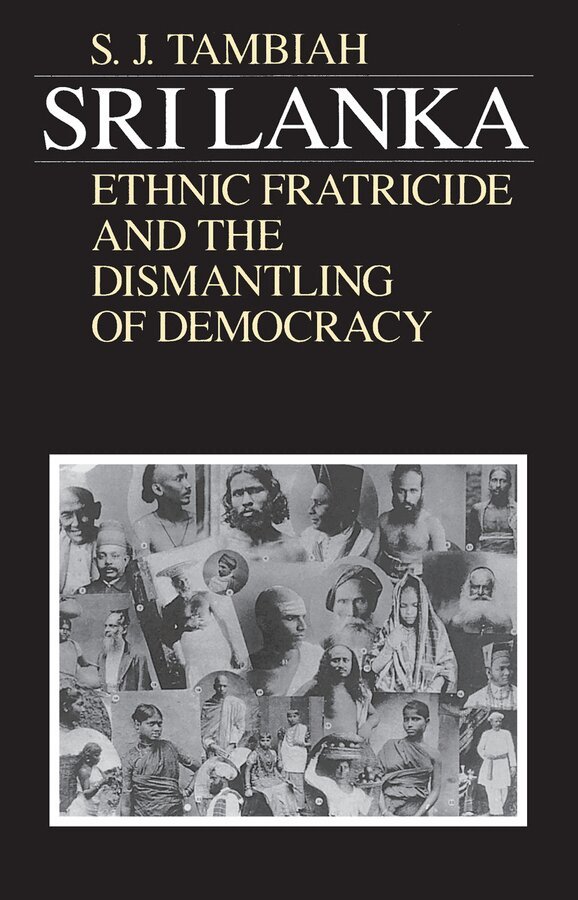
Stanley Jeyaraja Tambiah
Häftad, 1991
267 kr
Du är på sajten för privatpersoner.
2 011 kr
Beställningsvara. Skickas inom 3-6 vardagar. Fri frakt över 249 kr.
Denzin analyzes the ideas of society embedded in poststructuralism, postmodernism, feminism, cultural studies and Marxism through the ideas of key theorists like Baudrillard, Barthes, Habermas, Jameson, Bourdieu and Derrida. He relates these to the problematic of the postmodern self as exposed in cinema centering on the decisive performance of race, gender and class.
Norman K. Denzin was Distinguished Emeritus Professor of Communications, College of Communications Scholar, and Research Professor of Communications, Sociology, and Humanities at the University of Illinois at Urbana-Champaign, USA. One of the world’s foremost authorities on qualitative research and cultural criticism, he was the author or editor of more than 30 books, including The Qualitative Manifesto; Qualitative Inquiry Under Fire; Reading Race; Interpretive Ethnography; The Cinematic Society; The Alcoholic Self; and a trilogy on the American West. He was past editor of The Sociological Quarterly, co-editor of six editions of the landmark SAGE Handbook of Qualitative Research, co-editor (with Michael D. Giardina) of 18 books on qualitative inquiry, co-editor (with Yvonna S. Lincoln and Michael D. Giardina) of the methods journal Qualitative Inquiry, founding editor of Cultural Studies-Critical Methodologies and International Review of Qualitative Research, editor of four book series, and founding director of the International Congress of Qualitative Inquiry.
`Denzin is quick to point out how `postmodernism′ is a contradiction in terms, but he is clearer than most writers as to what, in its many forms, it actually is. Resistant to definition, Denzin offers several views of postmodernism from different fields, the very variety being a suitable image for the uncertainty of the notion. Denzin does not state it in so many words, but he offers us a Dadaist version of today.... There is really nothing new here philosophically, except to upset those critics who view some of the films reviewed as icons of revolt. Given the generally hopeless picture Denzin portrays of modern Western society, it is hard to go along with his upbeat conclusion where he seeks the reclamation of the self from the postmodern quagmire.... a book well worth reading as its expose of postmodernism has a clarity others would do well to imitate′ - NATFHE Journal`The book begins with one of the clearest and most interesting introductions to the postmodern terrain that I have yet seen, followed by his analysis of `postmodern social theory′... Denzin offers the reader an interesting and illuminating treatment of movies and, by showing how postmodern social theory has failed to make the social world accessible to women, an insightful critique of the work of Baudrillard, Lyotard and Jameson′ - Discourse & Society`Norman Denzin, one of the most interesting theorists and ethnographers in American sociology, has turned his critical eye to postmodern theory and contemporary American culture and society. Revitalizing Mills′ sociological imagination, Denzin addresses the relations between Hollywood films of the 1980′s, their constructions of self, and the structures of lived experience. He offers a postmodern sociology which addresses the increasingly conservative basis of postmodern ideologies of race, class and gender. It offers an original postmodern critique of the postmodern. Images of Postmodern Society should be and will be widely read and discussed′ - Larry Grossberg, University of Illinois`Denzin uncovers a profoundly important tension in postmodern culture: between identities based on the more stable and coherent ground of race-, class-, and gender-based practices and a self that is increasingly based on the more fleeting and fragmentary image worlds of contemporary corporate culture. Denzin′s work, then, demonstrates that the `abundance of meaning′ found in these films lies in the collision of modernist and postmodernist depicitions of cultural practice′ - Contemporary Sociology
Norman K. Denzin, Yvonna S. Lincoln, Michael D. Giardina, Gaile S. Cannella
Häftad, 2023
1 719 kr

Norman K. Denzin, Michael D. Giardina
Häftad, 2020
693 kr
Norman K. Denzin, Michael D. Giardina
Inbunden, 2020
2 466 kr
Stanley Jeyaraja Tambiah
Häftad, 1991
267 kr
Du är på sajten för privatpersoner.
2 011 kr
Beställningsvara. Skickas inom 3-6 vardagar. Fri frakt över 249 kr.
Denzin analyzes the ideas of society embedded in poststructuralism, postmodernism, feminism, cultural studies and Marxism through the ideas of key theorists like Baudrillard, Barthes, Habermas, Jameson, Bourdieu and Derrida. He relates these to the problematic of the postmodern self as exposed in cinema centering on the decisive performance of race, gender and class.
Norman K. Denzin was Distinguished Emeritus Professor of Communications, College of Communications Scholar, and Research Professor of Communications, Sociology, and Humanities at the University of Illinois at Urbana-Champaign, USA. One of the world’s foremost authorities on qualitative research and cultural criticism, he was the author or editor of more than 30 books, including The Qualitative Manifesto; Qualitative Inquiry Under Fire; Reading Race; Interpretive Ethnography; The Cinematic Society; The Alcoholic Self; and a trilogy on the American West. He was past editor of The Sociological Quarterly, co-editor of six editions of the landmark SAGE Handbook of Qualitative Research, co-editor (with Michael D. Giardina) of 18 books on qualitative inquiry, co-editor (with Yvonna S. Lincoln and Michael D. Giardina) of the methods journal Qualitative Inquiry, founding editor of Cultural Studies-Critical Methodologies and International Review of Qualitative Research, editor of four book series, and founding director of the International Congress of Qualitative Inquiry.
`Denzin is quick to point out how `postmodernism′ is a contradiction in terms, but he is clearer than most writers as to what, in its many forms, it actually is. Resistant to definition, Denzin offers several views of postmodernism from different fields, the very variety being a suitable image for the uncertainty of the notion. Denzin does not state it in so many words, but he offers us a Dadaist version of today.... There is really nothing new here philosophically, except to upset those critics who view some of the films reviewed as icons of revolt. Given the generally hopeless picture Denzin portrays of modern Western society, it is hard to go along with his upbeat conclusion where he seeks the reclamation of the self from the postmodern quagmire.... a book well worth reading as its expose of postmodernism has a clarity others would do well to imitate′ - NATFHE Journal`The book begins with one of the clearest and most interesting introductions to the postmodern terrain that I have yet seen, followed by his analysis of `postmodern social theory′... Denzin offers the reader an interesting and illuminating treatment of movies and, by showing how postmodern social theory has failed to make the social world accessible to women, an insightful critique of the work of Baudrillard, Lyotard and Jameson′ - Discourse & Society`Norman Denzin, one of the most interesting theorists and ethnographers in American sociology, has turned his critical eye to postmodern theory and contemporary American culture and society. Revitalizing Mills′ sociological imagination, Denzin addresses the relations between Hollywood films of the 1980′s, their constructions of self, and the structures of lived experience. He offers a postmodern sociology which addresses the increasingly conservative basis of postmodern ideologies of race, class and gender. It offers an original postmodern critique of the postmodern. Images of Postmodern Society should be and will be widely read and discussed′ - Larry Grossberg, University of Illinois`Denzin uncovers a profoundly important tension in postmodern culture: between identities based on the more stable and coherent ground of race-, class-, and gender-based practices and a self that is increasingly based on the more fleeting and fragmentary image worlds of contemporary corporate culture. Denzin′s work, then, demonstrates that the `abundance of meaning′ found in these films lies in the collision of modernist and postmodernist depicitions of cultural practice′ - Contemporary Sociology
Norman K. Denzin, Yvonna S. Lincoln, Michael D. Giardina, Gaile S. Cannella
Häftad, 2023
1 719 kr
Norman K. Denzin, Michael D. Giardina
Häftad, 2020
693 kr
Norman K. Denzin, Michael D. Giardina
Inbunden, 2020
2 466 kr
Stanley Jeyaraja Tambiah
Häftad, 1991
267 kr