• Fri frakt över 249 kr
  • •
  • Snabba leveranser
  • •
  • Billiga böcker
Kundservice

Du är på sajten för privatpersoner.

Företag, bibliotek eller offentlig verksamhet?

Du handlar på classic.bokus.com, där alla dina funktioner finns intakta.
Till classic.bokus.com
Bokus logotyp. Gå till startsidan.
  • Erbjudanden
  • Nyheter
  • Student
  • Topplistor
  • Barn & ungdom
  • Bokus Play
  • E-böcker
  • Pocketböcker
  • Spel & pussel

10% rabatt på allt med kod: NYSTART10 →

Sidfot

Mina sidor

    Hjälp

    • Kundservice
    • Vanliga frågor och svar
    • Frakt och leverans
    • Retur vid ångerrätt
    • Reklamera vara
    • Betalning
    • Köpvillkor
    • Allmänna villkor
    • Information om webbplatsens tillgänglighet

    Om Bokus

    • Om oss
    • Pressrum
    • För studenter
    • För företag
    • För bibliotek och offentlig verksamhet
    • För leverantörer
    • Hållbarhet

    Populärt

    • Aktuella erbjudanden
    • Presentkort
    • Studentlitteratur
    • Nya böcker
    • Topplistor
    • Signerade böcker
    • Engelska böcker

    Inspiration

    • Boktips
    • BookTok
    • Populära bokserier
    • Barnbokskaraktärer
    • Populära författare
    Logotyp för Bokus
    Följ oss på Facebook (extern länk)Följ oss på Instagram (extern länk)Följ oss på YouTube (extern länk)Följ oss på TikTok (extern länk)
    bokus @ CookiesAnpassa cookiesIntegritetspolicyKöpvillkor
    Till Citymail hemsida (extern länk)Till Budbee hemsida (extern länk)Till Postnord hemsida (extern länk)Till Schenker hemsida (extern länk)Till Early Bird hemsida (extern länk)Till Walleys hemsida (extern länk)
    1. Samhälle och politik
    2. Sociologi och antropologi
    3. Antropologi

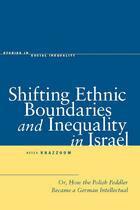
    Shifting Ethnic Boundaries and Inequality in Israel

    Or, How the Polish Peddler Became a German Intellectual

    AvAziza Khazzoom

    Inbunden, Engelska, 2008

    Del i serien Studies in Social Inequality

    840 kr

    Beställningsvara. Skickas inom 10-15 vardagar. Fri frakt över 249 kr.

    Fler format och utgåvor

    E-bok

    967 kr

    Beskrivning

    Why do racial and ethnic groups discriminate against each other? The most common sociological answer is that they want to monopolize scarce resources—good jobs or top educations—for themselves. This book offers a different answer, showing that racial and ethnic discrimination can also occur to preserve particular group identities.Shifting Ethnic Boundaries and Inequality in Israel focuses on the early period of Israeli statehood to examine how the European Jewish founders treated Middle Eastern Jewish immigrants. The author argues that, shaped by their own unique encounter with European colonialism, the European Jews were intent on producing Israel as part of the West. To this end, they excluded and discriminated against those Middle Eastern Jews who threatened the goal of Westernization. Blending quantitative and qualitative evidence, Aziza Khazzoom provides a compelling rationale for the emergence of ethnic identity and group discrimination, while also suggesting new ways to understand Israeli-Palestinian relations.

    Produktinformation

    • Utgivningsdatum:2008-03-07
    • Mått:155 x 235 x 25 mm
    • Vikt:640 g
    • Format:Inbunden
    • Språk:Engelska
    • Serie:Studies in Social Inequality
    • Antal sidor:360
    • Förlag:Stanford University Press
    • ISBN:9780804756976

    Utforska kategorier

    • Antropologi inom Samhälle och politik
    • Etnicitet inom Samhälle och politik

    Mer om författaren

    Aziza Khazzoom is Assistant Professor of Sociology at Hebrew University.

    Recensioner i media

    "The book makes an important contribution to the study of ethnicity in Israel and offers a fresh outlook on the formation of boundaries between Mizrahim and Ashkenazim . . . [I]t is a well-written book which carefully dispels some of the long-held myths concerning Mizrahim in Israel, including the Moroccan paradox which asserts that in some cases, segregation actually benefited (segments within the) Mizrahi population. Its innovative use of mixed methods in tandem with the breadth of historical literature surveyed makes it an essential reading for those interested in the emergence and subsequent shifting of ethnic boundaries in Israel."—Nir Cohen, Journal of International Migration and Integration "Khazzoom's book offers a nuanced and sophisticated explanation for the origin of ethnic inequality in Israel and for the existence of the Mizrahi-Ashkenazi cleavage. By examining the cultureal and economic roots of this divide, Khazzoom makes an important contribution to our understanding of contemporary Israeli society and to how ethnic groups in general, and the socioeconomic divisions between them, come into being."—Dov Maxman, Middle East Quarterly "Khazzoom's novel contribution is a powerful synthesis of insights from post-colonial studies of identity formation with a careful examination of the quantitative evidence in the best tradition of stratification research—two areas of scholarship that rarely speak to one another. There is no parallel to her achievement with this book."—Gil Eyal, author of The Disenchantment of the Orient: Expertisein Arab Affairs and the Israeli State "This excellent book combines the literature on race and ethnicity with the literature on inequality, examines the theoretical and empirical interplay between identity and class, and seamlessly combines quantitative data with historical moments. The outcome is a well written, level headed, rich, and engaging work which revises accepted wisdom on Israeli ethnicity."—Yehouda Shenhav, author of The Arab Jews: A Postcolonial Reading of Nationalism, Religion, and Ethnicity "Khazzoom's Shifting Ethnic Boundaries and Inequality elegantly evaluates the interactions of social movements, cultural boundaries, and political economy in Israel . . . Shifting Ethnic Boundaries and Inequality makes an original and brilliant contribution to theoretical explanations of social inequality."—Contemporary Sociology "Khazzoom's study is one of the best and more nuanced studies of the macro large-scale level of the Israeli setting of ethnic stratication."—Journal of Israeli History

    Innehållsförteckning

    • CONTENTS Acknowledgmentsxxx PART ONE Introduction CHAPTER ONE Introduction3 PART TWO Background CHAPTER TWO Brief Historical Background000 CHAPTER THREE Israeli Ethnic Formation000 CHAPTER FOUR Was Dichotomization Inevitable?000 PART THREE Analysis CHAPTER FIVE The Iraqi Paradox000 CHAPTER SIX How the Polish Peddler Became a German Intellectual: Orientalism, Jewish Identity, and the Antecedents to Social Closure in Israel000 CHAPTER SEVEN Cultural Capital000 CHAPTER EIGHT Residential Segregation and Economic Isolation000 CHAPTER NINE Into the Next Generation000 PART FOUR Conclusion CHAPTER TEN Conclusion000 Appendices000 Notes 000 Bibliography000 Index000