• Fri frakt över 249 kr
  • •
  • Snabba leveranser
  • •
  • Billiga böcker
Kundservice

Du är på sajten för privatpersoner.

Företag, bibliotek eller offentlig verksamhet?

Du handlar på classic.bokus.com, där alla dina funktioner finns intakta.
Till classic.bokus.com
Bokus logotyp. Gå till startsidan.
  • Erbjudanden
  • Nyheter
  • Student
  • Topplistor
  • Barn & ungdom
  • Bokus Play
  • E-böcker
  • Pocketböcker
  • Spel & pussel

10% rabatt på allt med kod NYSTART10 →

Sidfot

Mina sidor

    Hjälp

    • Kundservice
    • Vanliga frågor och svar
    • Frakt och leverans
    • Retur vid ångerrätt
    • Reklamera vara
    • Betalning
    • Köpvillkor
    • Allmänna villkor
    • Information om webbplatsens tillgänglighet

    Om Bokus

    • Om oss
    • Pressrum
    • För studenter
    • För företag
    • För bibliotek och offentlig verksamhet
    • För leverantörer
    • Hållbarhet

    Populärt

    • Aktuella erbjudanden
    • Presentkort
    • Studentlitteratur
    • Nya böcker
    • Topplistor
    • Signerade böcker
    • Engelska böcker

    Inspiration

    • Boktips
    • BookTok
    • Populära bokserier
    • Barnbokskaraktärer
    • Populära författare
    Logotyp för Bokus
    Följ oss på Facebook (extern länk)Följ oss på Instagram (extern länk)Följ oss på YouTube (extern länk)Följ oss på TikTok (extern länk)
    bokus @ CookiesAnpassa cookiesIntegritetspolicyKöpvillkor
    Till Citymail hemsida (extern länk)Till Budbee hemsida (extern länk)Till Postnord hemsida (extern länk)Till Schenker hemsida (extern länk)Till Early Bird hemsida (extern länk)Till Walleys hemsida (extern länk)
    1. Kultur
    2. Arkitektur

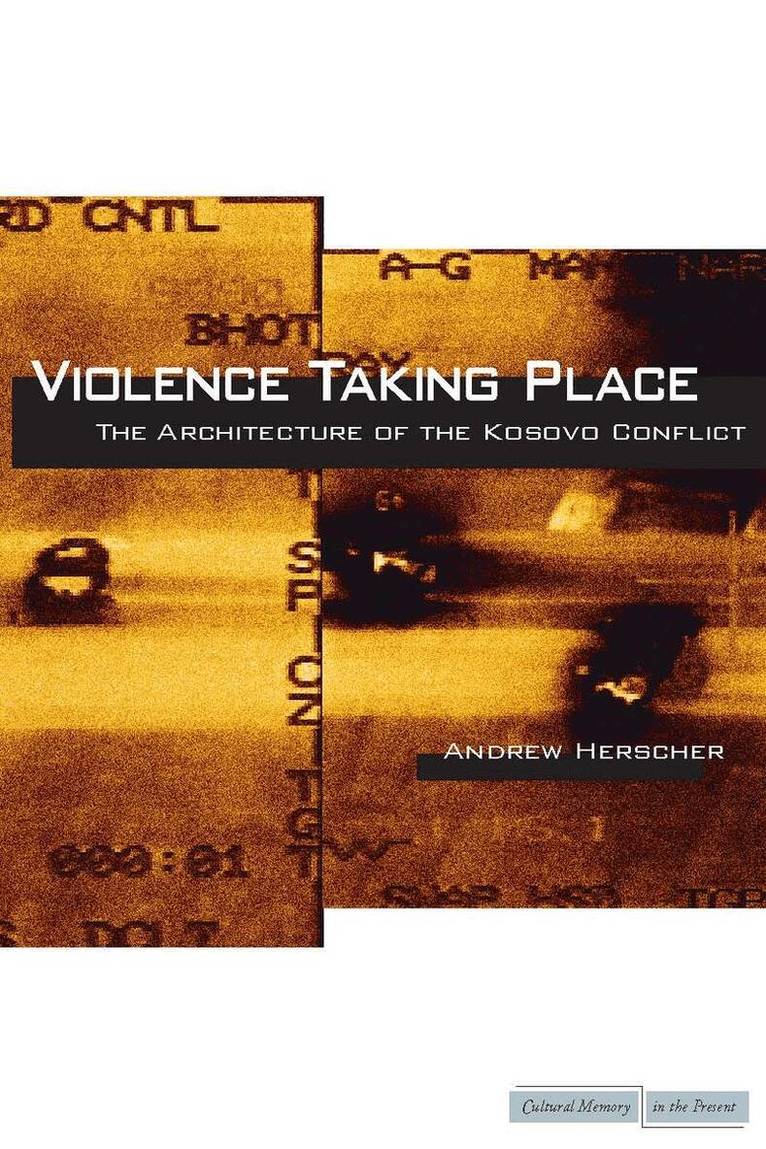
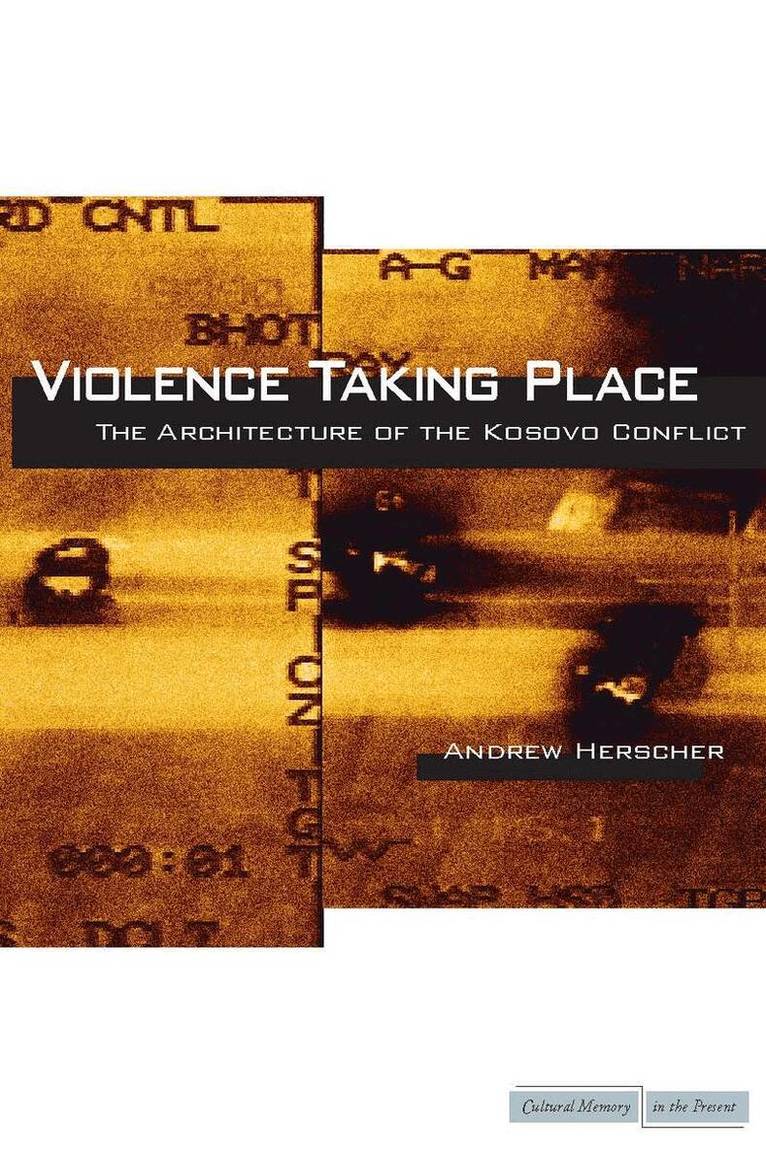
    Violence Taking Place

    The Architecture of the Kosovo Conflict

    AvAndrew Herscher

    E-bok
    Engelska, 2010

    Del i serien Cultural Memory in the Present

    319 kr

    Läs direkt i Bokus Reader – eller ladda ned till din enhet

    Fler format och utgåvor

    Inbunden

    1 102 kr

    Häftad

    267 kr

    Beskrivning

    While the construction of architecture has a place in architectural discourse, its destruction, generally seen as incompatible with the very idea of "culture," has been neglected in theoretical and historical discussion. Responding to this neglect, Herscher examines the case of the former Yugoslavia and in particular, Kosovo, where targeting architecture has been a prominent dimension of political violence. Rather than interpreting violence against architecture as a mere representation of "deeper" social, political, or ideological dynamics, Herscher reveals it to be a form of cultural production, irreducible to its contexts and formative of the identities and agencies that seemingly bear on it as causes. Focusing on the particular sites where violence is inflicted and where its subjects and objects are articulated, the book traces the intersection of violence and architecture from socialist modernization, through ethnic and nationalist conflict, to postwar reconstruction.

    Produktinformation

    • Utgivningsdatum:2010-03-25
    • Språk:Engelska
    • Antal sidor:224
    • Filformat:EPUB
    • Kopieringsskydd:LCP
    • ISBN:9780804776226
    • Förlag:Stanford University Press
    • Serie:Cultural Memory in the Present

    Utforska kategorier

    • Arkitektur inom Kultur
    • Våld och övergrepp inom Samhälle och politik
    • Europas historia inom Historia och arkeologi

    Mer om författaren

    Andrew Herscher is Assistant Professor of Architecture at the University of Michigan. He investigated wartime destruction for the International Criminal Tribunal for the former Yugoslavia, was co-director of the Department of Culture of the United Nations Mission in Kosovo, and founded the Kosovo Cultural Heritage Project.

    Recensioner i media

    "Overall, the book Violence Taking Place: The Architecture of the Kosvo Conflict is a thoughtful and detailed study of the complex relationships between architecture and violence. It provides an insightful view of the specifics of the Kosvo conflict and the broader context needed in our attempts to understand the war in former Yugoslavia."—Dijana Alic, International Journal of Islamic Architecture "Andrew Herscher's precise and meticulously researched book, Violence Taking Place, argues that not only is architectural destruction a symbol of violence but also that architecture forms a necessary context for violence to take place . . . Violence Taking Place represents the first architectural history of political violence in relation to historical preservation, and in doing so suggests a new area of concern for critical heritage studies. This is an important book that deserves to be read widely by those working in the field of historic preservation."—Rodney Harrison, Future Anterior "An incredible description of the relations between architecture, politics and human rights. The text and narrative are painfully beautiful."—Malkit Shoshan, Architect, The Foundation for Achieving Seamless Territory, Amsterdam, The Netherlands, Abitare: International Design Magazine "This book offers an extraordinary contribution to the existing interdisciplinary scholarship around the Yugoslav wars (and the nature of what is termed 'ethnic violence' more generally) on the one hand, and to work that explores the place of architecture in peace and conflict studies on the other. The author insists on architecture's role in making identities, marshaling a nuanced understanding of the Kosovo experience to explore broader, more theoretical themes in a way that is uniquely compelling."—Sari Wastell, Goldsmiths, University of London "In this painstakingly researched study of the destruction and reconstruction of Kosovo's culturescape, Andrew Herscher brilliantly defamiliarizes received wisdom concerning the relation between monuments and war in general. Keeping his eye on the specificity of this particular environment and on the general characteristics of contemporary conflict at once, Herscher interprellates between what is unique and what is, tragically, all-too-common in the 'urbicides' of the present geopolitical order. This is a work that will inform and challenge anyone with an interest in the dynamics of contemporary conflict and in the new transnational cultures of reconstruction."—Daniel Bertrand Monk, Colgate University