• Fri frakt över 249 kr
  • •
  • Snabba leveranser
  • •
  • Billiga böcker
Kundservice

Du är på sajten för privatpersoner.

Företag, bibliotek eller offentlig verksamhet?

Du handlar på classic.bokus.com, där alla dina funktioner finns intakta.
Till classic.bokus.com
Bokus logotyp. Gå till startsidan.
  • Erbjudanden
  • Nyheter
  • Student
  • Topplistor
  • Barn & ungdom
  • Bokus Play
  • E-böcker
  • Pocketböcker
  • Spel & pussel

10% rabatt på allt med kod: NYSTART10 →

Sidfot

Mina sidor

    Hjälp

    • Kundservice
    • Vanliga frågor och svar
    • Frakt och leverans
    • Retur vid ångerrätt
    • Reklamera vara
    • Betalning
    • Köpvillkor
    • Allmänna villkor
    • Information om webbplatsens tillgänglighet

    Om Bokus

    • Om oss
    • Pressrum
    • För studenter
    • För företag
    • För bibliotek och offentlig verksamhet
    • För leverantörer
    • Hållbarhet

    Populärt

    • Aktuella erbjudanden
    • Presentkort
    • Studentlitteratur
    • Nya böcker
    • Topplistor
    • Signerade böcker
    • Engelska böcker

    Inspiration

    • Boktips
    • BookTok
    • Populära bokserier
    • Barnbokskaraktärer
    • Populära författare
    Logotyp för Bokus
    Följ oss på Facebook (extern länk)Följ oss på Instagram (extern länk)Följ oss på YouTube (extern länk)Följ oss på TikTok (extern länk)
    bokus @ CookiesAnpassa cookiesIntegritetspolicyKöpvillkor
    Till Citymail hemsida (extern länk)Till Budbee hemsida (extern länk)Till Postnord hemsida (extern länk)Till Schenker hemsida (extern länk)Till Early Bird hemsida (extern länk)Till Walleys hemsida (extern länk)
    1. Historia och arkeologi
    2. Historia
    3. Asiens historia

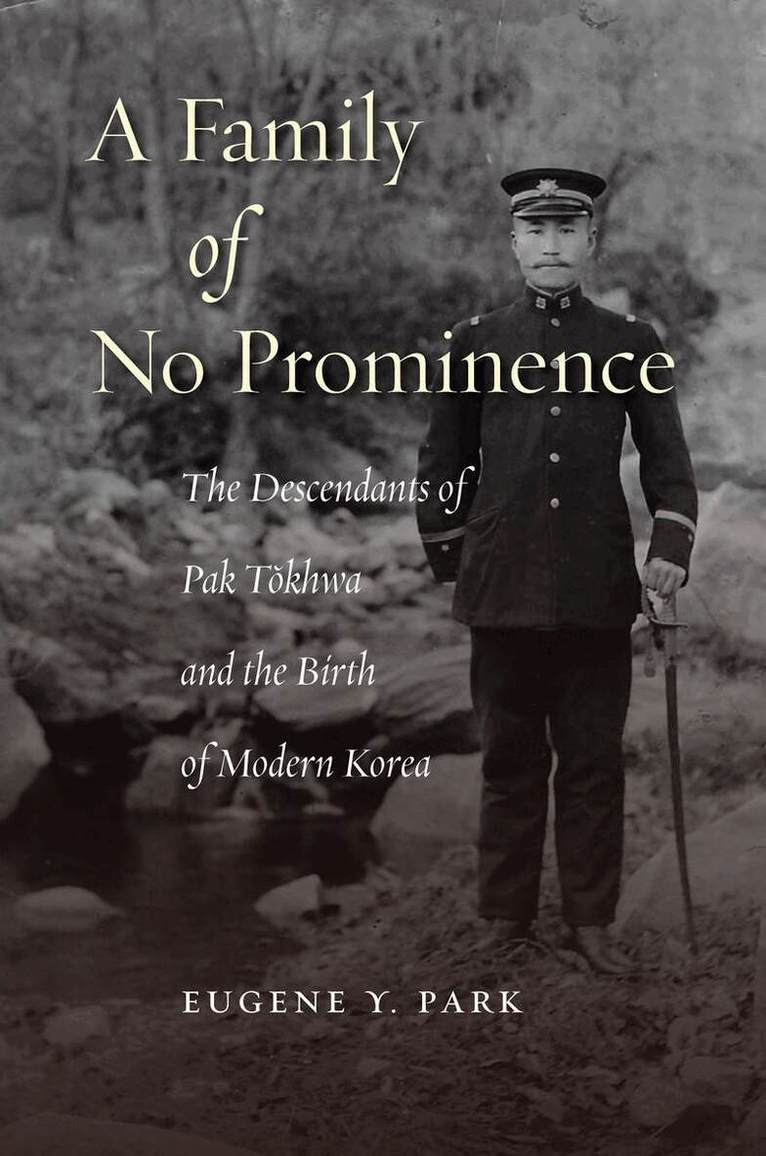
    Family of No Prominence

    The Descendants of Pak Tŏkhwa and the Birth of Modern Korea

    AvEugene Y. Park

    E-bok
    Engelska, 2014

    1 036 kr

    Läs direkt i Bokus Reader – eller ladda ned till din enhet

    Fler format och utgåvor

    Inbunden

    922 kr

    Beskrivning

    Koreans are known for their keen interest in genealogy and inherited ancestral status. Yet today's ordinary Korean would be hard pressed to explain the whereabouts of ancestors before the twentieth century. With A Family of No Prominence, Eugene Y. Park gives us a remarkable account of a nonelite family, that of Pak Tŏkhwa and his descendants (which includes the author). Spanning the early modern and modern eras over three centuries (1590–1945), this narrative of one family of the chungin class of people is a landmark achievement.What we do know of the chungin, or "middle people," of Korea largely comes from profiles of wealthy, influential men, frequently cited as collaborators with Japanese imperialists, who went on to constitute the post-1945 South Korean elite. This book highlights many rank-and-file chungin who, despite being better educated than most Koreans, struggled to survive. We follow Pak Tŏkhwa's descendants as they make inroads into politics, business, and culture. Yet many members' refusal to link their family histories and surnames to royal forebears, as most other Koreans did, sets them apart, and facilitates for readers a meaningful discussion of identity, modernity, colonialism, memory, and historical agency.

    Produktinformation

    • Utgivningsdatum:2014-04-02
    • Språk:Engelska
    • Antal sidor:264
    • Filformat:EPUB
    • Kopieringsskydd:LCP
    • ISBN:9780804790864
    • Förlag:Stanford University Press

    Utforska kategorier

    • Asiens historia inom Historia och arkeologi
    • Socialhistoria och kulturhistoria inom Historia och arkeologi
    • Historia: pesten, sjukdomar, svält inom Historia och arkeologi

    Mer om författaren

    Eugene Y. Park is the Korea Foundation Associate Professor of History and Director of the James Joo-Jin Kim Program in Korean Studies at the University of Pennsylvania. He is the author of Between Dreams and Reality: The Military Examination in Late Chosŏn Korea, 1600–1984 (2007).

    Recensioner i media

    "This book stands out for two reasons, though. Firstly, whereas previous studies have focused on more well-known chungin, this study with its path-breaking methodology is a both minute and long-term analysis of the social mobility of a 'family of no prominence.' Secondly, as argued by the author, this approach also facilitates a more variegated understanding of this social status group, in particular in the colonial period, when many prominent members of the chungin have been described as collaborators. This book is therefore indeed a valuable contribution to the field and should be read by all interested in the social status system of Chosn and its transition into modern Korea."—Anders Karlsoon, Pacific Affairs "[...] Park offers richly detailed stories and an empirically rigorous account of how this diverse group of chungin adapted to social and economic change . . . Park's book is profoundly thoughtful, beautifully written, and meticulously researched . . . Combining erudition and verve, A Family of No Prominence is an exciting, bold, and valuable text that will appeal to historians, anthropologists, sociologists, political scientists, as well as the general reader. There is no doubt this book is a substantial achievement."—Theodore Jun Yoo, American Historical Review, "A Family of No Prominence is particularly reflective about the nature of genealogical history as a genre and practice, thoughtfully addressing the accuracy and reliability of family genealogies as historical source materials. Park also considers his place in the genealogy of the Miryang Pak clan, ultimately contextualizing his own historiographical experience within a larger story about the profound modern transformations in the ways that many Korean families think about and narrate the stories of their past."—Carla Nappi, New Books in East Asian Studies "This book is a tour de force. Park draws from archives, oral history, and even his own memory to trace a family history across nearly half a millennium, offering a much-needed, eye-opening view of individuals in the late Chosŏn period."—James B. Lewis, University of Oxford "A great addition to our understanding of social structure in early modern Korea."—Michael Pettid, Binghamton University