• Fri frakt över 249 kr
  • •
  • Snabba leveranser
  • •
  • Billiga böcker
Kundservice

Du är på sajten för privatpersoner.

Företag, bibliotek eller offentlig verksamhet?

Du handlar på classic.bokus.com, där alla dina funktioner finns intakta.
Till classic.bokus.com
Bokus logotyp. Gå till startsidan.
  • Erbjudanden
  • Student
  • Topplistor
  • Barn & ungdom
  • Bokus Play
  • E-böcker
  • Ljudböcker
  • Pocketböcker
  • Spel och pussel

Pocketfynda! Hundratals böcker för 49 kr/st →

Sidfot

Mina sidor

    Hjälp

    • Kundservice
    • Vanliga frågor och svar
    • Frakt och leverans
    • Retur vid ångerrätt
    • Reklamera vara
    • Betalning
    • Köpvillkor
    • Allmänna villkor
    • Information om webbplatsens tillgänglighet

    Om Bokus

    • Om oss
    • Pressrum
    • För studenter
    • För företag
    • För bibliotek och offentlig verksamhet
    • För leverantörer
    • Hållbarhet

    Populärt

    • Aktuella erbjudanden
    • Presentkort
    • Studentlitteratur
    • Nya böcker
    • Topplistor
    • Signerade böcker
    • Engelska böcker

    Inspiration

    • Boktips
    • BookTok
    • Barnbokskaraktärer
    • Populära författare
    Logotyp för Bokus
    Följ oss på Facebook (extern länk)Följ oss på Instagram (extern länk)Följ oss på YouTube (extern länk)Följ oss på TikTok (extern länk)
    bokus @ CookiesAnpassa cookiesIntegritetspolicyKöpvillkor
    Till Citymail hemsida (extern länk)Till Budbee hemsida (extern länk)Till Postnord hemsida (extern länk)Till Schenker hemsida (extern länk)Till Early Bird hemsida (extern länk)Till Walleys hemsida (extern länk)
    1. Ekonomi och Ledarskap
    2. Företagsekonomi
    3. Redovisning och finansiering
    4. Finansiering

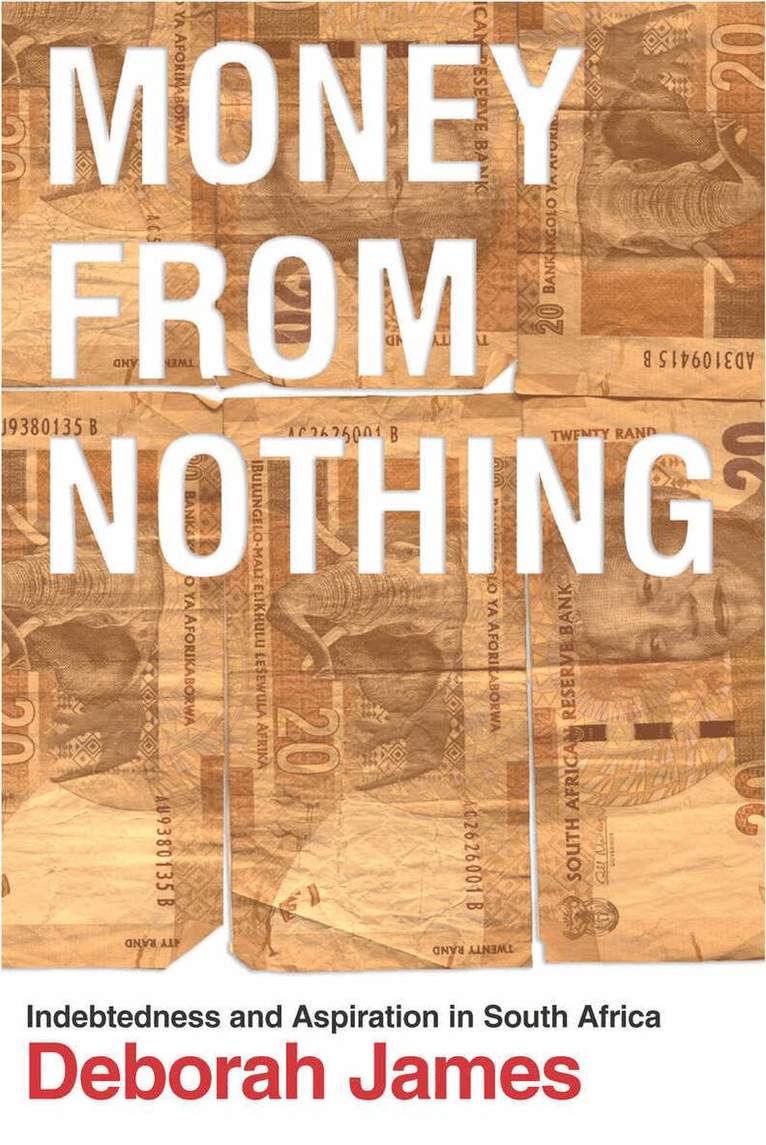
    Money from Nothing

    Indebtedness and Aspiration in South Africa

    AvDeborah James

    Häftad, Engelska, 2014

    320 kr

    Beställningsvara. Skickas inom 5-8 vardagar. Fri frakt över 249 kr.

    Fler format och utgåvor

    Inbunden

    1 314 kr

    E-bok

    386 kr

    Beskrivning

    Money from Nothing explores the dynamics surrounding South Africa's national project of financial inclusion—dubbed "banking the unbanked"—which aimed to extend credit to black South Africans as a critical aspect of broad-based economic enfranchisement. Through rich and captivating accounts, Deborah James reveals the varied ways in which middle- and working-class South Africans' access to credit is intimately bound up with identity, status-making, and aspirations of upward mobility. She draws out the deeply precarious nature of both the aspirations and the economic relations of debt which sustain her subjects, revealing the shadowy side of indebtedness and its potential to produce new forms of oppression and disenfranchisement in place of older ones. Money from Nothing uniquely captures the lived experience of indebtedness for those many millions who attempt to improve their positions (or merely sustain existing livelihoods) in emerging economies.

    Produktinformation

    • Utgivningsdatum:2014-12-04
    • Mått:152 x 229 x 19 mm
    • Vikt:408 g
    • Format:Häftad
    • Språk:Engelska
    • Antal sidor:304
    • Förlag:Stanford University Press
    • ISBN:9780804792677

    Utforska kategorier

    • Finansiering inom Ekonomi och Ledarskap
    • Ekonomiska system inom Ekonomi och Ledarskap
    • Etnicitet inom Samhälle och politik

    Mer om författaren

    Deborah James is Professor of Anthropology at the London School of Economics. Her previous books include Gaining Ground? "Rights" and "Property" in South African Land Reform (2007) and Songs of the Women Migrants (1999). She has written for the Mail and Guardian and has appeared in Laurie Taylor's Thinking Allowed, on the BBC.

    Recensioner i media

    "James' book is a powerful voice that contributes to the increasingly voluble conversation on consumption in a world that has moved beyond Marxist tenets of production, to the generation of income from loaning and borrowing cash based on speculation. How these new economies will affect the future of young nations such as South Africa remains to be discovered. Works such as Money for Nothing promise to shed light on this journey."—Isabel Scarborough, Allegra Laboratory "Partly perhaps because of its history, Africa (southern Africa in particular) has been a fertile region for work by social anthropologists on economic tops. This book is an especially good exemplar . . .The [book] is a highly readable account of the formal and informal institutions of credit and indebtedness - as well as the networks of obligation, reciprocity, and rejection - enlivened throughout by vignettes and analysis derived from her ethnographic fieldwork . . . Highly Recommended."—J.H. Cobbe, CHOICE "[A] new book by Deborah James [...] puts South Africa's debt industry under a microscope . . . James is an an anthropologist at the London School of Economics, so her book, Money From Nothing — Indebtedness and Aspirations in South Africa, present a more nuanced perspective than we're accustomed to getting from bank-employed economists or trade unionists."—Ann Crotty, The Times "Credit, and its flip side, debt, emerges as a fundamental lens to understand the workings of both social mobility and economic disenfranchisement, precariously inter-twined in the New South Africa. James makes complex theory accessible, combining it with page-turning ethnography—utterly captivating!"—Dinah Rajak, Senior Lecturer in Anthropology, University of Sussex and author of In Good Company: An Anatomy of Corporate Social Responsibility (Stanford University Press 2011) "South Africa, the most unequal society in the world, has recently launched a consumer credit boom. Property rights have been strengthened, but debtors lack the legal protection that is normal elsewhere. Deborah James's much needed ethnography reveals what it feels like to be on the receiving end of this boom for the banks."—Keith Hart, London School of Economics "Money from Nothing offers the most comprehensive, multi-angled study that we have of new initiatives in credit and debt in a poor population. It will be a key source for all who concern themselves with the debt nexus, as lived."—Jane I. Guyer, Johns Hopkins University "James' investigation of the 'credit-debt' revolution in South Africa offers readers a rich account of the new lending economy. At stake, she shows, is not merely the making of a new black middle class, but the remaking of the meaning of class itself in an era of 'neoliberal redistribution.' This path-breaking analysis is an example of economic anthropology at its very best."—Jean Comaroff, Harvard University "In closing, Money from Nothing is an outstanding ethnography which accounts for the relationship between micro and macro political-economy with implications for the everyday social life of money...James's meticulous ethnography and fine scholarship leaves readers with a sense of understanding of the South African economic context amidst the chaos of the dualities that exist in post-apartheid South Africa. I strongly recommend this scholarly work to those engaging in discourse on post-apartheid South Africa, political-economy and cultural-economy."—Hemali Joshi, Anthropology Southern Africa "James is attentive not only to the class dynamics of post-apartheid indebtedness but also to the competitive dynamics of status and distinction . . . [The book] emphasises the complex logics of her informants as they seek to navigate the frustrations of contemporary South Africa . . . Scholarship on the post-apartheid state, and intersection with private capital and its discourses, will benefit considerably from engagement with James's ethnography—as will economic anthropologists working in other parts of the world."—Kevin Donovan, Allegra Laboratory "Money from Nothing is an important contribution to the field of economic anthropology in post-apartheid South Africa, highlighting the everyday experiences of the black middle and aspiring middle class. Through the impressive use of ethnographic methods, James successfully complicates notions of credit versus indebtedness, formal and informal economies, the personal and the political."—Christi Kruger, H-Africa