• Fri frakt över 249 kr
  • •
  • Snabba leveranser
  • •
  • Billiga böcker
Kundservice

Du är på sajten för privatpersoner.

Företag, bibliotek eller offentlig verksamhet?

Du handlar på classic.bokus.com, där alla dina funktioner finns intakta.
Till classic.bokus.com
Bokus logotyp. Gå till startsidan.
  • Erbjudanden
  • Nyheter
  • Student
  • Topplistor
  • Barn & ungdom
  • Bokus Play
  • E-böcker
  • Pocketböcker
  • Spel & pussel

10% rabatt på allt med kod: NYSTART10 →

Sidfot

Mina sidor

    Hjälp

    • Kundservice
    • Vanliga frågor och svar
    • Frakt och leverans
    • Retur vid ångerrätt
    • Reklamera vara
    • Betalning
    • Köpvillkor
    • Allmänna villkor
    • Information om webbplatsens tillgänglighet

    Om Bokus

    • Om oss
    • Pressrum
    • För studenter
    • För företag
    • För bibliotek och offentlig verksamhet
    • För leverantörer
    • Hållbarhet

    Populärt

    • Aktuella erbjudanden
    • Presentkort
    • Studentlitteratur
    • Nya böcker
    • Topplistor
    • Signerade böcker
    • Engelska böcker

    Inspiration

    • Boktips
    • BookTok
    • Populära bokserier
    • Barnbokskaraktärer
    • Populära författare
    Logotyp för Bokus
    Följ oss på Facebook (extern länk)Följ oss på Instagram (extern länk)Följ oss på YouTube (extern länk)Följ oss på TikTok (extern länk)
    bokus @ CookiesAnpassa cookiesIntegritetspolicyKöpvillkor
    Till Citymail hemsida (extern länk)Till Budbee hemsida (extern länk)Till Postnord hemsida (extern länk)Till Schenker hemsida (extern länk)Till Early Bird hemsida (extern länk)Till Walleys hemsida (extern länk)
    1. Psykologi och pedagogik
    2. Pedagogik
    3. Utbildningsstrategier och utbildningspolitik

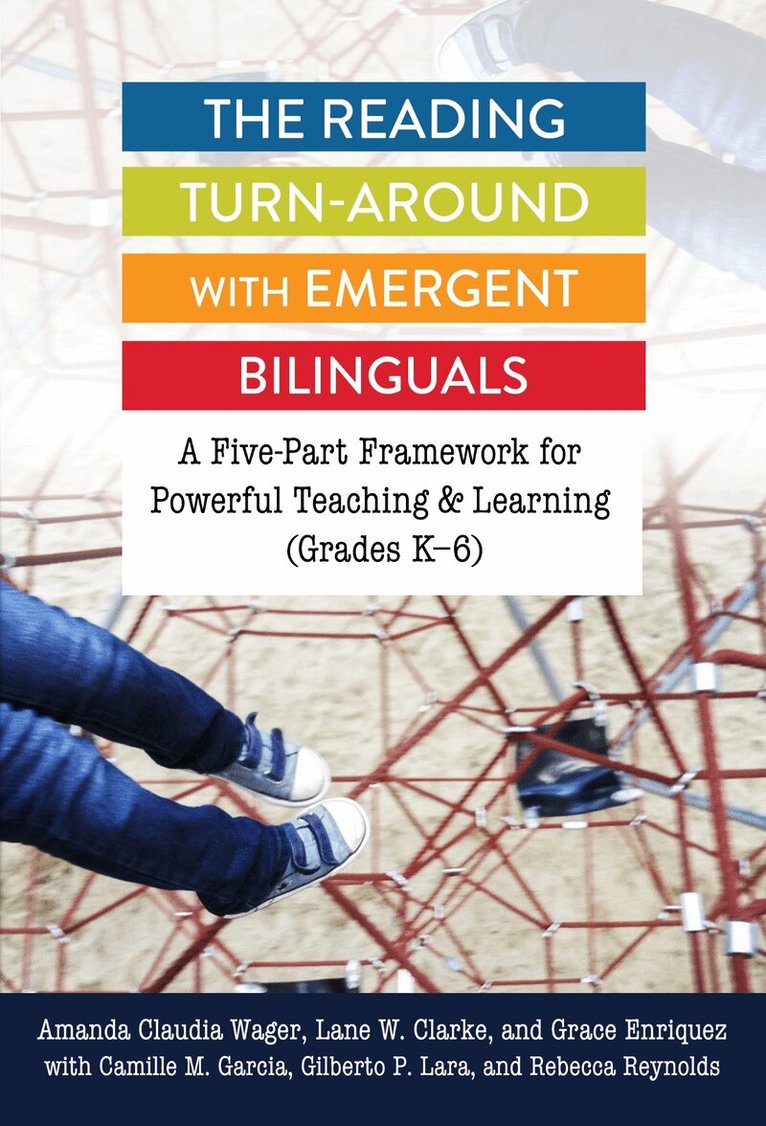
    Reading Turn-Around with Emergent Bilinguals

    A Five-Part Framework for Powerful Teaching and Learning (Grades K–6)

    AvAmanda Claudia Wager,Lane W. Clarke

    Häftad, Engelska, 2019

    Del i serien Language and Literacy Series

    552 kr

    Beställningsvara. Skickas inom 3-6 vardagar. Fri frakt över 249 kr.

    Beskrivning

    This practical resource will help K–6 practitioners grow their literacy practices while also meeting the needs of emergent bilingual learners. Building on the success of The Reading Turn-Around, this book adapts the five-part framework for reading instruction to the specific needs of emergent bilinguals. Designed for teachers who have not specialized in bilingual instruction, the authors provide an accessible introduction to differentiating instruction that focuses on utilizing students’ strengths, identities, and cultural backgrounds to foster effective literacy instruction. Chapters include classroom vignettes, teacher exercises, illustrations of powerful reading plans for the student and teacher, resources for culturally and linguistically diverse children’s literature, and tools to engage with students’ families and communities.

    Produktinformation

    • Utgivningsdatum:2019-11-08
    • Mått:152 x 226 x 15 mm
    • Vikt:250 g
    • Format:Häftad
    • Språk:Engelska
    • Serie:Language and Literacy Series
    • Antal sidor:176
    • Förlag:Teachers' College Press
    • Medarbetare:Ofelia García
    • ISBN:9780807763353

    Utforska kategorier

    • Utbildningsstrategier och utbildningspolitik inom Psykologi och pedagogik
    • Språkvetenskap och lingvistik inom Språk och ordböcker

    Mer om författaren

    Amanda Claudia Wager is Canada Research Chair in Community Research in Art, Culture, and Education at Vancouver Island University. Lane W. Clarke is an associate professor of education at the University of New England. Grace Enriquez is an associate professor at Lesley University and co-author of The Classroom Bookshelf, a blog published weekly by the School Library Journal. Lane and Grace coauthored (with Stephanie Jones) The Reading Turn-Around: A Five-Part Framework for Differentiated Instruction.

    Recensioner i media

    “Emergent bilinguals are the fastest growing population in our schools, and this important resource equips literacy educators with tools for providing equitable literacy experiences for emergent bilingual students. The authors have done an exceptional job of presenting their turn-around framework in a way that not only puts forth a vision for effective language and literacy development, but also presents a practical approach for applying the framework in today’s multilingual, multicultural classrooms.”- Jana Echevarria, professor emerita, California Statute University, Long Beach

    Innehållsförteckning

    • ContentsForeword Ofelia Garc xiAcknowledgments xiiiIntroduction 1Part I: Framework for Thinking about Emergent Bilingual Readers1.  A Five-Resource Framework  7Omar: Tuning Him In  7What Does It Mean to Engage in Turn-Around Pedagogies? 8Getting to Know Students Well: Connecting with Students and Families 10Five-Resource Framework Explained 11Four-Resource Framework Becomes Five 13Using the Framework in the Classroom 15Powerful Reading Plan (PRP) 162. Identity Matters 19Ada: Opening Windows to Her Identity 19What Is a Reading Identity? 20Mina: Feeling Discomfort as a Reader 22Getting to Know Students Well: Nurturing a Reciprocal Relationship 23What Teachers Can Do: Turn-Around Strategies to Support Positive Identities 24How the Turn-Around Impacted Mina 26Part II: Code-breaking3. Oracy Practices  31Vu: Searching for His Voice 31How Is Oracy a Code-Breaking Practice with Emergent Bilingual Learners? 32Thinking Critically about Classroom Practice: How Can You Strengthen Your Students’ Academic Language through Oracy?  32What are the Features of Oracy? 33How Can Teachers Promote Oracy as a  Foundation for Literacy Development?  35Getting to Know Students Well: Assessing Student’s Oracy Practices 35What Teachers Can Do: Turn-Around Strategies to Support Oracy Practices 36How the Turn-Around Impacted Vu 404. Code-Breaking Practices 42Natalia, Isabel, and Ana: Being Stuck on the Words 42What is Code-Breaking with Emergent Bilingual Learners? 42Thinking Critically about Classroom Practice: What Is Your Approach to Code-Breaking with EBs?  43Getting to Know Students Well: Studying Their Code-Breaking Practices 44What Teachers Can Do: Turn-Around Strategies to Support Code-Breaking Practices 46How the Turn-Around Impacted Natalia, Ana, and Isabel 50Part III: meaning-making5. Vocabulary 55Aziz: Struggling to Find the Right Word 55How is Vocabulary Tied to Language Learning and Meaning-Making?  56Thinking Critically About Classroom Practice:  What Words Should You Teach? 58Getting to Know Students Well:  Illuminating What Aziz Brings to the Table 59What Teachers Can Do:  Turn-Around Strategies to Promote Vocabulary Knowledge 63How the Turn-Around Impacted Aziz 676. Making Dis/Connections 69Adama: Becoming Engaged through Connections 69How Does Making Connections and Disconnections  Support Meaning-Making? 69Thinking Critically about Classroom Practice: How Can You Help Students  Make Meaningful Connections and Disconnections?  72Getting to Know Students Well: Tapping into Students’ Experiences  to Make Connections and Disconnections 73What Teachers Can Do: Turn-Around Strategies to Engage Connections and Disconnections to Texts 76How the Turn-Around Impacted Adama: Meaning-Making as Part of Growing Literacy Identity 77Part IV: Text-using7. Exploring and Utilizing Genre 83Consuelo: Questioning What She’s Reading 83Why is it Important to Know Genres? 84Thinking Critically about Classroom Practice:  How Do You Support Genre Study? 86Getting to Know Students Well:  Learning What They Already Do With Genres  87What Teachers Can Do:  Turn-Around Strategies to Promote Genre Exploration and Use 90How the Turn-Around Impacted Consuelo 968. Multimodal Tools 99Sébastien: Finding Poetry in Nature 99How Do We Support Text-Using in a Multimodal World? 99Thinking Critically about Classroom Practice:  What Is Your Approach to Multimodal Texts? 101Getting to Know Students Well:  Grasping How They Use Multimodal Texts 101What Teachers Can Do:  Turn-Around Strategies to Enhance Multimodal Text-Use 102How the Turn-Around Impacted Sébastien 106Part V: Text-Analyzing9. Deconstructing and Reconstructing Text 111Dalmiro: Accepting Representations  111What Is Text-Deconstruction? 112Thinking Critically about Classroom Practice:  What Is Text Reconstruction? 115What Teachers Can Do:   Turn-Around Strategies to Promote Text Analysis 116How the Turn-Around Impacted Mr. Dimas’s Class 12010. Reading for Social Justice 123Miguel: Responding with Hurt and Anger 123Why Read for Social Justice? 124Thinking Critically about Your Own Classroom:  What Role Does Social Justice Play in Your Reading Instruction? 125Getting to Know Students Well: Supporting Issues That Matter to Them  129What Teachers Can Do:  Turn-Around Strategies to Develop Reading for Social Justice 131How the Turn-Around Impacted Mr. Lara’s Students 133Appendix A: Children’s Literature Resources 136Appendix B: Blank Powerful Reading Plan (PRP) 138Children’s Literature References 139References 141Index 149About the Authors 161