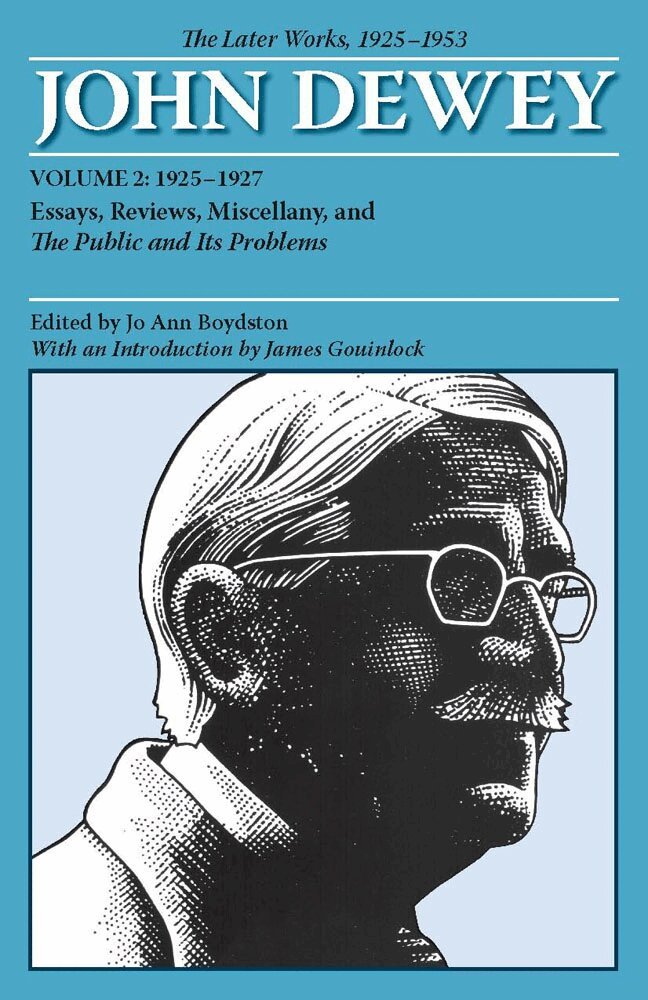
Häftad, Engelska, 2008
Later Works of John Dewey, Volume 2, 1925 - 1953
1925-1927, Essays, Reviews, Miscellany, and the Public and Its Problems
Av John Dewey, Jo Ann Boydston
Del i serien Later Works of John Dewey: 1925-1953
493 kr
Beställningsvara. Skickas inom 7-10 vardagar. Fri frakt över 249 kr.
Beskrivning
Produktinformation
- Utgivningsdatum: 2008-04-28
- Mått: 137 x 210 x 27 mm
- Vikt: 645 g
- Format: Häftad
- Språk: Engelska
- Serie: Later Works of John Dewey: 1925-1953
- Antal sidor: 494
- Förlag: Southern Illinois University Press
- ISBN: 9780809328123
Utforska kategorier
Mer om författaren
John Dewey (1859 1952) was an American philosopher, psychologist and educational reformer whose ideas have been influential in education and social reform. Dewey was an important early developer of the philosophy ofpragmatism and one of the founders of functional psychology. He was a major representative of progressive education and liberalism. In 1894 Dewey joined the newly founded University of Chicago(1894 1904) where he developed his belief in an empirically based theory of knowledge, becoming associated with the newly emerging Pragmatic philosophy. His time at the University of Chicago resulted in four essays collectively entitled Thought and its Subject-Matter, which was published with collected works from his colleagues at Chicago under the collective title Studies in Logical Theory(1903). During that time Dewey also initiated the University of Chicago Laboratory Schools, where he was able to actualize the pedagogical beliefs that provided material for his first major work on education, The School and Social Progress(1899).In 1899, Dewey was elected president of the American Psychological Association. From 1904 until his retirement in 1930 he was professor of philosophy at both Columbia University and Columbia University's Teachers College. In 1905 he became president of the American Philosophical Association. He was a longtime member of the American Federation of Teachers.
Betyg & recensioner
0 recensioner
Inga recensioner tillgängliga.