• Fri frakt över 249 kr
  • •
  • Snabba leveranser
  • •
  • Billiga böcker
Kundservice

Du är på sajten för privatpersoner.

Företag, bibliotek eller offentlig verksamhet?

Du handlar på classic.bokus.com, där alla dina funktioner finns intakta.
Till classic.bokus.com
Bokus logotyp. Gå till startsidan.
  • Erbjudanden
  • Nyheter
  • Student
  • Topplistor
  • Barn & ungdom
  • Bokus Play
  • E-böcker
  • Pocketböcker
  • Spel & pussel

10% rabatt på allt med kod NYSTART10 →

Sidfot

Mina sidor

    Hjälp

    • Kundservice
    • Vanliga frågor och svar
    • Frakt och leverans
    • Retur vid ångerrätt
    • Reklamera vara
    • Betalning
    • Köpvillkor
    • Allmänna villkor
    • Information om webbplatsens tillgänglighet

    Om Bokus

    • Om oss
    • Pressrum
    • För studenter
    • För företag
    • För bibliotek och offentlig verksamhet
    • För leverantörer
    • Hållbarhet

    Populärt

    • Aktuella erbjudanden
    • Presentkort
    • Studentlitteratur
    • Nya böcker
    • Topplistor
    • Signerade böcker
    • Engelska böcker

    Inspiration

    • Boktips
    • BookTok
    • Populära bokserier
    • Barnbokskaraktärer
    • Populära författare
    Logotyp för Bokus
    Följ oss på Facebook (extern länk)Följ oss på Instagram (extern länk)Följ oss på YouTube (extern länk)Följ oss på TikTok (extern länk)
    bokus @ CookiesAnpassa cookiesIntegritetspolicyKöpvillkor
    Till Citymail hemsida (extern länk)Till Budbee hemsida (extern länk)Till Postnord hemsida (extern länk)Till Schenker hemsida (extern länk)Till Early Bird hemsida (extern länk)Till Walleys hemsida (extern länk)
    1. Samhälle och politik
    2. Sociologi och antropologi
    3. Antropologi

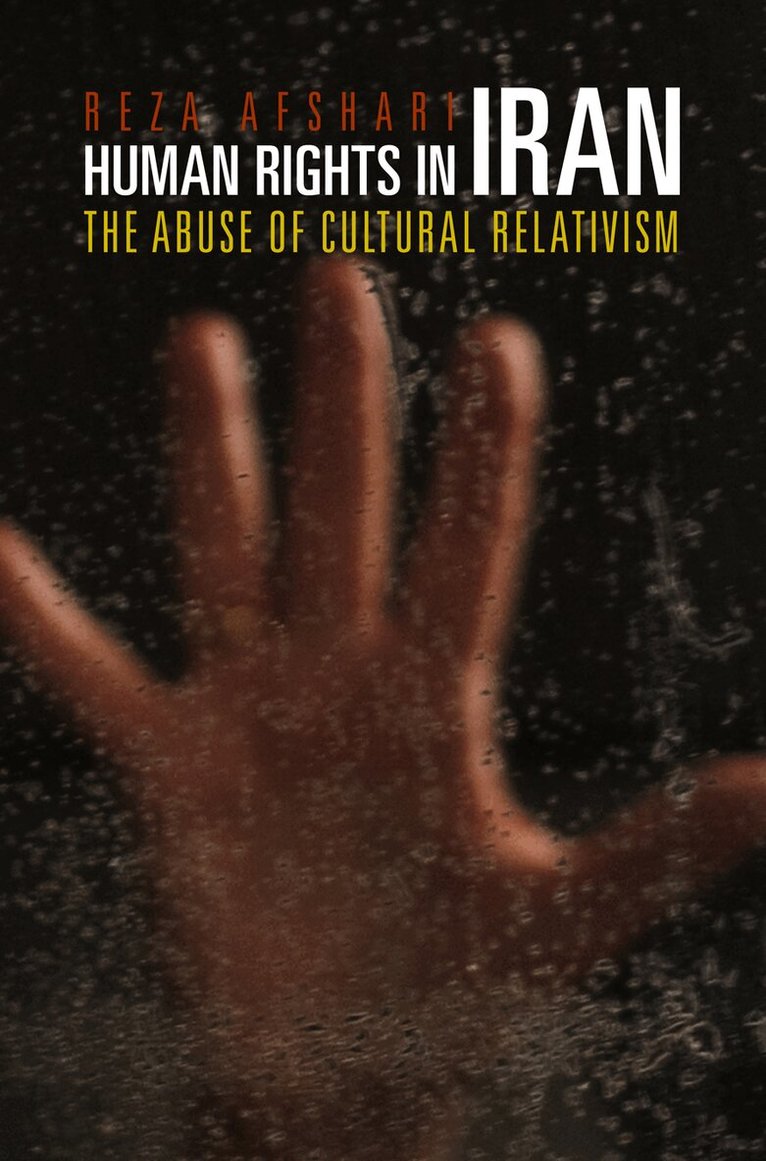
    Human Rights in Iran

    The Abuse of Cultural Relativism

    AvReza Afshari

    Häftad, Engelska, 2011

    Del i serien Pennsylvania Studies in Human Rights

    432 kr

    Beställningsvara. Skickas inom 5-8 vardagar. Fri frakt över 249 kr.

    Fler format och utgåvor

    E-bok

    632 kr

    Beskrivning

    Selected by Choice magazine as an Outstanding Academic TitleAre the principles set forth in the Universal Declaration of Human Rights truly universal? Or, as some have argued, are they derived exclusively from Western philosophic traditions and therefore irrelevant to many non-Western cultures? Should a state's claims to indigenous traditions, and not international covenants, determine the scope of rights granted to its citizens?In his strong defense of the Declaration, Reza Afshari contends that the moral vision embodied in this and other agreements is a proper response to the abuses of the modern state. Asserting that the most serious violations of human rights by state rulers are motivated by political and economic factors rather than the purported concern for cultural authenticity, Afshari examines one particular state that has claimed cultural exception to the universality of human rights, the Islamic Republic of Iran.In his revealing case study, Afshari investigates how Islamic culture and Iranian politics since the fall of the Shah have affected human rights policy in that state. He exposes the human rights violations committed by ruling clerics in Iran since the Revolution, showing that Iran has behaved remarkably like other authoritarian governments in its human rights abuses. For more than two decades, Iran has systematically jailed, tortured, and executed dissidents without due process of law and assassinated political opponents outside state borders. Furthermore, like other oppressive states, Iran has regularly denied and countered the charges made by United Nations human rights monitors, defending its acts as authentic cultural practices.Throughout his study, Afshari addresses Iran's claims of cultural relativism, a controversial thesis in the intense ongoing debate over the universality of human rights. In prison memoirs he uncovers the actual human rights abuses committed by the Islamic Republic and the sociopolitical conditions that cause or permit them. Finally, Afshari turns to little-read UN reports that reveal that the dynamics of power between UN human rights monitors and Iranian leaders have proven ineffective at enforcing human rights policy in Iran. Critically analyzing the state's responses, Afshari shows that the Islamic Republic, like other oppressive states, has regularly denied and countered the charges made by UN human rights monitors, and when denials were patently implausible, it defended its acts as authentic cultural practices. This defense is equally unconvincing, since it lacked domestic cultural consensus.

    Produktinformation

    • Utgivningsdatum:2011-02-17
    • Mått:155 x 235 x undefined mm
    • Vikt:739 g
    • Format:Häftad
    • Språk:Engelska
    • Serie:Pennsylvania Studies in Human Rights
    • Antal sidor:440
    • Förlag:University of Pennsylvania Press
    • ISBN:9780812221398

    Utforska kategorier

    • Antropologi inom Samhälle och politik
    • Politiskt förtryck inom Samhälle och politik

    Mer om författaren

    Reza Afshari is Professor of History and Human Rights at Pace University.

    Recensioner i media

    "The most exhaustive treatment of the record of human rights in postrevolutionary Iran. . . . This well-written and copiously researched volume will remain the standard work for years to come."-Choice"Using a vast array of government documents, newspapers, journals, memoirs of political prisoners, and reports issued by the Special Representative appointed by the United Nations Commission on Human Rights (UNCHR), Reza Afshari provides a rich, sensitive, and very sympathetic presentation of the experiences and voices of victims of human-rights violations in Iran."-International Journal of Middle East Studies"This book's powerful synthesis of data, narrative, and theory provides an important resource for those engaged in the study and furtherance of human rights."-Harvard Law Review

    Innehållsförteckning

    • A Note on TransliterationPrefaceHuman Rights DiscourseMain Sources Used in This BookUN ReportsPrison Memoirs and Their SignificanceThe Structure of the BookCh. 1. Islamic Cultural Relativism in Human Rights DiscourseCh. 2. The Shiite TheocracyCh. 3. The Right to LifeCh. 4. The Right to Freedom from TortureCh. 5. The Right to Liberty and Security of Person and to Freedom from Arbitrary ArrestCh. 6. The Right to a Fair TrialCh. 7. The Right to Freedom of Conscience, Thought, and ReligionCh. 8. Renounce Your Conscience or Face Death: The Prison Massacre of 1988Ch. 9. The Right to Freedom of Thought, Conscience, and Religion: Iranian Religious MinoritiesCh. 10. Official Responses to the United Nations: Countering the Charges of Violations in the 1980sCh. 11. Change of Tactics After Ayatollah Khomeini's DeathCh. 12. The Special Representative's Meetings with the Judiciary and Security OfficialsCh. 13. The Right to Freedom of Opinion, Expression, and the PressCh. 14. The Most Revealing Cases of Violations of the Right to Freedom of Expression and the PressCh. 15. The Rights to Participate in the Political Life of the Country and to Peaceful Assembly and AssociationCh. 16. The Rights of WomenCh. 17. UN Monitoring, 1984-2000: Mixed ResultsConclusionAfterwordNotesSelected BibliographyIndexAcknowledgments