• Fri frakt över 249 kr
  • •
  • Snabba leveranser
  • •
  • Billiga böcker
Kundservice

Du är på sajten för privatpersoner.

Företag, bibliotek eller offentlig verksamhet?

Du handlar på classic.bokus.com, där alla dina funktioner finns intakta.
Till classic.bokus.com
Bokus logotyp. Gå till startsidan.
  • Erbjudanden
  • Nyheter
  • Student
  • Topplistor
  • Barn & ungdom
  • Bokus Play
  • E-böcker
  • Pocketböcker
  • Spel & pussel

10% rabatt på allt med kod NYSTART10 →

Sidfot

Mina sidor

    Hjälp

    • Kundservice
    • Vanliga frågor och svar
    • Frakt och leverans
    • Retur vid ångerrätt
    • Reklamera vara
    • Betalning
    • Köpvillkor
    • Allmänna villkor
    • Information om webbplatsens tillgänglighet

    Om Bokus

    • Om oss
    • Pressrum
    • För studenter
    • För företag
    • För bibliotek och offentlig verksamhet
    • För leverantörer
    • Hållbarhet

    Populärt

    • Aktuella erbjudanden
    • Presentkort
    • Studentlitteratur
    • Nya böcker
    • Topplistor
    • Signerade böcker
    • Engelska böcker

    Inspiration

    • Boktips
    • BookTok
    • Populära bokserier
    • Barnbokskaraktärer
    • Populära författare
    Logotyp för Bokus
    Följ oss på Facebook (extern länk)Följ oss på Instagram (extern länk)Följ oss på YouTube (extern länk)Följ oss på TikTok (extern länk)
    bokus @ CookiesAnpassa cookiesIntegritetspolicyKöpvillkor
    Till Citymail hemsida (extern länk)Till Budbee hemsida (extern länk)Till Postnord hemsida (extern länk)Till Schenker hemsida (extern länk)Till Early Bird hemsida (extern länk)Till Walleys hemsida (extern länk)
    1. Samhälle och politik
    2. Sociologi och antropologi
    3. Sociologi

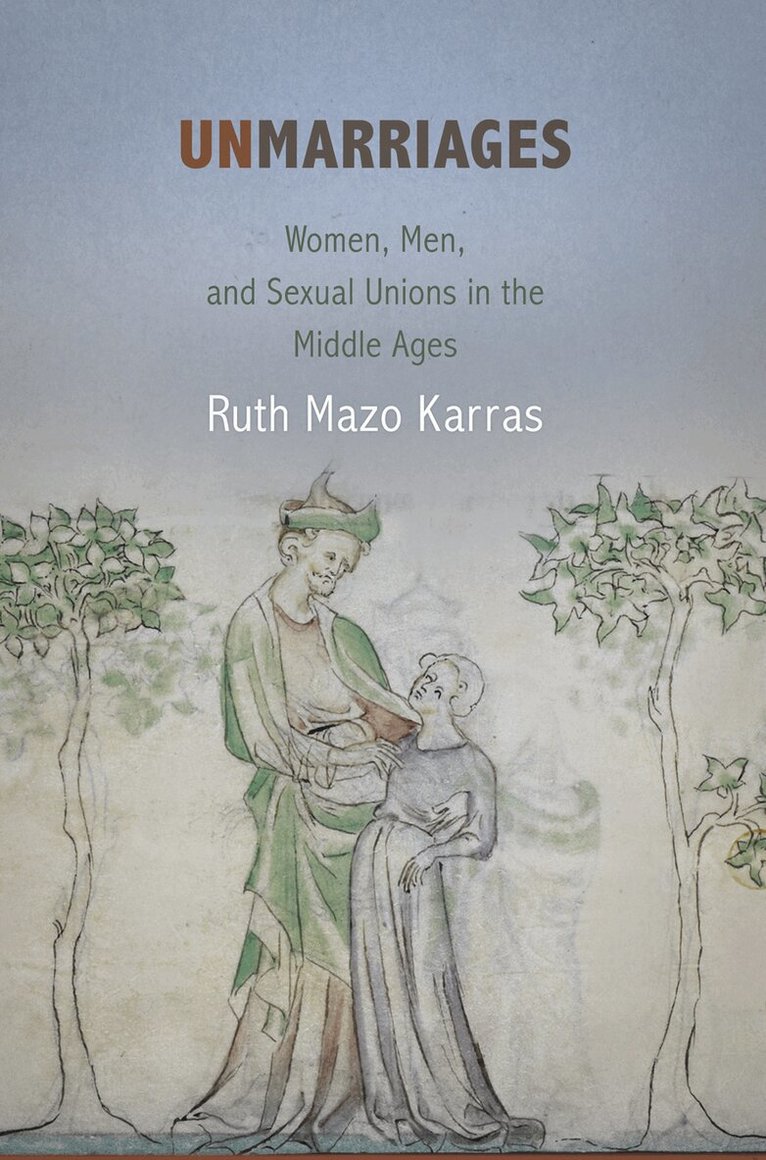
    Unmarriages

    Women, Men, and Sexual Unions in the Middle Ages

    AvRuth Mazo Karras

    Häftad, Engelska, 2014

    Del i serien Middle Ages Series

    393 kr

    Beställningsvara. Skickas inom 10-15 vardagar. Fri frakt över 249 kr.

    Fler format och utgåvor

    E-bok

    568 kr

    Beskrivning

    The Middle Ages are often viewed as a repository of tradition, yet what we think of as traditional marriage was far from the only available alternative to the single state in medieval Europe. Many people lived together in long-term, quasimarital heterosexual relationships, unable to marry if one was in holy orders or if the partners were of different religions. Social norms militated against the marriage of master to slave or between individuals of very different classes, or when the couple was so poor that they could not establish an independent household. Such unions, where the protections that medieval law furnished to wives (and their children) were absent, were fraught with danger for women in particular, but they also provided a degree of flexibility and demonstrate the adaptability of social customs in the face of slowly changing religious doctrine.Unmarriages draws on a wide range of sources from across Europe and the entire medieval millennium in order to investigate structures and relations that medieval authors and record keepers did not address directly, either in order to minimize them or because they were so common as not to be worth mentioning. Ruth Mazo Karras pays particular attention to the ways women and men experienced forms of opposite-sex union differently and to the implications for power relations between the genders. She treats legal and theological discussions that applied to all of Europe and presents a vivid series of case studies of how unions operated in specific circumstances to illustrate concretely what we can conclude, how far we can speculate, and what we can never know.

    Produktinformation

    • Utgivningsdatum:2014-03-06
    • Mått:152 x 229 x 19 mm
    • Vikt:424 g
    • Format:Häftad
    • Språk:Engelska
    • Serie:Middle Ages Series
    • Antal sidor:296
    • Förlag:University of Pennsylvania Press
    • ISBN:9780812222982
    • Utmärkelser:Winner of Awarded the 2012 Joan Kelly Memorial Prize in Women's History by the American Historical Association 2021

    Utforska kategorier

    • Sociologi inom Samhälle och politik
    • Socialhistoria och kulturhistoria inom Historia och arkeologi

    Mer om författaren

    Ruth Mazo Karras is Professor of History and Director of the Center for Medieval Studies at the University of Minnesota. She is the author of From Boys to Men: Formations of Masculinity in Late Medieval Europe and coeditor of Law and the Illicit in Medieval Europe, both available from the University of Pennsylvania Press.

    Recensioner i media

    "This fascinating study of heterosexual pair bonds over a thousand years of European history is a timely argument that while indissoluble monogamous marriage blessed by the Church was culturally dominant in the Middle Ages, it was by no means universally accepted or practised. Ruth Mazo Karras convincingly challenges the common assumption that pre-Christian practice involved clearly delineated categories of marriage in which the transfer of property determined validity."-TLS"Karras challenges the modern notion that "traditional marriage" was the only acceptable sexual relationship between a man and a woman, and the only alternative to a life of solitude in the Middle Ages. . . . An impressive and complex undertaking."-Law and History Review"A carefully researched exploration of the variety-and ambiguity-of marriages in the Middle Ages. Karras combines rigorous scholarship with fascinating personal stories that are often as engaging as a good novel."-Stephanie Coontz, author of Marriage, a History: From Obedience to Intimacy, or How Love Conquered Marriage"Ruth Mazo Karras turns the history of medieval marriage upside down and inside out, demonstrating the ubiquity in medieval Europe of male-female couples who did not marry. . . . In a sweep that stretches from ancient Rome to Reformation Europe and from Italy to Iceland, Karras has again produced a must-read for medievalists. Unmarriages cracks open the myth of 'traditional' marriage and reveals a truer, messier world of opposite-sex coupling. It should be assigned reading for all who bewail the decline of so-called traditional marriage values."-Judith M. Bennett, University of Southern California"This important book summons from the shadows those heterosexual relationships that were destined to become marginal. Through an admirably wide array of sources, Karras retrieves forgotten arrangements like concubinage, clerical marriage, bigamy, and clandestine unions, and in so doing reanimates the couples who shunned conventional marriage. This work is a must for historians of gender, sexuality, and marriage. It helps us understand not only what society would become, but what it might have been"-Dyan Elliott, Northwestern University"Imaginative and masterfully executed, Umarriages reveals the talent of an accomplished scholar. The book ranges boldly and widely across the Middle Ages and beyond, from slave marriages in the later Roman Empire to reimaginings of the marital bond in the era of the Reformation, and investigates sources as diverse as Icelandic sagas, canon law, and criminal registers from fifteenth-century Paris. Karras peppers her analysis with fascinating vignettes that personalize her findings, illuminating the impact of law, social custom, and religious thought on a sampling of women's lives: Augustine of Hippo's unnamed concubine, the Frankish aristocrat Waldrada, Abelard's HeloÏse, Katherine Swynford (an ancestor of King Henry VIII of England), and others less socially significant but no less compellingly studied. Her conclusions about changing definitions of the marital union, its imprecise boundaries, and the varied alternatives to it-cohabitation and concubinage, clerical marriages and marriages between individuals of different faiths, to name but a few-bear meaningful repercussions for modern debates about marriage."-Mathew Kuefler, San Diego State University

    Innehållsförteckning

    • Introduction: Marriage and Other UnionsChapter 1. The Church and the Regulation of Unions between Women and MenChapter 2. Unequal UnionsChapter 3. Priests and Their PartnersChapter 4. On the Margins of MarriageConclusionNotesBibliographyIndexAcknowledgments