• Fri frakt över 249 kr
  • •
  • Snabba leveranser
  • •
  • Billiga böcker
Kundservice

Du är på sajten för privatpersoner.

Företag, bibliotek eller offentlig verksamhet?

Du handlar på classic.bokus.com, där alla dina funktioner finns intakta.
Till classic.bokus.com
Bokus logotyp. Gå till startsidan.
  • Erbjudanden
  • Nyheter
  • Student
  • Topplistor
  • Barn & ungdom
  • Bokus Play
  • E-böcker
  • Pocketböcker
  • Spel & pussel

10% rabatt på allt med kod: NYSTART10 →

Sidfot

Mina sidor

    Hjälp

    • Kundservice
    • Vanliga frågor och svar
    • Frakt och leverans
    • Retur vid ångerrätt
    • Reklamera vara
    • Betalning
    • Köpvillkor
    • Allmänna villkor
    • Information om webbplatsens tillgänglighet

    Om Bokus

    • Om oss
    • Pressrum
    • För studenter
    • För företag
    • För bibliotek och offentlig verksamhet
    • För leverantörer
    • Hållbarhet

    Populärt

    • Aktuella erbjudanden
    • Presentkort
    • Studentlitteratur
    • Nya böcker
    • Topplistor
    • Signerade böcker
    • Engelska böcker

    Inspiration

    • Boktips
    • BookTok
    • Populära bokserier
    • Barnbokskaraktärer
    • Populära författare
    Logotyp för Bokus
    Följ oss på Facebook (extern länk)Följ oss på Instagram (extern länk)Följ oss på YouTube (extern länk)Följ oss på TikTok (extern länk)
    bokus @ CookiesAnpassa cookiesIntegritetspolicyKöpvillkor
    Till Citymail hemsida (extern länk)Till Budbee hemsida (extern länk)Till Postnord hemsida (extern länk)Till Schenker hemsida (extern länk)Till Early Bird hemsida (extern länk)Till Walleys hemsida (extern länk)
    1. Samhälle och politik
    2. Samhälle och kultur
    3. Kultur och medier
    4. Kulturvetenskap

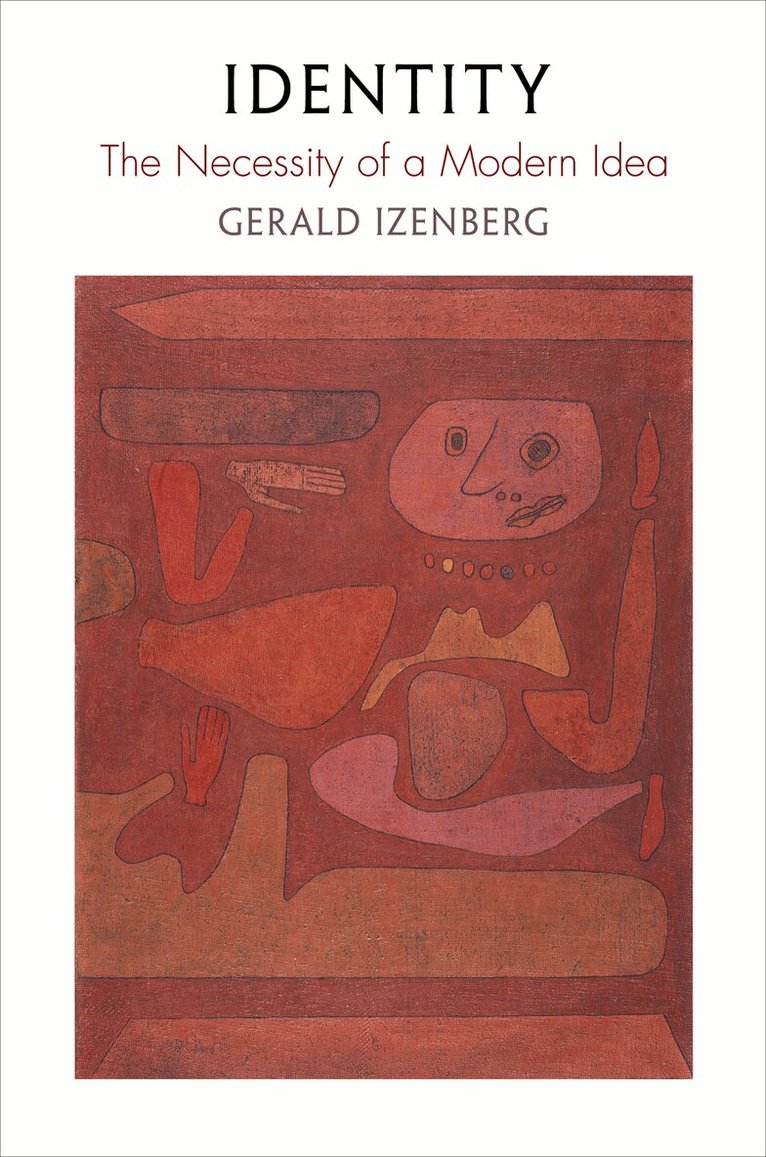
    Identity

    The Necessity of a Modern Idea

    AvGerald Izenberg

    Häftad, Engelska, 2019

    Del i serien Intellectual History of the Modern Age

    500 kr

    Beställningsvara. Skickas inom 5-8 vardagar. Fri frakt över 249 kr.

    Beskrivning

    Identity: The Necessity of a Modern Idea is the first comprehensive history of identity as the answer to the question, "who, or what, am I?" It covers the century from the end of World War I, when identity in this sense first became an issue for writers and philosophers, to 2010, when European political leaders declared multiculturalism a failure just as Canada, which pioneered it, was hailing its success. Along the way the book examines Erik Erikson's concepts of psychological identity and identity crisis, which made the word famous; the turn to collective identity and the rise of identity politics in Europe and America; varieties and theories of group identity; debates over accommodating collective identities within liberal democracy; the relationship between individual and group identity; the postmodern critique of identity as a concept; and the ways it nonetheless transformed the social sciences and altered our ideas of ethics.At the same time the book is an argument for the validity and indispensability of identity, properly understood. Identity was not a concept before the twentieth century because it was taken for granted. The slaughter of World War I undermined the honored identities of prewar Europe and, as a result, the idea of identity as something objective and stable was thrown into question at the same time that people began to sense that it was psychologically and socially necessary. We can't be at home in our bodies, act effectively in the world, or interact comfortably with others without a stable sense of who we are. Gerald Izenberg argues that, while it is a mistake to believe that our identities are givens that we passively discover about ourselves, decreed by God, destiny, or nature, our most important identities have an objective foundation in our existential situation as bodies, social beings, and creatures who aspire to meaning and transcendence, as well as in the legitimacy of our historical particularity.

    Produktinformation

    • Utgivningsdatum:2019-03-08
    • Mått:155 x 235 x 35 mm
    • Vikt:862 g
    • Format:Häftad
    • Språk:Engelska
    • Serie:Intellectual History of the Modern Age
    • Antal sidor:552
    • Förlag:University of Pennsylvania Press
    • ISBN:9780812224535

    Utforska kategorier

    • Kulturvetenskap inom Samhälle och politik
    • Socialhistoria och kulturhistoria inom Historia och arkeologi

    Mer om författaren

    Gerald Izenberg is Professor Emeritus of History, Washington University in St. Louis, and author of Impossible Individuality: Romanticism, Revolution, and the Origins of Modern Selfhood, 1787-1802.

    Recensioner i media

    "A remarkable work: intellectually challenging and engaging, wide-ranging and deeply thought-through, marked by incisive analysis and luminous insights. This distinguished and important book should be of interest to people in a wide variety of fields-intellectual history (European and American), cultural studies, sociology, psychology, and philosophy." (Jerrold Seigel, author of The Idea of the Self: Thought and Experience in Europe Since the Seventeenth Century) "There are not many people alive today who could produce a book like this one, which calls on a vast range of learning that can only be acquired over a lifetime of reading and scholarly reflection. It is sweeping in its scope and steeped in erudition. Gerald Izenberg is a masterful explicator of difficult authors and texts." (Darrin McMahon, author of Divine Fury: A History of Genius)

    Innehållsförteckning

    • Introduction. The New "Discourse" of IdentityChapter 1. Identity Becomes an Issue: European Literature Between the World WarsChapter 2. The Ontological Critique of Identity: Heidegger and SartreChapter 3. Identity Becomes a Word: Erik Erikson and Psychological IdentityChapter 4. Social Identity and the Birth of Identity Politics, 1945-1970Chapter 5. Collective Identities and Their Agendas, 1970-2000Chapter 6. The Practical Politics of National and Multicultural Identity: Germany, France, Canada, and the United States, 1970-2010Chapter 7. The Problem of Collective Identity in Liberal DemocracyChapter 8. The Contradictions of Postmodern IdentityChapter 9. Identity Transforms the Social SciencesChapter 10. The Kinds of Kinds: Explaining Collective IdentityChapter 11. Identity as an Ethical IssueConclusion. The Necessity of IdentityNotesBibliographyIndexAcknowledgments