• Fri frakt över 249 kr
  • •
  • Snabba leveranser
  • •
  • Billiga böcker
Kundservice

Du är på sajten för privatpersoner.

Företag, bibliotek eller offentlig verksamhet?

Du handlar på classic.bokus.com, där alla dina funktioner finns intakta.
Till classic.bokus.com
Bokus logotyp. Gå till startsidan.
  • Erbjudanden
  • Student
  • Topplistor
  • Barn & ungdom
  • Bokus Play
  • E-böcker
  • Ljudböcker
  • Pocketböcker
  • Spel och pussel

Pocketfynda! Hundratals böcker för 49 kr/st →

Sidfot

Mina sidor

    Hjälp

    • Kundservice
    • Vanliga frågor och svar
    • Frakt och leverans
    • Retur vid ångerrätt
    • Reklamera vara
    • Betalning
    • Köpvillkor
    • Allmänna villkor
    • Information om webbplatsens tillgänglighet

    Om Bokus

    • Om oss
    • Pressrum
    • För studenter
    • För företag
    • För bibliotek och offentlig verksamhet
    • För leverantörer
    • Hållbarhet

    Populärt

    • Aktuella erbjudanden
    • Presentkort
    • Studentlitteratur
    • Nya böcker
    • Topplistor
    • Signerade böcker
    • Engelska böcker

    Inspiration

    • Boktips
    • BookTok
    • Barnbokskaraktärer
    • Populära författare
    Logotyp för Bokus
    Följ oss på Facebook (extern länk)Följ oss på Instagram (extern länk)Följ oss på YouTube (extern länk)Följ oss på TikTok (extern länk)
    bokus @ CookiesAnpassa cookiesIntegritetspolicyKöpvillkor
    Till Citymail hemsida (extern länk)Till Budbee hemsida (extern länk)Till Postnord hemsida (extern länk)Till Schenker hemsida (extern länk)Till Early Bird hemsida (extern länk)Till Walleys hemsida (extern länk)
    1. Samhälle och politik
    2. Samhälle och kultur
    3. Sociala grupper och identitet

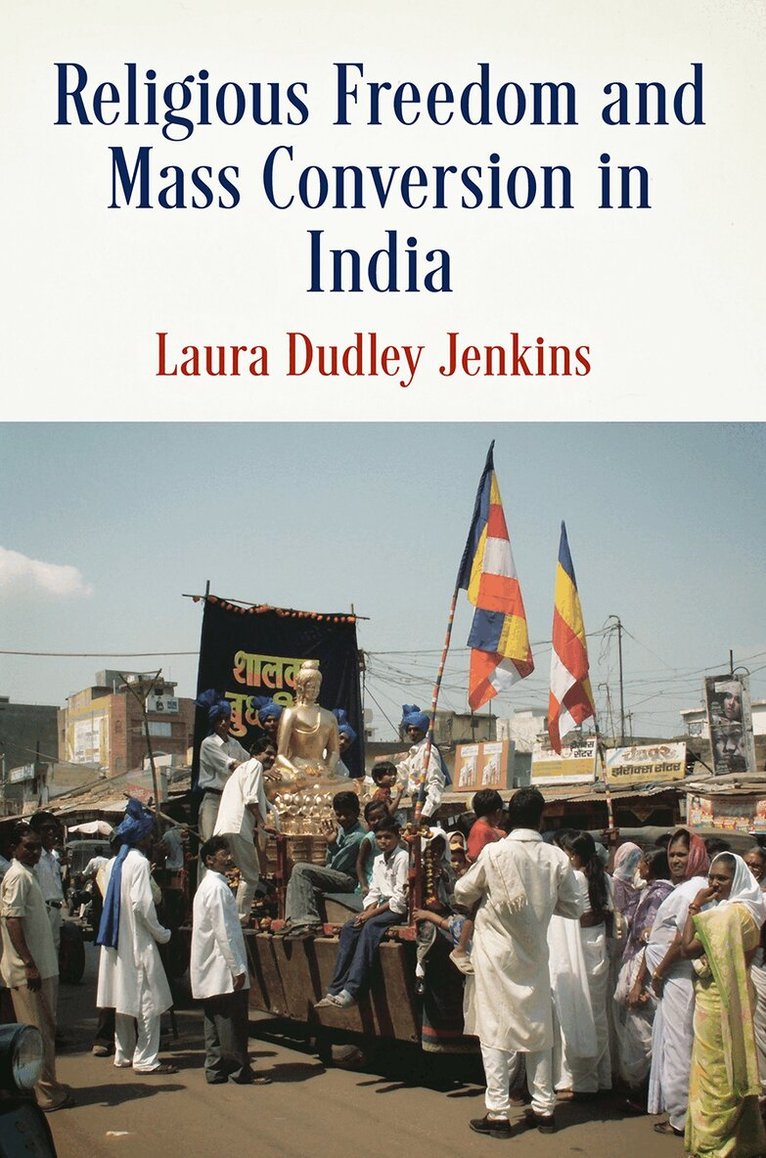
    Religious Freedom and Mass Conversion in India

    AvLaura Dudley Jenkins

    E-bok
    Engelska, 2019

    Del i serien Pennsylvania Studies in Human Rights

    1 499 kr

    Läs direkt i Bokus Reader – eller ladda ned till din enhet

    Fler format och utgåvor

    Inbunden

    1 057 kr

    Beskrivning

    Hinduism is the largest religion in India, encompassing roughly 80 percent of the population, while 14 percent of the population practices Islam and the remaining 6 percent adheres to other religions. The right to "freely profess, practice, and propagate religion" in India's constitution is one of the most comprehensive articulations of the right to religious freedom. Yet from the late colonial era to the present, mass conversions to minority religions have inflamed majority-minority relations in India and complicated the exercise of this right.In Religious Freedom and Mass Conversion in India, Laura Dudley Jenkins examines three mass conversion movements in India: among Christians in the 1930s, Dalit Buddhists in the 1950s, and Mizo Jews in the 2000s. Critics of these movements claimed mass converts were victims of overzealous proselytizers promising material benefits, but defenders insisted the converts were individuals choosing to convert for spiritual reasons. Jenkins traces the origins of these opposing arguments to the 1930s and 1940s, when emerging human rights frameworks and early social scientific studies of religion posited an ideal convert: an individual making a purely spiritual choice. However, she observes that India's mass conversions did not adhere to this model and therefore sparked scrutiny of mass converts' individual agency and spiritual sincerity.Jenkins demonstrates that the preoccupation with converts' agency and sincerity has resulted in significant challenges to religious freedom. One is the proliferation of legislation limiting induced conversions. Another is the restriction of affirmative action rights of low caste people who choose to practice Islam or Christianity. Last, incendiary rumors are intentionally spread of women being converted to Islam via seduction. Religious Freedom and Mass Conversion in India illuminates the ways in which these tactics immobilize potential converts, reinforce damaging assumptions about women, lower castes, and religious minorities, and continue to restrict religious freedom in India today.

    Produktinformation

    • Utgivningsdatum:2019-04-11
    • Språk:Engelska
    • Antal sidor:320
    • Filformat:EPUB
    • Kopieringsskydd:LCP
    • ISBN:9780812296006
    • Förlag:University of Pennsylvania Press
    • Serie:Pennsylvania Studies in Human Rights

    Utforska kategorier

    • Sociala grupper och identitet inom Samhälle och politik
    • Politiskt förtryck inom Samhälle och politik

    Mer om författaren

    Laura Dudley Jenkins is Professor of Political Science and a faculty affiliate of the Women's, Gender, and Sexuality Studies Department and Asian Studies Program at the University of Cincinnati.

    Recensioner i media

    "The book is analytically insightful and methodologically innovative and provides a vital contribution to understanding the relationship between religion, the state, and citizenship rights in India." (Asian Ethnology) "The primary argument of Religious Freedom and Mass Conversion in India is absolutely clear: The prototypical and normative convert constructed in international human rights discourse from the 1930s onward-one characterized primarily by agency and sincerity-is inadequate both theoretically and politically . . . Jenkins approaches the topic innovatively, intentionally juxtaposing to the normative narrative of the ideal agential and sincere convert counternarratives that call this normative narrative into question." (Journal of Church and State) "Religious Freedom and Mass Conversion in India is unparalleled in its reach. It explores mass conversion over time-from the late colonial period to the modern era; across communities-among the lower castes, Hindus, Buddhists, Jews, and women; and in several different regions of India. It is a much needed contribution to scholarship on India and to comparative studies of religion, politics, and constitutional law." (Amrita Basu, Amherst College)

    Innehållsförteckning

    • Introduction: Religious Freedom and the Right to ConvertPART I. MOBILITYChapter 1. Mass Movement Christians: Religious and Social MobilityChapter 2. Ambedkarite Buddhists: Religious and Political MobilityChapter 3. Mizo Jews: Religious and Spatial MobilityPART II. IMMOBILITYChapter 4. Prosecution: Anticonversion LegislationChapter 5. Prevention: Losing Affirmative ActionChapter 6. Persecution: The Love Jihad RumorConclusion. A More Equal FreedomNotesBibliographyIndexAcknowledgments