• Fri frakt över 249 kr
  • •
  • Snabba leveranser
  • •
  • Billiga böcker
Kundservice

Du är på sajten för privatpersoner.

Företag, bibliotek eller offentlig verksamhet?

Du handlar på classic.bokus.com, där alla dina funktioner finns intakta.
Till classic.bokus.com
Bokus logotyp. Gå till startsidan.
  • Erbjudanden
  • Nyheter
  • Student
  • Topplistor
  • Barn & ungdom
  • Bokus Play
  • E-böcker
  • Pocketböcker
  • Spel & pussel

10% studentrabatt med kod TERM26

Sidfot

Mina sidor

    Hjälp

    • Kundservice
    • Vanliga frågor och svar
    • Frakt och leverans
    • Retur vid ångerrätt
    • Reklamera vara
    • Betalning
    • Köpvillkor
    • Allmänna villkor
    • Information om webbplatsens tillgänglighet

    Om Bokus

    • Om oss
    • Pressrum
    • För studenter
    • För företag
    • För bibliotek och offentlig verksamhet
    • För leverantörer
    • Hållbarhet

    Populärt

    • Aktuella erbjudanden
    • Presentkort
    • Studentlitteratur
    • Nya böcker
    • Topplistor
    • Signerade böcker
    • Engelska böcker

    Inspiration

    • Boktips
    • BookTok
    • Populära bokserier
    • Barnbokskaraktärer
    • Populära författare
    Logotyp för Bokus
    Följ oss på Facebook (extern länk)Följ oss på Instagram (extern länk)Följ oss på YouTube (extern länk)Följ oss på TikTok (extern länk)
    bokus @ CookiesAnpassa cookiesIntegritetspolicyKöpvillkor
    Till Citymail hemsida (extern länk)Till Budbee hemsida (extern länk)Till Postnord hemsida (extern länk)Till Schenker hemsida (extern länk)Till Early Bird hemsida (extern länk)Till Walleys hemsida (extern länk)
    1. Samhälle och politik
    2. Samhälle och kultur
    3. Sociala grupper och identitet
    4. Genusvetenskap

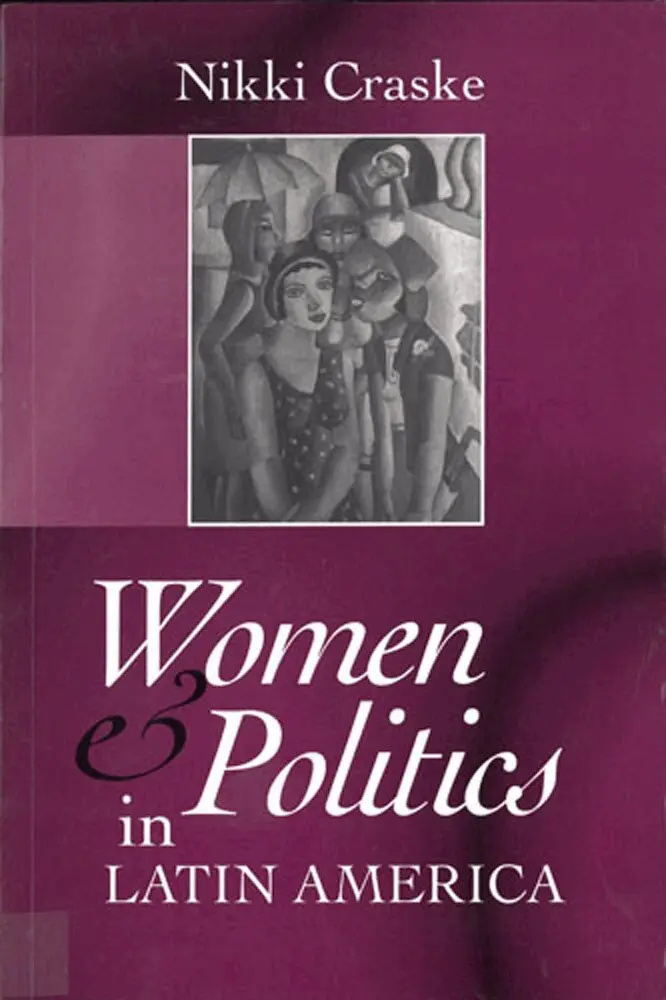
    Women and Politics in Latin America

    AvNikki Craske

    Häftad, Engelska, 1999

    465 kr

    Beställningsvara. Skickas inom 10-15 vardagar. Fri frakt över 249 kr.

    Fler format och utgåvor

    Inbunden

    743 kr

    Häftad

    267 kr

    E-bok

    300 kr

    Beskrivning

    This book provides a comprehensive view of women's political participation in Latin America. Focusing on the latter half of the twentieth century, it examines five different arenas of action and debate: political institutions, workplaces, social movements, revolutions, and feminisms. Nikki Craske explores the ways in which women have become more effective in the public arena as the context of politics has altered.Craske demonstrates how gender relations shape political institutions and practices while simultaneously being shaped by them. She examines the moments when women's action has challenged received ideas, and had a significant impact on the political life of Latin American nations. Women remain heavily underrepresented in political lie, despite their important role in popular movements against authoritarianism, Craske states, and posits that the economy is a substantial constraint on women's political participation. This powerful book analyzes the gains made since the 1950s while scrutinizing the challenges and difficulties which still constrain women's political participation.

    Produktinformation

    • Utgivningsdatum:1999-03-01
    • Mått:152 x 229 x 18 mm
    • Vikt:399 g
    • Format:Häftad
    • Språk:Engelska
    • Antal sidor:272
    • Förlag:Rutgers University Press
    • ISBN:9780813526935

    Utforska kategorier

    • Genusvetenskap inom Samhälle och politik
    • Etnicitet inom Samhälle och politik
    • Socialhistoria och kulturhistoria inom Historia och arkeologi

    Mer om författaren

    Nikki Craske is a lecturer in politics at Queen's University of Belfast. She has coedited Mexico and the North American Free Trade Agreement: Who Will Benefit? and Dismantling the Mexican State.

    Recensioner i media

    CraskeÆs aim, at root, is to re-evaluate the relation between women and politics in a period of apparent decline and disenchantment. . . . The failure of womenÆs movements to prevent demobilization or to ensure many lasting gains . . . demands, Craske suggests, a re-assessment of the strategies originally employed to mobilize political action. Perhaps its clearest revelation is symptomatically at the point that Craske attempts to define feminism. . . CraskeÆs book is poised facing this dilemma between seeing feminism as æcritiqueÆ of current theories on the one hand or æenhance[ment]Æ building on and strengthening those theories, on the other. (Bulletin of Hispanic Studies) CraskeÆs book provides a comprehensive overview of the scholarship on womenÆs participation, including some of her own original research on Argentina, Chile, and Mexico. . . Craske finds a key aspect of womenÆs political participation in the frequent use of motherhood as a mobilizing point. Be it in human rights groups, neighborhood organizations, revolutionary movements, or trade unions, Latin American women frequently see their activism as rooted in their roles as mothers. . . . Appropriate not only for seasoned scholars . . . but also for graduate students and advanced undergraduates. (Journal of Interamerican Studies and World Affairs) This well written, thorough, and accessible book presents a fine, updated overview of the challenges facing women in Latin America. - Orin Starn (Author of Nighwatch: The Politics of Protest in the Andes) In her wide-ranging survey, Women and Politics in Latin America, Nikki Craske has combined a wealth of empirical detail with theoretical insight, to produce a book which will be essential reading on the subject.  - Maxine Molyneaux (Institute of Latin American Studies, University of London) Craske defines 'politics' in a broad and inclusive sense and shows that, in spite of considerable difficulties and obstacles, there have been important shifts recently in gender relations and the nature of politics and political practice in Latin America.  - Tessa Cubitt (Academic Development Centre, University of Portsmouth)

    Innehållsförteckning

    • List of TablesAcknowledgements      Acronyms        ArgumentWhy women?Political exclusionThe shifting terrainMothers, women, citizens: tensionsOrganization of the bookConclusionsWomen and Political Identity in Latin AmericaIntroductionConstructing gender relationsMachismo and marianismoConceptualizing women's political participationGender interestsDeveloping citizenshipConclusionsSetting the SceneIntroductionLatin American political systems in the twentieth centuryEconomic developmentsSocial structuresLatin American women: a glance at the statisticsConclusionsFormal Political Representation: Governments, Parties and BureaucraciesIntroductionThe struggle for formal citizenshipWomen's legislative representation and office holdingGovernment impact on women's political participationPolitical partiesBureaucraciesConclusionsThe Impact of Work on Political IdentityIntroductionChanging work experiencesCollective action in the workplaceThe political implications of workConclusionsSocial Movements: Consumer and Human Rights OrganizationsIntroductionThe rise of social movementsThe development of consumer organizationsHuman rights organizations: the originsStructures and organizationFacilitating organizations: professionalization of protestPolitical implications of social movementsConstraintsConclusionsRevolutionary Empowerment?IntroductionThe armed strugglesThe revolutionary statesCubaNicaraguaCounter-revolutionConclusions   Feminisms in Latin AmericaIntroductionFeminist or feminine?The roots of feminism in Latin AmericaSecond-wave feminismContemporary feminism and the Regional Feminist MeetingsState feminismConclusions: challenges to feminism in the 1990sConclusions: Politics: an Ambivalent ExperienceChanging gender relationsPolitical motherhoodRedefining politicsGender interestsThe 1990s and beyondNotes      ReferencesIndex