• Fri frakt över 249 kr
  • •
  • Snabba leveranser
  • •
  • Billiga böcker
Kundservice

Du är på sajten för privatpersoner.

Företag, bibliotek eller offentlig verksamhet?

Du handlar på classic.bokus.com, där alla dina funktioner finns intakta.
Till classic.bokus.com
Bokus logotyp. Gå till startsidan.
  • Erbjudanden
  • Nyheter
  • Student
  • Topplistor
  • Barn & ungdom
  • Bokus Play
  • E-böcker
  • Pocketböcker
  • Spel & pussel

Må bättre, för mindre! Upp till 50% rabatt på hälsoböcker

Sidfot

Mina sidor

    Hjälp

    • Kundservice
    • Vanliga frågor och svar
    • Frakt och leverans
    • Retur vid ångerrätt
    • Reklamera vara
    • Betalning
    • Köpvillkor
    • Allmänna villkor
    • Information om webbplatsens tillgänglighet

    Om Bokus

    • Om oss
    • Pressrum
    • För studenter
    • För företag
    • För bibliotek och offentlig verksamhet
    • För leverantörer
    • Hållbarhet

    Populärt

    • Aktuella erbjudanden
    • Presentkort
    • Studentlitteratur
    • Nya böcker
    • Topplistor
    • Signerade böcker
    • Engelska böcker

    Inspiration

    • Boktips
    • BookTok
    • Populära bokserier
    • Barnbokskaraktärer
    • Populära författare
    Logotyp för Bokus
    Följ oss på Facebook (extern länk)Följ oss på Instagram (extern länk)Följ oss på YouTube (extern länk)Följ oss på TikTok (extern länk)
    bokus @ CookiesAnpassa cookiesIntegritetspolicyKöpvillkor
    Till Citymail hemsida (extern länk)Till Budbee hemsida (extern länk)Till Postnord hemsida (extern länk)Till Schenker hemsida (extern länk)Till Early Bird hemsida (extern länk)Till Walleys hemsida (extern länk)
    1. Filosofi och religion
    2. Religion och tro
    3. Kristendom
    4. Biblar

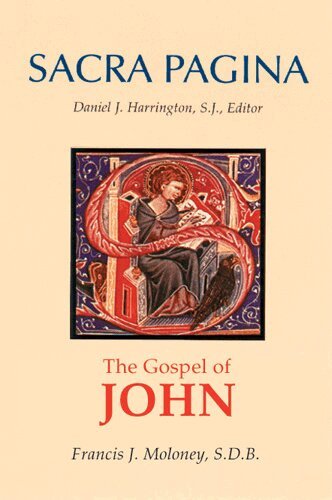
    Sacra Pagina: The Gospel of John

    AvFrancis J. Moloney SDB,Daniel J Harrington

    Häftad, Engelska, 2005

    Del 4 i serien Sacra Pagina

    511 kr

    Beställningsvara. Skickas inom 3-6 vardagar. Fri frakt över 249 kr.

    Beskrivning

    No other book of the New Testament has attracted as much attention from commentators as the Fourth Gospel. It has stirred minds, hearts, and imaginations from Christianity's earliest days. In The Gospel of John, Francis Moloney unfolds the identifiable point of view" of this unique Gospel narrative and offers readers, heirs to its rich and widely varied interpretative traditions, relevance for their lives today.The Gospel of John's significance for Christianity has been obvious from the time of Irenaeus. It was also fundamental in the emergence of Christian theology, especially in the trinitarian and christological debates that produced the great ecumenical Councils, from Nicaea to Chalcedon.What sets this commentary on the Fourth Gospel apart from others is Moloney's particular attention to the narrative design of the Gospel story. He traces the impact the Johannine form of the Jesus story has made on readers and explicates the way in which the author has told the story of Jesus. Through this he demonstrates how the Gospel story articulates a coherent theology, christology, and ecclesiology.

    Produktinformation

    • Utgivningsdatum:2005-10-01
    • Mått:152 x 229 x 32 mm
    • Vikt:850 g
    • Format:Häftad
    • Språk:Engelska
    • Serie:Sacra Pagina
    • Antal sidor:632
    • Förlag:Liturgical Press
    • ISBN:9780814659670

    Utforska kategorier

    • Biblar inom Filosofi och religion

    Mer om författaren

    Francis J. Moloney, SDB (1940 – 2025) studied at the Salesian Pontifical University, at the Pontifical Biblical Institute, both in Rome, and at the University of Oxford. He was foundation professor of theology at Australian Catholic University, dean and professor of New Testament at the Catholic University of America, a member of the Order of Australia, and a fellow of the Australian Academy of the Humanities. He also served as senior professorial fellow at the Catholic Theological College in Melbourne, Australia, a part of the ecumenical University of Divinity. Moloney is the author of more than forty books, including Reading Revelation at Easter Time; Life of Jesus in Icons: From the Bible of Tbilisi; and The Gospel of John in the Sacra Pagina series published by Liturgical Press.

    Recensioner i media

    The manner in which Moloney contains the size yet incorporates major past and contemporary scholarship makes the book a valuable contribution to Johannine studies. His ability to draw the reader into the narrative is exceptional.The Australasian Catholic Record

    Innehållsförteckning

    • CONTENTSEditor’s Preface   ixPreface   xiNote on References and the Translation   xvAbbreviations   xviiIntroductionA. The Johannine Literature   1B. The Author   6C. “The Jews” in the Fourth Gospel   9D. Approaches to the Fourth Gospel   11E. The Approach Adopted in this Commentary   13F. The Theological Contribution and Contemporary Significance of the Fourth Gospel   20G. The Structure of the Gospel   23General Bibliography   25Translation, Interpretation, NotesI. THE PROLOGUE (1:1-18)   33II. THE BOOK OF SIGNS (1:19–12:50)   48A. The First Days of Jesus (1:19-51)   48B. From Cana to Cana (2:1–4:54)   63Introduction   63The Response to Jesus Within Israel (2:1–3:36)   65i. The First Miracle at Cana: Faith in the Word of Jesus (2:1-12)   65  ii. Jesus and “the Jews” (2:13-22)   75iii. The Narrator’s Comment (2:23-25)   84iv. Jesus and Nicodemus (3:1-21)   88v. Jesus and John the Baptist (3:22-36)   103The Response to Jesus Outside Israel (4:1-54)   113vi. Jesus and the Samaritan Woman: I (4:1-15)   114vii. Jesus and the Samaritan Woman: II (4:16-30)   125viii. Jesus’ Comment (4:31-38)   136ix. Jesus and the Samaritan Villagers (4:39-42)   145x. The Second Miracle at Cana: Faith in the Word of Jesus (4:43-54)   150C. The Feasts of “the Jews” (5:1–10:42)   164Introduction   164i. Jesus and the Sabbath (5:1-47)   165a) Jesus’ Healing Work on a Sabbath (5:1-18)   166b) Life and Judgment (5:19-30)   176c) Witness and Accusation (5:31-47)   185ii. Jesus and the Passover (6:1-71)   193Introduction   193a) An Introduction (6:1-4)   195b) The Miracle of the Loaves and Fishes (6:5-15)   196c) The Miracle on the Sea (6:16-21)   201d) A Second Introduction (6:22-24)   205e) The Discourse on the Bread From Heaven (6:25-59)   207f) The Crisis Created by the Word of Jesus (6:60-71)   226iii. Jesus and Tabernacles: I (7:1–8:59)   232The Feast of Tabernacles   232a) Before the Feast (7:1-9)   237b) At the Feast in Jerusalem (7:10-13)   239c) About the Middle of the Feast (7:14-36)   2411. Jesus, “the Jews,” and “the People” (7:14-24)   2422. The Jerusalemites and “the People” (7:25-31)   2463. Jesus and “the Jews” (7:32-36)   248d) On the Last Day of the Feast (7:37–8:59)   2511. Jesus, “the People,” and the Leaders (7:37-52)   251Excursus on John 7:53–8:11: The Woman Taken in Adultery   2582. Jesus Reveals Himself as the Light of the World (8:12-30)   265  3. Jesus and “the Jews” in Conflict Over Their Respective Origins (8:31-59)   274iv. Jesus and Tabernacles: II (9:1–10:21)   289v. Jesus and Dedication (10:22-42)   312D. Jesus Turns Toward “The Hour” (11:1–12:50)   322i. A Resurrection That Will Lead to Death (11:1-54)   322ii. The Hour Has Come (11:55–12:36)   346iii. Conclusion to the Ministry of Jesus (12:37-50)   362III. THE BOOK OF GLORY (13:1–20:31)   370A. The Last Discourse (13:1–17:26)   370i. Making God Known: The Footwashing and the Morsel (13:1-38)   370a) The Footwashing (13:1-17)   372b) To Make God Known (13:18-20)   379c) The Gift of the Morsel (13:21-38)   381ii. Departure (14:1-31)   391iii. To Abide, to Love, and to Be Hated (15:1–16:3)   416a) To Abide (15:1-11)   418b) The Command to Love (15:12-17)   424c) To Be Hated by the World (15:18–16:3)   427 iv. Departure (16:4-33)   436v. Making God Known: Jesus’ Final Prayer (17:1-26)   458B. The Passion (18:1–19:42) 481i. Jesus and His Enemies in a Garden (18:1-11)   482ii. Jesus’ Appearance Before “the Jews” (18:12-27)   486iii. Jesus Before Pilate (18:28–19:16a)   492iv. The Crucifixion of Jesus (19:16b-37)   501v. Jesus Is Buried in a Garden by His New-found Friends (19:38-42)   510C. The Resurrection (20:1-29)   515Introduction   515i. Scenes at the Tomb (20:1-18)   518a) Visits to the Empty Tomb (20:1-10)   518b) Jesus Appears to Mary Magdalene (20:11-18)  524ii. Scenes in the House (20:19-29)   529a) Jesus Appears to the Disciples but not Thomas (20:19-23)   529b) Jesus Appears to the Disciples and to Thomas (20:24-29)   536  IV. THE CONCLUSION TO THE GOSPEL (20:30-31)   542V. EPILOGUE (21:1-25)   545Further Resurrection Appearances (21:1-25)   545Introduction   545i. Jesus Appears to His Disciples at the Sea of Tiberias (21:1-14)   547ii. Jesus, Peter, and the Beloved Disciple (21:15–24)   547iii. A Second Conclusion to the Gospel (21:25)   562Conclusion: Does John 21 Belong to the Story?   562IndexesScripture Index   569Index of Ancient Writings   579Index of Authors   586Supplementary Bibliography   595