• Fri frakt över 249 kr
  • •
  • Snabba leveranser
  • •
  • Billiga böcker
Kundservice

Du är på sajten för privatpersoner.

Företag, bibliotek eller offentlig verksamhet?

Du handlar på classic.bokus.com, där alla dina funktioner finns intakta.
Till classic.bokus.com
Bokus logotyp. Gå till startsidan.
  • Erbjudanden
  • Student
  • Topplistor
  • Barn & ungdom
  • Bokus Play
  • Bokus Play
  • E-böcker
  • Ljudböcker
  • Pocketböcker
  • Spel & pussel

10% rabatt på allt med kod NYSTART10 →

Sidfot

Mina sidor

    Hjälp

    • Kundservice
    • Vanliga frågor och svar
    • Frakt och leverans
    • Retur vid ångerrätt
    • Reklamera vara
    • Betalning
    • Köpvillkor
    • Allmänna villkor
    • Information om webbplatsens tillgänglighet

    Om Bokus

    • Om oss
    • Pressrum
    • För studenter
    • För företag
    • För bibliotek och offentlig verksamhet
    • För leverantörer
    • Hållbarhet

    Populärt

    • Aktuella erbjudanden
    • Presentkort
    • Studentlitteratur
    • Nya böcker
    • Topplistor
    • Signerade böcker
    • Engelska böcker

    Inspiration

    • Boktips
    • BookTok
    • Populära bokserier
    • Barnbokskaraktärer
    • Populära författare
    Logotyp för Bokus
    Följ oss på Facebook (extern länk)Följ oss på Instagram (extern länk)Följ oss på YouTube (extern länk)Följ oss på TikTok (extern länk)
    bokus @ CookiesAnpassa cookiesIntegritetspolicyKöpvillkor
    Till Citymail hemsida (extern länk)Till Budbee hemsida (extern länk)Till Postnord hemsida (extern länk)Till Schenker hemsida (extern länk)Till Early Bird hemsida (extern länk)Till Walleys hemsida (extern länk)
    1. Samhälle och politik
    2. Sociologi och antropologi
    3. Antropologi

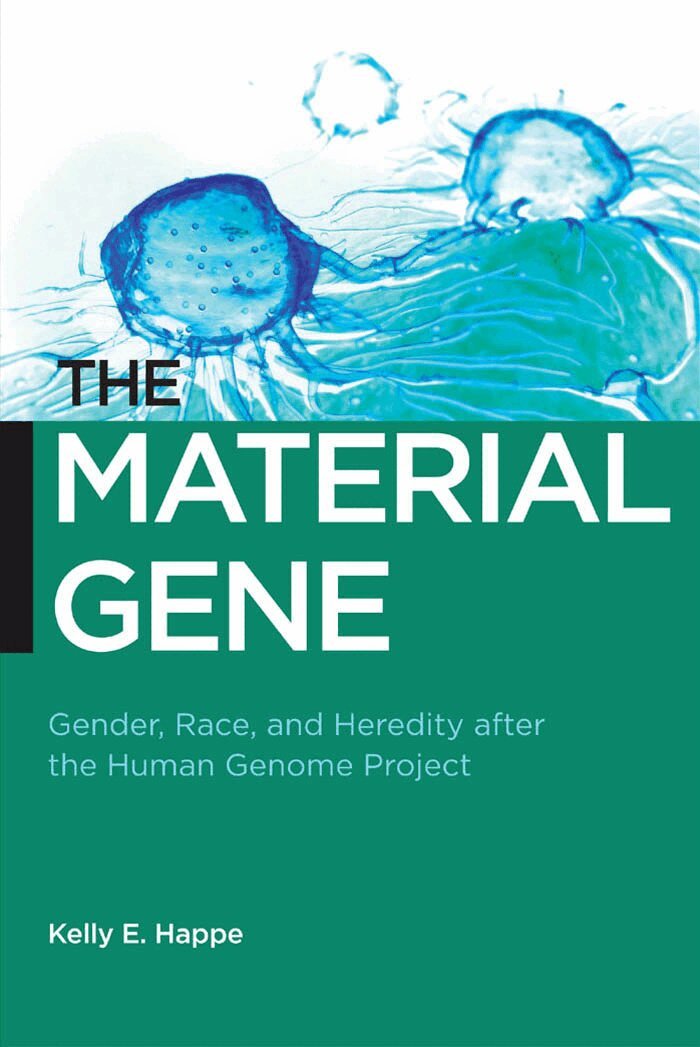
    Material Gene

    Gender, Race, and Heredity After the Human Genome Project

    AvKelly E. Happe

    Inbunden, Engelska, 2013

    Del i serien Biopolitics

    950 kr

    Beställningsvara. Skickas inom 10-15 vardagar. Fri frakt över 249 kr.

    Fler format och utgåvor

    Häftad

    376 kr

    Beskrivning

    Winner of the 2014 Diamond Anniversary Book AwardFinalist for the 2014 National Communications Association Critical and Cultural Studies Division Book of the Year AwardIn 2000, the National Human Genome Research Institute announced the completion of a "draft" of the human genome, the sequence information of nearly all 3 billion base pairs of DNA. Since then, interest in the hereditary basis of disease has increased considerably. In The Material Gene, Kelly E. Happe considers the broad implications of this development by treating "heredity" as both a scientific and political concept. Beginning with the argument that eugenics was an ideological project that recast the problems of industrialization as pathologies of gender, race, and class, the book traces the legacy of this ideology in contemporary practices of genomics. Delving into the discrete and often obscure epistemologies and discursive practices of genomic scientists, Happe maps the ways in which the hereditarian body, one that is also normatively gendered and racialized, is the new site whereby economic injustice, environmental pollution, racism, and sexism are implicitly reinterpreted as pathologies of genes and by extension, the bodies they inhabit. Comparing genomic approaches to medicine and public health with discourses of epidemiology, social movements, and humanistic theories of the body and society, The Material Gene reworks our common assumption of what might count as effective, just, and socially transformative notions of health and disease.

    Produktinformation

    • Utgivningsdatum:2013-05-06
    • Mått:153 x 229 x 21 mm
    • Vikt:589 g
    • Format:Inbunden
    • Språk:Engelska
    • Serie:Biopolitics
    • Antal sidor:303
    • Förlag:New York University Press
    • ISBN:9780814790670

    Utforska kategorier

    • Antropologi inom Samhälle och politik
    • Sociala och etiska frågor inom Samhälle och politik
    • Biovetenskap inom Naturvetenskap och teknik

    Mer om författaren

    Kelly E. Happe is Associate Professor in the Department of Communication Studies and the Institute for Women's Studies at the University of Georgia. She is the author of The Material Gene: Gender, Race, and Heredity After the Human Genome Project and co-editor of Biocitizenship: The Politics of Bodies, Governance, and Power.

    Recensioner i media

    "[Happes] is a narrative of unbroken continuity between the eugenic bio-racism of old and current genomic research whereby the complex breast cancer experience of black women is reduced to a racial predisposition. Her argument is clear: in her view, the geneticization of breast cancer equals a highly problematic depoliticization of the disease, its etiology and specific forms of progression." (Science as Culture) "Engaging with historical sources as well as current scientific literature, the text explores the potential implications of this discovery for embodied existence as the human body is reconfirmed as a frontier of risk. The result is a valuable piece of work that offers an impressive depth of research and delivers a number of well conveyed and convincing arguments." (Sociology of Health & Illness) "The Material Gene demonstrates that the rhetoric of science does its best work when it moves science out of the laboratory and into the political and social world. Happe isolates how the biomedical discourses of genomic research strips the body of its social history in order to perpetuate a political unconscious that heredity is the primary locus for the risk of disease. By putting the genomic body back into its social context, Happe reveals the perilous history between genomics and eugenics, while at the same time, she offers insight into how the promise of genomic research might escape its political unconscious." - Ronald Walter Greene,Chair, Department of Communication Studies, University of Minnesota "The Material Gene is a provocative, clearly written, and well-informed account of how genetic science reinforces harmful assumptions about race and gender under the banner of progress." Exploring the discourses surrounding the genetic basis for breast cancer, Happe argues that the rhetoric of genomic medicine hyperindividualizes and privatizes risk and disease. Thus she reminds us of the urgency of critical framing of scientific research. This book is necessary reading for scholars of rhetoric, scientists, and citizens who are building alternative frameworks for understanding disease and heredity." - Dana Cloud,Associate Professor, Communications Studies, University of Texas "Ever since the Human Genome Project started to take shape in the late 1980s, social inquiry has been concerned with the consequences of the renewed vigor and depth with which biological knowledge has been shaping life itself. Kelly Happe's book, The Material Gene, carries forward this important set of concerns." - Jorg Niewohner (New Genetics and Society) "In this ground-breaking book Happe questions whether any science concerned with race and genomics will not reinscribe problematic notions of race... What is eminently clear is thatThe Material Geneis wonderful to think with, and Happe has made a significant contribution to the evolving literature on race, gender, biopolitics, and bioscience, especially in relation to environmental health. I highly recommend the book for the careful read it deserves." - Julie Guthman (Society and Space) "Kelly Happes The Material Gene is the most comprehensive look at the implications in both theory and practice of the new genomics. What happens when you have a fragmentary understanding of mechanisms such as DNA (and more recently RNA) but need to intervene now to prevent diseases that present a risk to the patient? What happens to our understanding of our bodies when we are told that we or our off-spring are potentially ill? Computing risk is at the core of the new science of applied genetics, but it is a science still discovering new sets of meanings, implications, and even a new language. It is also part of the new movement of translation medicine: linking the laboratory to the clinic, with wider implications for both. Happes work demands to be read by physician and academic alike." - Sander L. Gilman,Distinguished Professor of the Liberal Arts and Sciences and Psychiatry, Emory University

    Innehållsförteckning

    • ContentsAcknowledgments ixPreface xiii1 Ideology and the New Rhetoric of Genomics 12 Heredity as Ideology: Situating Genomics Historically 233 Genomics and the Reproductive Body 614 Genomics and the Racial Body 1015 Genomics and the Polluted Body 1396 Toward a Biosociality without Genes 177Notes 189Bibliography 243Index 273About the Author 288