• Fri frakt över 249 kr
  • •
  • Snabba leveranser
  • •
  • Billiga böcker
Kundservice

Du är på sajten för privatpersoner.

Företag, bibliotek eller offentlig verksamhet?

Du handlar på classic.bokus.com, där alla dina funktioner finns intakta.
Till classic.bokus.com
Bokus logotyp. Gå till startsidan.
  • Erbjudanden
  • Nyheter
  • Student
  • Topplistor
  • Barn & ungdom
  • Bokus Play
  • E-böcker
  • Pocketböcker
  • Spel & pussel

10% rabatt på allt med kod: NYSTART10 →

Sidfot

Mina sidor

    Hjälp

    • Kundservice
    • Vanliga frågor och svar
    • Frakt och leverans
    • Retur vid ångerrätt
    • Reklamera vara
    • Betalning
    • Köpvillkor
    • Allmänna villkor
    • Information om webbplatsens tillgänglighet

    Om Bokus

    • Om oss
    • Pressrum
    • För studenter
    • För företag
    • För bibliotek och offentlig verksamhet
    • För leverantörer
    • Hållbarhet

    Populärt

    • Aktuella erbjudanden
    • Presentkort
    • Studentlitteratur
    • Nya böcker
    • Topplistor
    • Signerade böcker
    • Engelska böcker

    Inspiration

    • Boktips
    • BookTok
    • Populära bokserier
    • Barnbokskaraktärer
    • Populära författare
    Logotyp för Bokus
    Följ oss på Facebook (extern länk)Följ oss på Instagram (extern länk)Följ oss på YouTube (extern länk)Följ oss på TikTok (extern länk)
    bokus @ CookiesAnpassa cookiesIntegritetspolicyKöpvillkor
    Till Citymail hemsida (extern länk)Till Budbee hemsida (extern länk)Till Postnord hemsida (extern länk)Till Schenker hemsida (extern länk)Till Early Bird hemsida (extern länk)Till Walleys hemsida (extern länk)
    1. Samhälle och politik
    2. Politik och statsskick
    3. Centralt styre och förvaltning

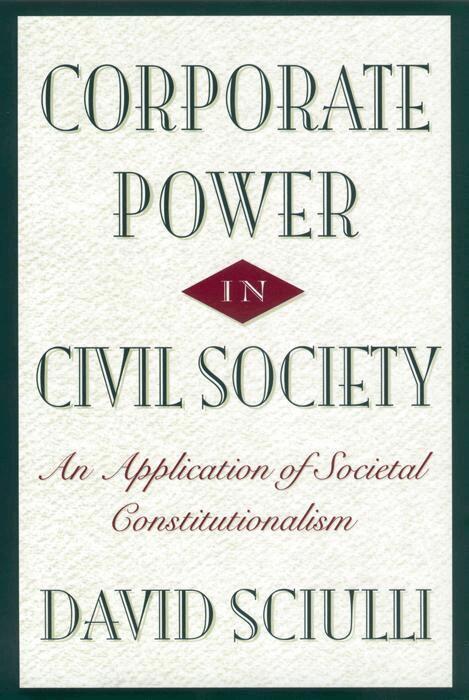
    Corporate Power in Civil Society

    AvDavid Sciulli

    Inbunden, Engelska, 2001

    1 200 kr

    Beställningsvara. Skickas inom 10-15 vardagar. Fri frakt över 249 kr.

    Beskrivning

    The corporate mega-mergers of the 1980s and 1990s raise many troubling questions for social scientists and legal scholars. Do corporate globalism and the new, streamlined corporation help or hinder the development of civil society? Does the new power that increasingly deregulated businesses wield undermine the rights of citizens, or is this threat being exaggerated? Who has the authority to get things done in a corporation's name and who can be held legally responsible for a corporation's misbehavior? What role, if any, should the courts play in strengthening the rights of individuals who challenge the actions of big business?David Sciulli maps the legal limits of corporate power in our democratic society, and explores the role of the corporate judiciary in creating public policy. He argues that the judiciary must be more vigilant and act to curb corporate abuses. He demonstrates that when corporations exercise their private power in civil society, they are just as capable as the state of exercising it in ways that are dangerous, arbitrary, and challenge the basic institutional arrangements of society. Finally, Sciulli calls for sociologists to involve themselves more deeply in issues of corporate governance and commit their discipline to influencing the decisions of the courts.

    Produktinformation

    • Utgivningsdatum:2001-01-01
    • Mått:152 x 229 x 31 mm
    • Vikt:703 g
    • Format:Inbunden
    • Språk:Engelska
    • Antal sidor:416
    • Förlag:New York University Press
    • ISBN:9780814797860

    Utforska kategorier

    • Centralt styre och förvaltning inom Samhälle och politik
    • Internationell ekonomi inom Ekonomi och Ledarskap
    • Sociologi inom Samhälle och politik

    Mer om författaren

    David Sciulli is Professor of Sociology at Texas A&M University. He is the author of Societal Constitutionalism.

    Recensioner i media

    His most innovative contribution is to fuse sociological theories of civil society with corporate law. (Social Control and Law) Corporate Power in Civil Society is well-written, and it brims with interesting insights. Sciulli's careful attention to the broader civil context of corporations and his close attention to the cases he examines make him an excellent sleuth for uncovering the reasons for and the implications of judicial behavior. In drawing on sociological theories to inform corporate law, the book makes a refreshing and timely contribution. (Contemporary Sociology) This book is a significant contribution to . . . broad political thought, one that should stimulate a great deal more. (New Political Science)