• Fri frakt över 249 kr
  • •
  • Snabba leveranser
  • •
  • Billiga böcker
Kundservice

Du är på sajten för privatpersoner.

Företag, bibliotek eller offentlig verksamhet?

Du handlar på classic.bokus.com, där alla dina funktioner finns intakta.
Till classic.bokus.com
Bokus logotyp. Gå till startsidan.
  • Erbjudanden
  • Nyheter
  • Student
  • Topplistor
  • Barn & ungdom
  • Bokus Play
  • E-böcker
  • Pocketböcker
  • Spel & pussel

Må bättre, för mindre! Upp till 50% rabatt på hälsoböcker

Sidfot

Mina sidor

    Hjälp

    • Kundservice
    • Vanliga frågor och svar
    • Frakt och leverans
    • Retur vid ångerrätt
    • Reklamera vara
    • Betalning
    • Köpvillkor
    • Allmänna villkor
    • Information om webbplatsens tillgänglighet

    Om Bokus

    • Om oss
    • Pressrum
    • För studenter
    • För företag
    • För bibliotek och offentlig verksamhet
    • För leverantörer
    • Hållbarhet

    Populärt

    • Aktuella erbjudanden
    • Presentkort
    • Studentlitteratur
    • Nya böcker
    • Topplistor
    • Signerade böcker
    • Engelska böcker

    Inspiration

    • Boktips
    • BookTok
    • Populära bokserier
    • Barnbokskaraktärer
    • Populära författare
    Logotyp för Bokus
    Följ oss på Facebook (extern länk)Följ oss på Instagram (extern länk)Följ oss på YouTube (extern länk)Följ oss på TikTok (extern länk)
    bokus @ CookiesAnpassa cookiesIntegritetspolicyKöpvillkor
    Till Citymail hemsida (extern länk)Till Budbee hemsida (extern länk)Till Postnord hemsida (extern länk)Till Schenker hemsida (extern länk)Till Early Bird hemsida (extern länk)Till Walleys hemsida (extern länk)
    1. Samhälle och politik
    2. Samhälle och kultur
    3. Kultur och medier
    4. Referensverk och tvärvetenskap

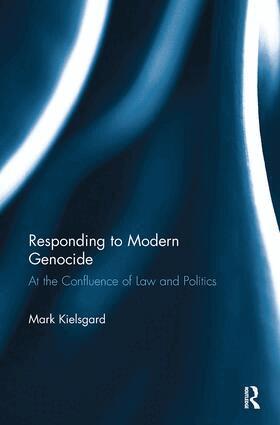
    Responding to Modern Genocide

    At the Confluence of Law and Politics

    AvMark D. Kielsgard

    Häftad, Engelska, 2017

    729 kr

    Beställningsvara. Skickas inom 10-15 vardagar. Fri frakt över 249 kr.

    Fler format och utgåvor

    Inbunden

    2 493 kr

    E-bok

    939 kr

    E-bok

    942 kr

    Beskrivning

    Developments in the understanding and treatment of genocide through the twentieth century have involved a combination of politics, public opinion, social trends, and economic development, and led to the substantive law of genocide and the assumption of international jurisdiction. This book analyzes incidences of genocide and mass atrocities, focusing on the political factors involved in modern counter-genocide efforts. Drawing on incidences of genocide and mass atrocity such as the Holocaust, the Rwandan genocide, and the Armenian genocide, Mark Kielsgard adopts a conceptual model that reveals the political factors which impact the international law of genocide, such as barriers and catalysts to transitional justice and the politics of genocide denial. As a work which provides a focused picture of those influences and their significance to genocide studies, this book will be of great use and interest to students and researchers in international criminal law, conflict studies, and conflict resolution.

    Produktinformation

    • Utgivningsdatum:2017-12-21
    • Mått:156 x 234 x 21 mm
    • Vikt:500 g
    • Format:Häftad
    • Språk:Engelska
    • Antal sidor:270
    • Förlag:Taylor & Francis Inc
    • ISBN:9780815355328

    Utforska kategorier

    • Referensverk och tvärvetenskap inom Samhälle och politik
    • Vapen och utrustning inom Samhälle och politik
    • Politisk aktivism inom Samhälle och politik

    Mer om författaren

    Mark D. Kielsgard is Assistant Professor at City University of Hong Kong.

    Recensioner i media

    "Kielsgard (City Univ. of Hong Kong) offers a compelling discussion of the role politics plays in the possibility of preventing genocide...The beginning traces the evolution of the law on genocide and the politics of its development. The second section of the book essentially discusses several theories of genocide highlighting the elements that lead to genocide. When these elements are identified, Kielsgard argues, prevention could be possible if the political will exists. The next section looks at how genocide denial affects the ability to prevent genocide because denial permits future crimes against marginalized groups. The final part of the book discusses transitional justice responses following genocide."W. R. Pruitt,Virginia Wesleyan College, CHOICE

    Innehållsförteckning

    • 1. Introduction: Responding to Genocide  2. The Function of Prevention  3. The Cost of Denial  4. Restorative Justice: The Essential Healing Process  5. Punishing Genocide  6. "No Peace Without Justice"  7. Conclusion: Tracking Trends and Projecting an International Order of Human Dignity