• Fri frakt över 249 kr
  • •
  • Snabba leveranser
  • •
  • Billiga böcker
Kundservice

Du är på sajten för privatpersoner.

Företag, bibliotek eller offentlig verksamhet?

Du handlar på classic.bokus.com, där alla dina funktioner finns intakta.
Till classic.bokus.com
Bokus logotyp. Gå till startsidan.
  • Erbjudanden
  • Nyheter
  • Student
  • Topplistor
  • Barn & ungdom
  • Bokus Play
  • E-böcker
  • Pocketböcker
  • Spel & pussel

10% rabatt på allt med kod NYSTART10 →

Sidfot

Mina sidor

    Hjälp

    • Kundservice
    • Vanliga frågor och svar
    • Frakt och leverans
    • Retur vid ångerrätt
    • Reklamera vara
    • Betalning
    • Köpvillkor
    • Allmänna villkor
    • Information om webbplatsens tillgänglighet

    Om Bokus

    • Om oss
    • Pressrum
    • För studenter
    • För företag
    • För bibliotek och offentlig verksamhet
    • För leverantörer
    • Hållbarhet

    Populärt

    • Aktuella erbjudanden
    • Presentkort
    • Studentlitteratur
    • Nya böcker
    • Topplistor
    • Signerade böcker
    • Engelska böcker

    Inspiration

    • Boktips
    • BookTok
    • Populära bokserier
    • Barnbokskaraktärer
    • Populära författare
    Logotyp för Bokus
    Följ oss på Facebook (extern länk)Följ oss på Instagram (extern länk)Följ oss på YouTube (extern länk)Följ oss på TikTok (extern länk)
    bokus @ CookiesAnpassa cookiesIntegritetspolicyKöpvillkor
    Till Citymail hemsida (extern länk)Till Budbee hemsida (extern länk)Till Postnord hemsida (extern länk)Till Schenker hemsida (extern länk)Till Early Bird hemsida (extern länk)Till Walleys hemsida (extern länk)
    1. Samhälle och politik
    2. Sociologi och antropologi
    3. Antropologi

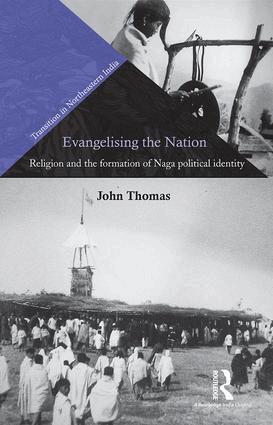
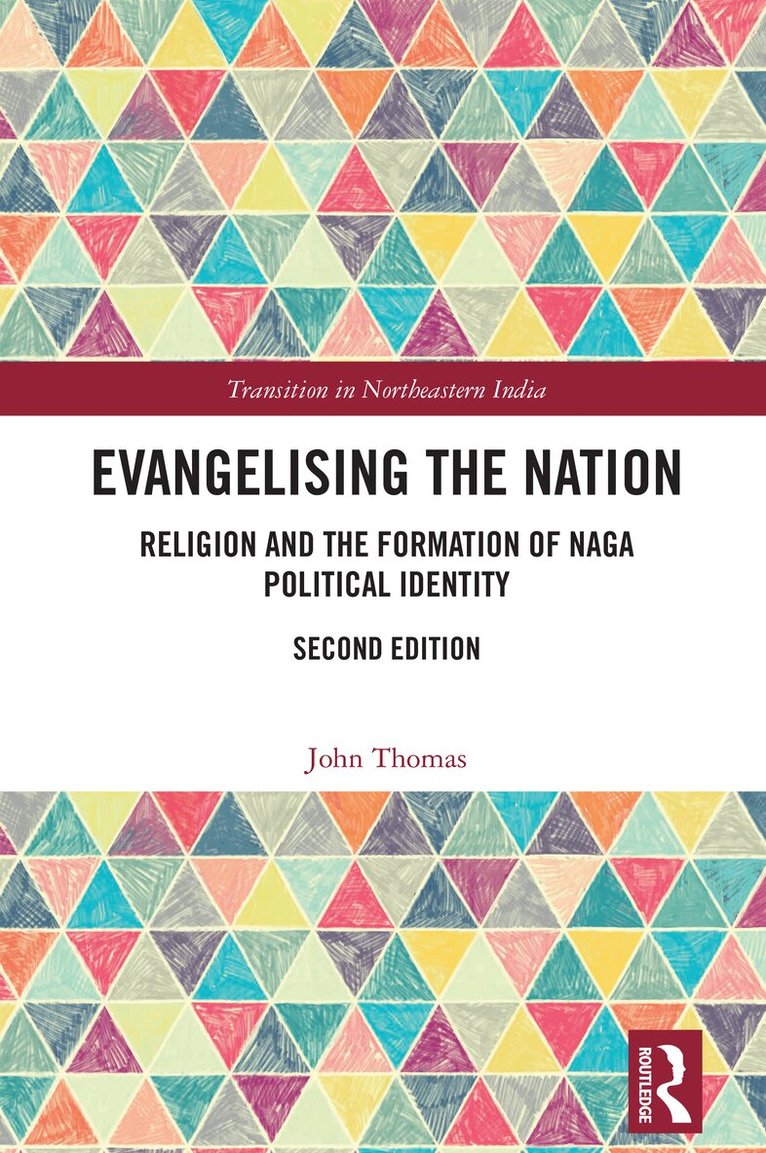
    Evangelising the Nation

    Religion and the Formation of Naga Political Identity

    AvJohn Thomas

    Häftad, Engelska, 2017

    Del i serien Transition in Northeastern India

    508 kr

    Tillfälligt slut

    Fler format och utgåvor

    E-bok

    805 kr

    E-bok

    805 kr

    Inbunden

    2 423 kr

    Inbunden

    Tillf. slut

    Beskrivning

    Northeast India has witnessed several nationality movements during the 20th century. The oldest and one of the most formidable has been that of the Nagas — inhabiting the hill tracts between the Brahmaputra river in India and the Chindwin river in Burma (now Myanmar). Rallying behind the slogan, ‘Nagaland for Christ’, this movement has been the site of an ambiguous relation between a particular understanding of Christianity and nation-making. This book, based on meticulous archival research, traces the making of this relation and offers fresh perspectives on the workings of religion in the formation of political and cultural identities among the Nagas. It tracks the transmutations of Protestantism from the United States to the hill tracts of Northeast India, and its impact on the form and content of the nation that was imagined and longed for by the Nagas. The volume also examines the role of missionaries, local church leaders, and colonial and post-colonial states in facilitating this process.Lucidly written and rigorous in its analyses, this book will be of interest to scholars and researchers of South Asian history, religion, political science, sociology and social anthropology, and particularly those concerned with Northeast India.

    Produktinformation

    • Utgivningsdatum:2017-11-28
    • Mått:138 x 216 x 17 mm
    • Vikt:450 g
    • Format:Häftad
    • Språk:Engelska
    • Serie:Transition in Northeastern India
    • Antal sidor:242
    • Förlag:Taylor & Francis Inc
    • ISBN:9780815376132

    Utforska kategorier

    • Antropologi inom Samhälle och politik
    • Religion: allmänt inom Filosofi och religion
    • Politik och statsskick inom Samhälle och politik

    Mer om författaren

    John Thomas teaches History in the Department of Humanities and Social Sciences, Indian Institute of Technology, Guwahati, Assam, India.

    Innehållsförteckning

    • Introduction 1. The Original Sin 2. Sending Out the Spears 3. War, Nationalism and Conversions 4. Peace, Crusades and Pacification 5. Church, Politics and the Limits of Theology Conclusion. Bibliography