• Fri frakt över 249 kr
  • •
  • Snabba leveranser
  • •
  • Billiga böcker
Kundservice

Du är på sajten för privatpersoner.

Företag, bibliotek eller offentlig verksamhet?

Du handlar på classic.bokus.com, där alla dina funktioner finns intakta.
Till classic.bokus.com
Bokus logotyp. Gå till startsidan.
  • Erbjudanden
  • Nyheter
  • Student
  • Topplistor
  • Barn & ungdom
  • Bokus Play
  • E-böcker
  • Pocketböcker
  • Spel & pussel

10% rabatt på allt med kod: NYSTART10 →

Sidfot

Mina sidor

    Hjälp

    • Kundservice
    • Vanliga frågor och svar
    • Frakt och leverans
    • Retur vid ångerrätt
    • Reklamera vara
    • Betalning
    • Köpvillkor
    • Allmänna villkor
    • Information om webbplatsens tillgänglighet

    Om Bokus

    • Om oss
    • Pressrum
    • För studenter
    • För företag
    • För bibliotek och offentlig verksamhet
    • För leverantörer
    • Hållbarhet

    Populärt

    • Aktuella erbjudanden
    • Presentkort
    • Studentlitteratur
    • Nya böcker
    • Topplistor
    • Signerade böcker
    • Engelska böcker

    Inspiration

    • Boktips
    • BookTok
    • Populära bokserier
    • Barnbokskaraktärer
    • Populära författare
    Logotyp för Bokus
    Följ oss på Facebook (extern länk)Följ oss på Instagram (extern länk)Följ oss på YouTube (extern länk)Följ oss på TikTok (extern länk)
    bokus @ CookiesAnpassa cookiesIntegritetspolicyKöpvillkor
    Till Citymail hemsida (extern länk)Till Budbee hemsida (extern länk)Till Postnord hemsida (extern länk)Till Schenker hemsida (extern länk)Till Early Bird hemsida (extern länk)Till Walleys hemsida (extern länk)
    1. Samhälle och politik
    2. Samhälle och kultur
    3. Kultur och medier
    4. Referensverk och tvärvetenskap

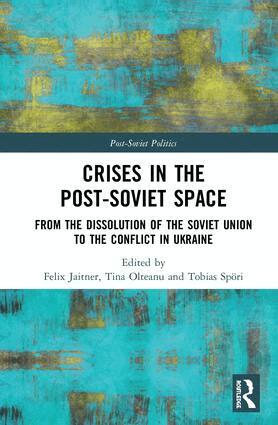
    Crises in the Post‐Soviet Space

    From the dissolution of the Soviet Union to the conflict in Ukraine

    AvFelix Jaitner,Tina Olteanu

    Inbunden, Engelska, 2018

    Del i serien Post-Soviet Politics

    2 423 kr

    Beställningsvara. Skickas inom 10-15 vardagar. Fri frakt över 249 kr.

    Beskrivning

    The breakup of the Soviet Union led to the creation of new states and territorial conflicts of different levels of intensity. Scrutinising the post‐Soviet period, this volume offers explanations for both the frequency and the intensity of crises in the region.This book argues that the societies which emerged in the post-Soviet space share characteristic features, and that the instability and conflict-prone nature of the Soviet Union’s successor states can be explained by analysing the post-independence history of the region and linking it to the emergence of overlapping economic, political and violent crises (called 'Intersecting Crises Phenomena’). Transformation itself is shown to be a decisive process and, while acknowledging specific national and regional characteristics and differences, the authors demonstrate its shared impact. This comparison across countries and over time presents patterns of crisis and crisis management common to all the successor states. It disentangles the process, highlighting the multifaceted features of post-Soviet crises and draws upon the concept of crisis to determine the tipping points of post-Soviet development. Especially useful for scholars and students dealing with the Soviet successor states, this book should also prove interesting to those researching in the fields of communist and post‐communist Studies, Eurasian politics, international relations and peace and conflict studies.

    Produktinformation

    • Utgivningsdatum:2018-06-08
    • Mått:156 x 234 x 23 mm
    • Vikt:700 g
    • Format:Inbunden
    • Språk:Engelska
    • Serie:Post-Soviet Politics
    • Antal sidor:270
    • Förlag:Taylor & Francis Inc
    • ISBN:9780815377245

    Utforska kategorier

    • Referensverk och tvärvetenskap inom Samhälle och politik
    • Politisk aktivism inom Samhälle och politik
    • Internationella relationer inom Samhälle och politik

    Mer om författaren

    Tina Olteanu is a Professor of Political Science at the Department for Political Science at the University of Vienna, Austria. Her research interests are democracy and democratization, participation and corruption research mainly in Eastern Europe but also in a European comparative perspective.Felix Jaitner is a doctoral student at the Department of Political Science, University of Vienna. His research is focused on uneven and peripheral development, the transformation process in Eastern Europe and the post-Soviet space and state theory. Tobias Spöri is a PhD candidate at the Department of Political Science, University of Vienna. His research deals with political participation, the legacy of state socialism and the transformation of post-socialist Europe since 1989/1991.

    Innehållsförteckning

    • 1 Introduction: Crises in the Post-Soviet Space – From the Dissolution of the Soviet Union to an Area of ‘Intersecting Crises Phenomena’? PART I Mapping post-Soviet Crises 2 The dissolution of the Soviet Union and its consequences 3 Divergent Social and Economic Consequences of Transformation in Post-communist States 4 Divergent Political-Economic Trajectories: Russia, Ukraine, Belarus PART II Crises of Belongings 5 Creating the History of the Future: Russian Historical Memory in the Era of the Ukrainian Crisis 6 Ukraine: The Dynamics of Cross-Cutting Cleavages During Quadruple Transition 7 Ethnic Divides in the Baltic States: Political Orientations after the Russian–Ukrainian Crisis 8 'Stability's End: The Political Economy of Russia's Intersecting Crises Since 2009 9 The making of Ukraine’s multilevel crisis: transnational capitalism, neoliberal kleptocrats, and dispossession 10 Ukraine’s Frozen Transformation. State Capture, Nationalising Policies and Shifting Geopolitics 11 "Decline of the Demos: Latvia, the Face of New Europe and Austerity’s Return" PART IV Crises of Political Power 12 Chechnya: A Study of a Post-Soviet Conflict 13 Azerbaijan between Post-Socialist Crisis and Fragile Stability 14 Kazakhstan’s political and economic development and the role of the ruling elites Conclusion: The Ukraine conflict as a result of post-Soviet crises development