• Fri frakt över 249 kr
  • •
  • Snabba leveranser
  • •
  • Billiga böcker
Kundservice

Du är på sajten för privatpersoner.

Företag, bibliotek eller offentlig verksamhet?

Du handlar på classic.bokus.com, där alla dina funktioner finns intakta.
Till classic.bokus.com
Bokus logotyp. Gå till startsidan.
  • Erbjudanden
  • Nyheter
  • Student
  • Topplistor
  • Barn & ungdom
  • Bokus Play
  • E-böcker
  • Pocketböcker
  • Spel & pussel

10% studentrabatt med kod TERM26

Sidfot

Mina sidor

    Hjälp

    • Kundservice
    • Vanliga frågor och svar
    • Frakt och leverans
    • Retur vid ångerrätt
    • Reklamera vara
    • Betalning
    • Köpvillkor
    • Allmänna villkor
    • Information om webbplatsens tillgänglighet

    Om Bokus

    • Om oss
    • Pressrum
    • För studenter
    • För företag
    • För bibliotek och offentlig verksamhet
    • För leverantörer
    • Hållbarhet

    Populärt

    • Aktuella erbjudanden
    • Presentkort
    • Studentlitteratur
    • Nya böcker
    • Topplistor
    • Signerade böcker
    • Engelska böcker

    Inspiration

    • Boktips
    • BookTok
    • Populära bokserier
    • Barnbokskaraktärer
    • Populära författare
    Logotyp för Bokus
    Följ oss på Facebook (extern länk)Följ oss på Instagram (extern länk)Följ oss på YouTube (extern länk)Följ oss på TikTok (extern länk)
    bokus @ CookiesAnpassa cookiesIntegritetspolicyKöpvillkor
    Till Citymail hemsida (extern länk)Till Budbee hemsida (extern länk)Till Postnord hemsida (extern länk)Till Schenker hemsida (extern länk)Till Early Bird hemsida (extern länk)Till Walleys hemsida (extern länk)
    1. Naturvetenskap och teknik
    2. Matematik och naturvetenskap
    3. Kemi

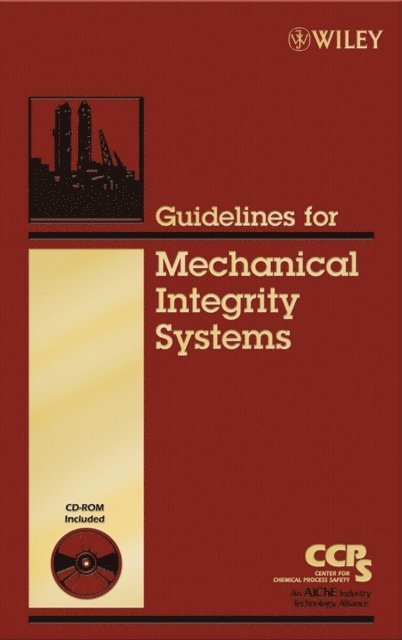
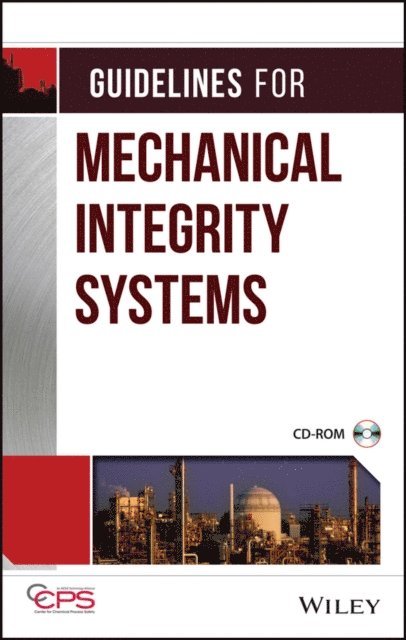
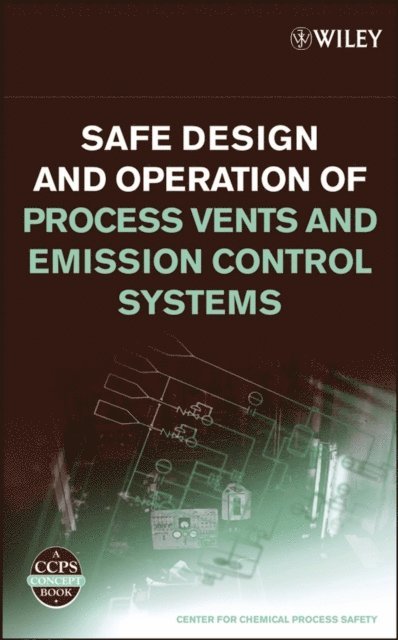
    Guidelines for Mechanical Integrity Systems

    AvCCPS (Center for Chemical Process Safety)

    Inbunden, Engelska, 2006

    2 059 kr

    Beställningsvara. Skickas inom 5-8 vardagar. Fri frakt över 249 kr.

    Fler format och utgåvor

    E-bok

    2 382 kr

    E-bok

    2 382 kr

    Beskrivning

    In recent years, process safety management system compliance audits have revealed that organizations often have significant opportunities for improving their Mechanical Integrity programs. As part of the Center for Chemical Process Safety's Guidelines series, Guidelines for Mechanical Integrity Systems provides practitioners a basic familiarity of mechanical integrity concepts and best practices. The book recommends efficient approaches for establishing a successful MI program.

    Produktinformation

    • Utgivningsdatum:2006-09-08
    • Mått:160 x 236 x 21 mm
    • Vikt:562 g
    • Format:Inbunden
    • Språk:Engelska
    • Antal sidor:320
    • Förlag:John Wiley & Sons Inc
    • ISBN:9780816909520

    Utforska kategorier

    • Kemi inom Naturvetenskap och teknik
    • Naturvetenskap:allmänt inom Naturvetenskap och teknik
    • Tillverkningsteknik inom Naturvetenskap och teknik

    Mer om författaren

    Since 1985, the Center for Chemical Process Safety (CCPS) has been the world leader in developing and disseminating information on process safety management and technology.  CCPS, an industry technology alliance of the American Institute of Chemical Engineers (AIChE), has published over 80 books in its process safety guidelines and process safety concepts series. A team of CCPS member volunteer experts guided the development of this book, which was compiled by Randal Montgomery and Andrew Remson under contract. Messrs. Montgomery and Remson have helped facilities develop and implement MI programs and have instructed hundreds of engineers and process safety professionals on the topic.

    Recensioner i media

    "…an excellent overview of all aspects of mechanical integrity systems…should be very useful for any engineer…" (Journal of Loss Prevention in the Process Industries, January 2007) "…a thorough introduction to MI Systems for managers, quality control engineers and those who are responsible for maintaining systems." (E-STREAMS, September 2007)

    Innehållsförteckning

    • List of Tables xiiiList of Figures xvItems on the CD Accompanying This Book xviiAcronyms and abbreviations xxiGlossary xxvAcknowledgments xxixPreface xxxiManagement Overview of the Guidelines xxxiii1 INTRODUCTION 11.1 What is Mechanical Integrity? 21.2 Relationship to Other Programs 31.3 Expectations for the Ml Program 31.4 The Effect of RAGAGEPs 51.5 Structure of this Guidelines Book 61.6 References 82 MANAGEMENT RESPONSIBILITY 92.1 Facility Leadership’s Roles and Responsibilities 92.1.1 Organizational Roles and Responsibilities 102.1.2 Roles and Responsibilities Matrix 102.1.3 Reporting Mechanisms 112.1.4 Auditing 142.2 Technical Assurance Responsibilities 142.2.1 Defining Acceptance Criteria 142.2.2 Providing Technical Content 152.2.3 Establishing Metrics 152.2.4 Ensuring Technical Review 163 EQUIPMENT SELECTION 173.1 Reviewing Program Objectives 173.2 Establishing Equipment Selection Criteria 183.3 Defining Level of Detail 213.4 Documenting the Equipment Selection 223.5 Equipment Selection Roles and Responsibilities 23Apendix 3A, Sample Guidelines for Selecting Equipment for the MI Program 254 INSPECTION, TESTING, AND PREVENTIVE MAINTENANCE 294.1 ITPM Task Planning 304.1.1 ITPM Task Selection 304.1.2 Developing Sampling Criteria 424.1.3 Other ITPM Task Planning Considerations 444.1.4 ITPM Task Scheduling 454.2 Task Execution and Monitoring 464.2.1 Defining Acceptance Criteria 464.2.2 Equipment and ITPM Task Results Documentation 474.2.3 ITPM Task Implementation and Execution 494.2.4 ITPM Task Results Management 494.2.5 Task Schedule Management 514.2.6 ITPM Program Monitoring 524.3 ITPM Program Roles and Responsibilities 534.4 References 53Appendix 4A. Common Predictive Maintenance and Nondestructive Testing Techniqes 58Appendix 5 A. Sample Training Survey5 Ml TRAINING PROGRAM5.1 Skills/Knowledge Assessment 615.2 Training For New and Current Workers 645.3 Verification and Documentation of Training Effectiveness 645.4 Certification 665.5 Ongoing and Refresher Training 695.6 Training for Technical Personnel 695.7 Contractor Issues 715.8 Roles and Responsibilities5.9 References6 Ml PROGRAM PROCEDURES 776.1 Types of Procedures Supporting the Ml Program 796.2 Identification of MI Procedure Needs 816.3 Procedure Development Process 836.4 MI Procedure Format and Content 876.5 Other Sources of MI Procedures 906.6 Implementing and Maintaining MI Procedures916.7 Procedure Program Roles and Responsibilities 926.8 References 927 QUALITY ASSURANCE 957.1 Design 967.2 Procurement 977.3 Fabrication 987.4 Receiving 997.5 Storage and Retrieval 997.6 Construction and Installation 1007.7 In-service Repairs, Alterations, and Rerating 1017.8 Temporary Installations and Temporary Repairs 1027.9 Decommissioning/Reusc 1037.10 Used Equipment 1037.11 Spare Parts 1047.12 Contractor-Supplied Equipment and Materials 1047.13 QA Program Roles and Responsibilities 1047.14 References 104Appendix 7A. Design Review Suggestions 107Appendix 7B. Sample Vendor QA Plan 110Appendix 7C. Positive Material Identification 112Appendix 7D. Sample Service QA Plan 116Appendix 8A. Fitness for Service (FS) 1318 EQUIPMENT DEFICIENCY MANAGEMENT 1198.1 Equipment Deficiency Management Process 1198.2 Acceptance Criteria 1208.3 Equipment Deficiency Identification 1228.4 Responding to Equipment Deficiencies 1238.5 Equipment Deficiency Communication 1278.6 Permanent Correction of Equipment Deficiencies 1278.7 Deficiency Management Roles and Responsibilities 1288.8 Reference 1289 EQUIPMENT-SPECIFIC INTEGRITY MANAGEMENT 1359.1 Fixed Equipment 1379.2 Relief and Vent Systems 1429.3 Instrumentation and Controls 1449.4 Rotating Equipment 1459.5 Fired Equipment 1519.6 Electrical Systems 1519.7 Fire Protection Systems 1539.8 Miscellaneous Equipment 1549.8.1 Ventilation and Purge Systems 1549.8.2 Protective Systems 1559.8.3 Solids-handling Systems 1569.8.4 Safety-critical Utilities 1579.8.5 Other Safety Equipment 1579.9 Equipment-specific MI Activity Matrices 1589.10 References 18210 Ml PROGRAM IMPLEMENTATION 18310.1 Budgeting and Resources 18310.1.1 Program Development Resources 18310.1.2 Initial Implementation Resources 18710.1.3 Ongoing Efforts 19310.2 Use of Software in Ml Programs 19610.2.1 Use of CMMS 19710.2.2 Other Software Used in MI Programs 19810.3 Return on Investment (ROI) 20010.3.1 Improved Equipment Reliability 20010.3.2 Cost Avoidance 20110.3.3 Regulatory Compliance and Industry Association Commitments 20210.3.4 Reduced Liability and Reduced Damage to Corporate Reputation 20210.4 References 20211 RISK MANAGMENT TOOLS 20311.1 Introduction to Common Risk-based Analytical Techniques Used in MI Programs 20511.2 Incorporating Risk into MI Decisions 21011.3 FMEA/FMECA 21211.4 RCM 21311.5 Risk-based Inspection 21811.5.1 Equipment and Process Data 22111.5.2 Risk Modeling 22111.5.3 Inspection Planning Strategies/Guidelines 22211.5.4 Other RBI Program Issues 22311.6 Protection Layer Analysis Techniques 22511.7 References 22912 CONTINUOUS IMPROVEMENT OF Ml PROGRAMS 23112.2 Program Audits 23312.3 Performance Measurement and Monitoring 23812.4 Equipment Failure and Root Cause Analyses 24012.4.1 Failure Analysis 24312.4.2 Root Cause Analysis 24512.5 References 248Index 249