• Fri frakt över 249 kr
  • •
  • Snabba leveranser
  • •
  • Billiga böcker
Kundservice

Du är på sajten för privatpersoner.

Företag, bibliotek eller offentlig verksamhet?

Du handlar på classic.bokus.com, där alla dina funktioner finns intakta.
Till classic.bokus.com
Bokus logotyp. Gå till startsidan.
  • Erbjudanden
  • Nyheter
  • Student
  • Topplistor
  • Barn & ungdom
  • Bokus Play
  • E-böcker
  • Pocketböcker
  • Spel & pussel

10% rabatt på allt med kod: NYSTART10 →

Sidfot

Mina sidor

    Hjälp

    • Kundservice
    • Vanliga frågor och svar
    • Frakt och leverans
    • Retur vid ångerrätt
    • Reklamera vara
    • Betalning
    • Köpvillkor
    • Allmänna villkor
    • Information om webbplatsens tillgänglighet

    Om Bokus

    • Om oss
    • Pressrum
    • För studenter
    • För företag
    • För bibliotek och offentlig verksamhet
    • För leverantörer
    • Hållbarhet

    Populärt

    • Aktuella erbjudanden
    • Presentkort
    • Studentlitteratur
    • Nya böcker
    • Topplistor
    • Signerade böcker
    • Engelska böcker

    Inspiration

    • Boktips
    • BookTok
    • Populära bokserier
    • Barnbokskaraktärer
    • Populära författare
    Logotyp för Bokus
    Följ oss på Facebook (extern länk)Följ oss på Instagram (extern länk)Följ oss på YouTube (extern länk)Följ oss på TikTok (extern länk)
    bokus @ CookiesAnpassa cookiesIntegritetspolicyKöpvillkor
    Till Citymail hemsida (extern länk)Till Budbee hemsida (extern länk)Till Postnord hemsida (extern länk)Till Schenker hemsida (extern länk)Till Early Bird hemsida (extern länk)Till Walleys hemsida (extern länk)
    1. Historia och arkeologi
    2. Historia
    3. Allmän historia och världshistoria

    Cuban City, Segregated

    Race and Urbanization in the Nineteenth Century

    AvBonnie A. Lucero

    Inbunden, Engelska, 2019

    628 kr

    Beställningsvara. Skickas inom 5-8 vardagar. Fri frakt över 249 kr.

    Fler format och utgåvor

    E-bok

    1 038 kr

    Beskrivning

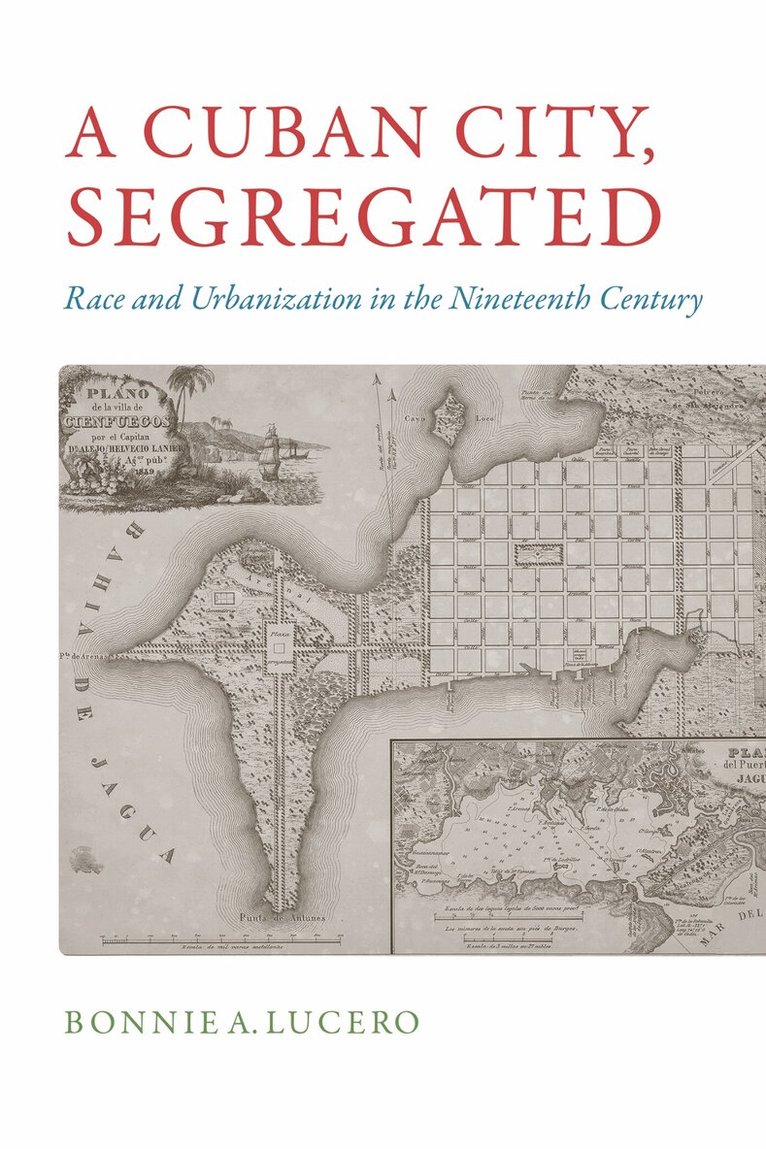
    A microhistory of racial segregation in Cienfuegos, a central Cuban port city.Founded as a white colony in 1819, Cienfuegos quickly became home to people of African descent, both free and enslaved, and later a small community of Chinese and other immigrants. Despite the racial, ethnic, and cultural diversity defining the city's population, the urban landscape was characterized by distinctive racial boundaries, separating the white city center from the heterogeneous peripheries. A Cuban City, Segregated: Race and Urbanization in the Nineteenth Century explores how the de facto racial segregation was constructed and perpetuated in a society devoid of explicitly racial laws.  Drawing on the insights of intersectional feminism, Bonnie A. Lucero shows that the key to understanding racial segregation in Cuba is recognizing the often unspoken ways specifically classed notions and practices of gender shaped the historical production of race and racial inequality. In the context of nineteenth-century Cienfuegos, gender, race, and class converged in the concept of urban order, a complex and historically contingent nexus of ideas about the appropriate and desired social hierarchy among urban residents, often embodied spatially in particular relationships to the urban landscape.  As Cienfuegos evolved subtly over time, the internal logic of urban order was driven by the construction and defense of a legible, developed, aesthetically pleasing, and, most importantly, white city center. Local authorities produced policies that reduced access to the city center along class and gendered lines, for example, by imposing expensive building codes on centric lands, criminalizing poor peoples' leisure activities, regulating prostitution, and quashing organized labor. Although none of these policies mentioned race outright, this new scholarship demonstrates that the policies were instrumental in producing and perpetuating the geographic marginality and discursive erasure of people of color from the historic center of Cienfuegos during its first century of existence.

    Produktinformation

    • Utgivningsdatum:2019-04-09
    • Mått:152 x 229 x 9144 mm
    • Vikt:617 g
    • Format:Inbunden
    • Språk:Engelska
    • Antal sidor:288
    • Förlag:The University of Alabama Press
    • ISBN:9780817320034

    Utforska kategorier

    • Allmän historia och världshistoria inom Historia och arkeologi
    • Amerikas historia inom Historia och arkeologi
    • Etnicitet inom Samhälle och politik

    Mer om författaren

    Bonnie A. Lucero is an associate professor of History and director of the Center for Latino Studies at the University of Houston-Downtown. She is the author of Revolutionary Masculinity and Racial Inequality: Gendering War and Politics in Cuba and coeditor of Voices of Crime: Constructing and Contesting Social Control in Modern Latin America.

    Recensioner i media

    An insightful and well-researched microhistory of the range of dynamics that shaped race relations, urban order, and sexual labor in Cienfuegos. A Cuban City, Segregated joins an increasingly rich historiography centered on the political and social history - especially with regard to race and gender - of Cuba during the nineteenth century."" - Tiffany A. Sippial, author of Prostitution, Modernity, and the Making of the Cuban Republic, 1840–1920""This is an excellent study of the construction of urban order in a nineteenth-century Cuban city and a unique contribution to several bodies of literature in the field, especially Latin American urban history, studies of race and slavery, and Cuban studies."" - Guadalupe García, author of Beyond the Walled City: Colonial Exclusion in Havana and coeditor of Imprints of Revolution: Visual Representations of Resistance

    Innehållsförteckning

    • List of IllustrationsAcknowledgmentsA Note on TerminologyIntroduction: Urban Orderand Racial Exclusion1. A White Colony in the Age of ""Africanization,"" 1790–1830s2. A Town of Racial Enclaves, 1840–1860s3. Freedom and Marginality in a Divided City, 1860–1890s4. Negotiating Exclusion in the Historic City Center, 1890s5. Consolidating a White City Center under US RuleConclusion: Reclaiming Urban Space in the Early RepublicNotesGlossaryBibliographyIndex