Häftad, Engelska, 2012
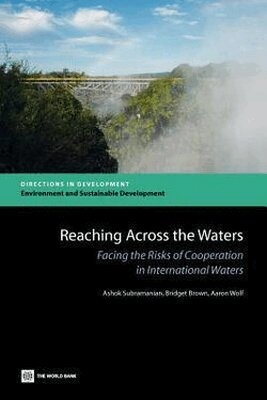
Reaching Across the Waters
Av Ashok Subramanian, Bridget Brown, Aaron Wolf
279 kr
Beställningsvara. Skickas inom 10-15 vardagar. Fri frakt över 249 kr.
Beskrivning
This volume reviews the experience of cooperation in five international river basins, focusing on the perceptions of risks and opportunities by decision makers in countries responding to a specific prospect of cooperation. For each basin, the analysis centered on “tipping points,” or periods in time when policymakers in the countries involved were faced with a critical decision concerning water cooperation. This study was inspired, in part, by the intensified involvement of the World Bank and development partners in shared international waters, resulting in a growing interest to better understand the political economy surrounding regional cooperation deals over water. While the associated economic benefits and costs of cooperation are generally well analyzed, the perceptions of decision makers regarding political risks and opportunities have been much less explored. Responding to this knowledge gap, this study looked at the political dimension of cooperation over international waters, beginning with perceived risks. Five categories of perceived risk were analyzed: 1) Capacity and Knowledge; 2) Accountability and Voice; 3) Sovereignty and Autonomy; 4) Equity and Access; and 5) Stability and Support. All five categories of risk were found to exert a significant influence on cooperation decisions, indicating that perceived risks were a core consideration for decision makers in countries. Furthermore, cooperation was more likely when risks were reduced, or opportunities created for political gains. This has important implications for development partners’ engagement in shared international waters. Partners are advised to conduct risk assessments in consultation with countries involved, and devise plans for reducing perceived risks. Suggested measures for partner action are also included. In addition to the discussions of risk and enhancing the potential for cooperation, this volume offers some important lessons on supporting cooperation. First, cooperation can take several years of planning and confidence building, often before negotiations even begin. Thus, a long-term time commitment by partners is likely required. Finally, deals are dynamic. Once a deal is reached, the situation does not become static: deals can be fragile and fall apart or evolve and grow into stronger and more sustainable arrangements. Accordingly, periodic assessments are needed to reflect changing realities and as inputs for a revised strategy.|It is often said that children have always been part of the workforce. With the onset of the industrial revolution in the nineteenth century, children were exploited under miserable conditions in factories, and a movement against child labor began. A worldwide campaign increased awareness and alerted international organizations and governments to the idea that child labor would best be replaced by child education. The current objectives of such a campaign seem simple and laudable but the issues involved are complex and questions must be answered: What actually is child labor, and what determines childhood? How many child laborers are there in the world? Is child labor restricted to developing countries or is it frequently used in order to stigmatize the non-Western world? Is regulation of labor conditions the solution or should governments and civil society opt for a radical ban? Is there a role for corporate social responsibility? Kristoffel Lieten is professor of child labour studies at the International Institute of Social Studies at the University of Amsterdam.
Produktinformation
- Utgivningsdatum: 2012-07-30
- Mått: 151 x 229 x 7 mm
- Vikt: 369 g
- Format: Häftad
- Språk: Engelska
- Antal sidor: 110
- Förlag: World Bank Publications
- ISBN: 9780821395943
Betyg & recensioner
0 recensioner
Inga recensioner tillgängliga.