• Fri frakt över 249 kr
  • •
  • Snabba leveranser
  • •
  • Billiga böcker
Kundservice

Du är på sajten för privatpersoner.

Företag, bibliotek eller offentlig verksamhet?

Du handlar på classic.bokus.com, där alla dina funktioner finns intakta.
Till classic.bokus.com
Bokus logotyp. Gå till startsidan.
  • Erbjudanden
  • Nyheter
  • Student
  • Topplistor
  • Barn & ungdom
  • Bokus Play
  • E-böcker
  • Pocketböcker
  • Spel & pussel

10% rabatt på allt med kod NYSTART10 →

Sidfot

Mina sidor

    Hjälp

    • Kundservice
    • Vanliga frågor och svar
    • Frakt och leverans
    • Retur vid ångerrätt
    • Reklamera vara
    • Betalning
    • Köpvillkor
    • Allmänna villkor
    • Information om webbplatsens tillgänglighet

    Om Bokus

    • Om oss
    • Pressrum
    • För studenter
    • För företag
    • För bibliotek och offentlig verksamhet
    • För leverantörer
    • Hållbarhet

    Populärt

    • Aktuella erbjudanden
    • Presentkort
    • Studentlitteratur
    • Nya böcker
    • Topplistor
    • Signerade böcker
    • Engelska böcker

    Inspiration

    • Boktips
    • BookTok
    • Populära bokserier
    • Barnbokskaraktärer
    • Populära författare
    Logotyp för Bokus
    Följ oss på Facebook (extern länk)Följ oss på Instagram (extern länk)Följ oss på YouTube (extern länk)Följ oss på TikTok (extern länk)
    bokus @ CookiesAnpassa cookiesIntegritetspolicyKöpvillkor
    Till Citymail hemsida (extern länk)Till Budbee hemsida (extern länk)Till Postnord hemsida (extern länk)Till Schenker hemsida (extern länk)Till Early Bird hemsida (extern länk)Till Walleys hemsida (extern länk)
    1. Samhälle och politik
    2. Politik och statsskick
    3. Statsvetenskap och politisk teori

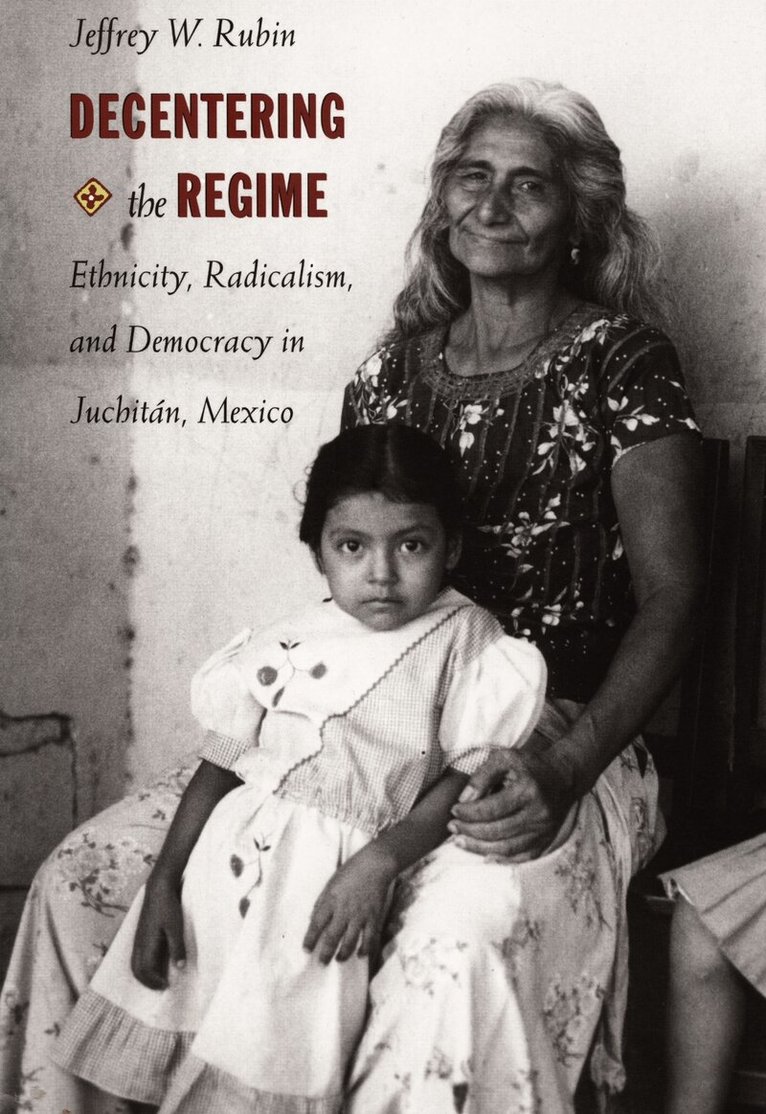
    Decentering the Regime

    Ethnicity, Radicalism, and Democracy in Juchitán, Mexico

    AvJeffrey W. Rubin

    Häftad, Engelska, 1997

    377 kr

    Beställningsvara. Skickas inom 5-8 vardagar. Fri frakt över 249 kr.

    Fler format och utgåvor

    E-bok

    568 kr

    Beskrivning

    Since 1989 an indigenous political movement-the Coalition of Workers, Peasants, and Students of the Isthmus (COCEI)-has governed the southern Mexican city of JuchitÁn. In Decentering the Regime, Jeffrey W. Rubin examines this Zapotec Indian movement and shows how COCEI forged an unprecedented political and cultural path-overcoming oppression in the 1970s to achieve democracy in the 1990s. Rubin traces the history and rise to power of this grassroots movement, and describes a JuchitÁn that exists in substantial autonomy from the central Mexican government and Mexican nationalism-thereby debunking the notion that a state- and regime-centered approach to power can explain the politics of domination and resistance in Mexico.Employing an interdisciplinary approach, Rubin shows that the Juchitecos’ ability to organize and sustain a radical political movement grew out of a century-long history of negotiation of political rule. He argues that factors outside the realm of formal politics-such as ethnicity, language, gender, and religion-play an important part in the dynamics of regional political struggles and relationships of power. While offering a detailed view of the Zapotec community and its interactions, Rubin reconceptualizes democracy by considering the question of how meaningful autonomy, self-government, cultural expression, and material well-being can be forged out of violence and repression.

    Produktinformation

    • Utgivningsdatum:1997-11-18
    • Mått:153 x 229 x 24 mm
    • Vikt:608 g
    • Format:Häftad
    • Språk:Engelska
    • Antal sidor:328
    • Förlag:Duke University Press
    • ISBN:9780822320630

    Utforska kategorier

    • Statsvetenskap och politisk teori inom Samhälle och politik
    • Etnicitet inom Samhälle och politik

    Mer om författaren

    Jeffrey W. Rubin is Associate Professor of History and Research Associate at Institute for the Study of Economic Culture at Boston University.

    Recensioner i media

    "Decentering the Regime reveals a creative, unorthodox political scientist at work. Rubin integrates trenchant cultural and ethnohistorical analysis into his examination of local, regional, and national politics. In the process, his work takes its place on the cutting edge of research not only on Mexican politics and Latin American social movements, but also on broader, post-structural discussions of hegemony and the contested relationship between state formation and popular culture."-Gilbert M. Joseph, Yale University