• Fri frakt över 249 kr
  • •
  • Snabba leveranser
  • •
  • Billiga böcker
Kundservice

Du är på sajten för privatpersoner.

Företag, bibliotek eller offentlig verksamhet?

Du handlar på classic.bokus.com, där alla dina funktioner finns intakta.
Till classic.bokus.com
Bokus logotyp. Gå till startsidan.
  • Erbjudanden
  • Student
  • Topplistor
  • Barn & ungdom
  • Bokus Play
  • E-böcker
  • Ljudböcker
  • Pocketböcker
  • Spel och pussel

5% studentrabatt – använd koden KURSBOK27 →

Sidfot

Mina sidor

    Hjälp

    • Kundservice
    • Vanliga frågor och svar
    • Frakt och leverans
    • Retur vid ångerrätt
    • Reklamera vara
    • Betalning
    • Köpvillkor
    • Allmänna villkor
    • Information om webbplatsens tillgänglighet

    Om Bokus

    • Om oss
    • Pressrum
    • För studenter
    • För företag
    • För bibliotek och offentlig verksamhet
    • För leverantörer
    • Hållbarhet

    Populärt

    • Aktuella erbjudanden
    • Presentkort
    • Studentlitteratur
    • Nya böcker
    • Topplistor
    • Signerade böcker
    • Engelska böcker

    Inspiration

    • Boktips
    • BookTok
    • Barnbokskaraktärer
    • Populära författare
    Logotyp för Bokus
    Följ oss på Facebook (extern länk)Följ oss på Instagram (extern länk)Följ oss på YouTube (extern länk)Följ oss på TikTok (extern länk)
    bokus @ CookiesAnpassa cookiesIntegritetspolicyKöpvillkor
    Till Citymail hemsida (extern länk)Till Budbee hemsida (extern länk)Till Postnord hemsida (extern länk)Till Schenker hemsida (extern länk)Till Early Bird hemsida (extern länk)Till Walleys hemsida (extern länk)
    1. Samhälle och politik
    2. Samhälle och kultur
    3. Kultur och medier
    4. Kulturvetenskap

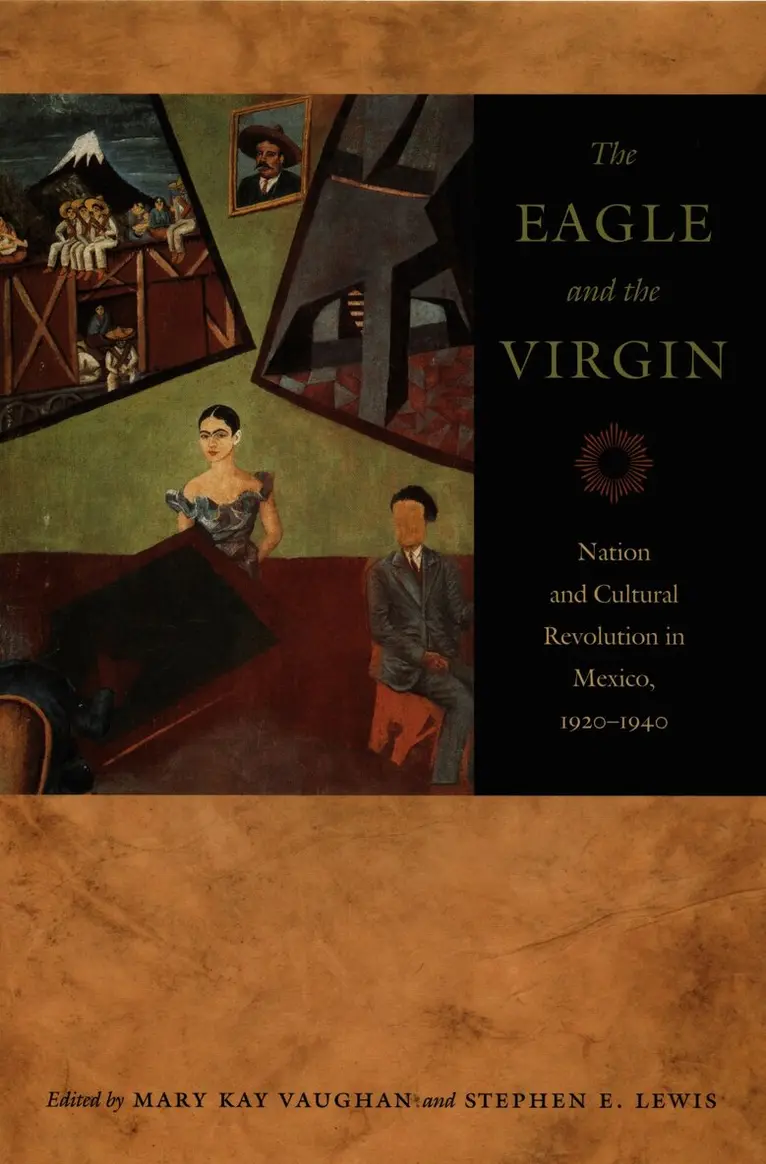
    Eagle and the Virgin

    Nation and Cultural Revolution in Mexico, 1920–1940

    AvMary Kay Vaughan,Stephen Lewis

    Häftad, Engelska, 2006

    442 kr

    Beställningsvara. Skickas inom 5-8 vardagar. Fri frakt över 249 kr.

    Beskrivning

    When the fighting of the Mexican Revolution died down in 1920, the national government faced the daunting task of building a cohesive nation. It had to establish control over a disparate and needy population and prepare the country for global economic competition. As part of this effort, the government enlisted the energy of artists and intellectuals in cultivating a distinctly Mexican identity. It devised a project for the incorporation of indigenous peoples and oversaw a vast, innovative program in the arts. The Eagle and the Virgin examines the massive nation-building project Mexico undertook between 1920 and 1940.Contributors explore the nation-building efforts of the government, artists, entrepreneurs, and social movements; their contradictory, often conflicting intersection; and their inevitably transnational nature. Scholars of political and social history, communications, and art history describe the creation of national symbols, myths, histories, and heroes to inspire patriotism and transform workers and peasants into efficient, productive, gendered subjects. They analyze the aesthetics of nation building made visible in murals, music, and architecture; investigate state projects to promote health, anticlericalism, and education; and consider the role of mass communications, such as cinema and radio, and the impact of road building. They discuss how national identity was forged among social groups, specifically political Catholics, industrial workers, middle-class women, and indigenous communities. Most important, the volume weighs in on debates about the tension between the eagle (the modernizing secular state) and the Virgin of Guadalupe (the Catholic defense of faith and morality). It argues that despite bitter, violent conflict, the symbolic repertoire created to promote national identity and memory making eventually proved capacious enough to allow the eagle and the virgin to coexist peacefully.Contributors. Adrian Bantjes, Katherine Bliss, MarÍa Teresa FernÁndez, Joy Elizabeth Hayes, Joanne Hershfield, Stephen E. Lewis, Claudio Lomnitz, Rick A. LÓpez, Sarah M. Lowe, Jean Meyer, James Oles, Patrice Olsen, Desmond Rochfort, Michael Snodgrass, Mary Kay Vaughan, Marco VelÁzquez, Wendy Waters, Adriana Zavala

    Produktinformation

    • Utgivningsdatum:2006-03-13
    • Mått:156 x 235 x 25 mm
    • Vikt:612 g
    • Format:Häftad
    • Språk:Engelska
    • Antal sidor:396
    • Förlag:Duke University Press
    • ISBN:9780822336686

    Utforska kategorier

    • Kulturvetenskap inom Samhälle och politik
    • Amerikas historia inom Historia och arkeologi

    Mer om författaren

    Mary Kay Vaughan is Professor of History at the University of Maryland, College Park. Her books include Cultural Politics in Revolution: Teachers, Peasants, and Schools in Mexico, 1930–1940. She is a coeditor of the journal Hispanic American Historical Review.Stephen E. Lewis is Associate Professor of History at California State University, Chico. He is the author of The Ambivalent Revolution: Forging State and Nation in Chiapas, 1910–1945.

    Recensioner i media

    “The Eagle and the Virgin is a necessary book, a selection of essays which allows readers to see in detail how a nation is invented and reinvented, how it experiences its achievements and its customs, both the good and the bad; and how it is internationalized and nationalized (since by 1940 Mexico was both a more cosmopolitan country and a more Mexican one). A delightful work.”-Carlos MonsivÁis “Steeped in a generation of new cultural and transnational analysis of state formation and popular expression, The Eagle and the Virgin raises the bar for studies of nation building and cultural politics in postrevolutionary Mexico. Particularly impressive is the volume’s sensitive analysis of contests over religious culture and symbols, its gendered understanding of state formation, and its handsomely illustrated treatment of the development of a Mexican revolutionary aesthetic.”-Gilbert M. Joseph, coeditor of The Mexico Reader: History, Culture, Politics “The 16 essays that Mary Kay Vaughan and Stephen E. Lewis have compiled here inventively probe and synthesize the synergistic processes of nation building and cultural revolution that characterized Mexico in the period from 1920 to 1940. . . . The vibrancy and variety of these essays remind us that culture is integral to any analysis of this crucial period in the formation of Mexican national identity, because Mexico’s cultural revolution is so inimitable in its many contested manifestations. As this volume demonstrates, its very creativity and inconsistency are fundamental to understanding the complexity of the interactions that took place between the state and popular sectors.” - Susan M. Deeds (Hispanic American Historical Review)

    Innehållsförteckning

    • List of Illustrations xiiAcknowledgments ixIntroduction / Mary Kay Vaughan and Stephen E. Lewis 1I. The Aesthetics of Nation Building The Noche Mexicana and the Exhibition of Popular Arts:Two Ways of Exalting Indianness / Rick A. Lopez 23The Sickle, the Serpent, and the Soil: History, Revolution, Nationhood, and Modernity in the Murals of Diego Rivera, Jose Clemente Orozco, and David Alfaro Siqueiros / Desmond Rochfort 43Painting in the Shadow of the Big Three Frida Kahlo / Sarah M. Lowe 53Maria Izquierdo / Adrianna Zavala 67The Mexican Experience of Marion and Grace Greenwood / James Oles 79Mestizaje and Musical Nationalism in Mexico/ Marco Velazquez and Mary Kay Vaughan 95Revolution in the City Streets: Changing Nomenclature, Changing Form, and the Revision of Public Memory / Patrice Elizabeth Olsen 119II. Utopian Projects of the State Saints, Sinners, and the State Formation: Local Religion and Cultural Revolution in Mexico / Adrian A. Bantjes 137Nationalizing the Countryside: Schools and Rural Communities in the 1930’s / Mary Kay Vaughan 157The Nation, Education, and the “Indian Problem” in Mexico, 1920–1940 / Stephen E. Lewis 176For the Health of the Nation: Gender and the Cultural Politics of Social Hygiene in Revolutionary Mexico / Katherine E. Bliss 196III. Mass Communication and Nation Building Remapping Identities: Road Construction and Nation Building in Postrevolutionary Mexico / Wendy Waters 221National Imaginings on the Air: Radio in Mexico, 1920–1950 / Joy Elizabeth Hayes 243Screening the Nation / Joanne Hershfield 259IV. Social Construction of Nations An Idea of Mexico: Catholics in the Revolution / Jean Meyer 281Guadalajaran Women and the Construction of National Identity / Maria Teresa Fernandez Aceves 297“We Are All Mexicans Here”: Workers, Patriotism, and Union Struggles in Monterrey / Michael Snodgrass 314Final Reflections: What Was Mexico’s Cultural Revolution? / Claudio Lomnitz 335Contributors 351Index 357