• Fri frakt över 249 kr
  • •
  • Snabba leveranser
  • •
  • Billiga böcker
Kundservice

Du är på sajten för privatpersoner.

Företag, bibliotek eller offentlig verksamhet?

Du handlar på classic.bokus.com, där alla dina funktioner finns intakta.
Till classic.bokus.com
Bokus logotyp. Gå till startsidan.
  • Erbjudanden
  • Nyheter
  • Student
  • Topplistor
  • Barn & ungdom
  • Bokus Play
  • E-böcker
  • Pocketböcker
  • Spel & pussel

10% rabatt på allt med kod: NYSTART10 →

Sidfot

Mina sidor

    Hjälp

    • Kundservice
    • Vanliga frågor och svar
    • Frakt och leverans
    • Retur vid ångerrätt
    • Reklamera vara
    • Betalning
    • Köpvillkor
    • Allmänna villkor
    • Information om webbplatsens tillgänglighet

    Om Bokus

    • Om oss
    • Pressrum
    • För studenter
    • För företag
    • För bibliotek och offentlig verksamhet
    • För leverantörer
    • Hållbarhet

    Populärt

    • Aktuella erbjudanden
    • Presentkort
    • Studentlitteratur
    • Nya böcker
    • Topplistor
    • Signerade böcker
    • Engelska böcker

    Inspiration

    • Boktips
    • BookTok
    • Populära bokserier
    • Barnbokskaraktärer
    • Populära författare
    Logotyp för Bokus
    Följ oss på Facebook (extern länk)Följ oss på Instagram (extern länk)Följ oss på YouTube (extern länk)Följ oss på TikTok (extern länk)
    bokus @ CookiesAnpassa cookiesIntegritetspolicyKöpvillkor
    Till Citymail hemsida (extern länk)Till Budbee hemsida (extern länk)Till Postnord hemsida (extern länk)Till Schenker hemsida (extern länk)Till Early Bird hemsida (extern länk)Till Walleys hemsida (extern länk)
    1. Naturvetenskap och teknik
    2. Geovetenskap
    3. Geovetenskap

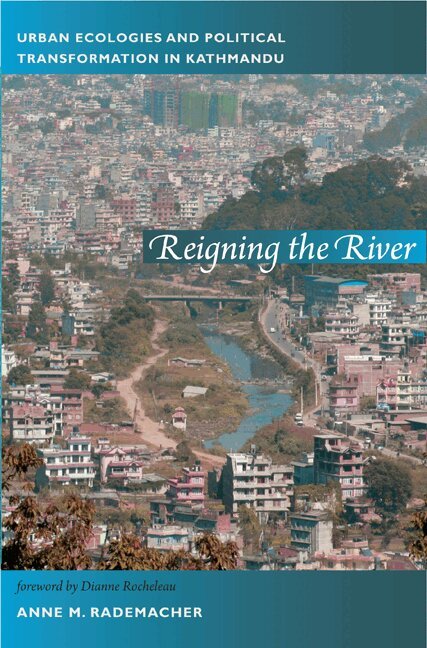
    Reigning the River

    Urban Ecologies and Political Transformation in Kathmandu

    AvAnne Rademacher

    Häftad, Engelska, 2011

    Del i serien New Ecologies for the Twenty-First Century

    256 kr

    Skickas . Fri frakt över 249 kr.

    Fler format och utgåvor

    E-bok

    568 kr

    Beskrivning

    A major contribution to the nascent anthropology of urban environments, Reigning the River illuminates the complexities of river restoration in Kathmandu, Nepal’s capital and one of the fastest-growing cities in South Asia. In this rich ethnography, Anne M. Rademacher explores the ways that urban riverscape improvement involved multiple actors, each constructing ideals of restoration through contested histories and ideologies of belonging. She examines competing understandings of river restoration, particularly among bureaucrats in state and conservation-development agencies, cultural heritage activists, and advocates for the security of tens of thousands of rural-to-urban migrants settled along the exposed riverbed. Rademacher conducted research during a volatile period in Nepal’s political history. As clashes between Maoist revolutionaries and the government intensified, the riverscape became a site of competing claims to a capital city that increasingly functioned as a last refuge from war-related violence. In this time of intense flux, efforts to ensure, create, or imagine ecological stability intersected with aspirations for political stability. Throughout her analysis, Rademacher emphasizes ecology as an important site of dislocation, entitlement, and cultural meaning.

    Produktinformation

    • Utgivningsdatum:2011-10-27
    • Mått:152 x 232 x 17 mm
    • Vikt:376 g
    • Format:Häftad
    • Språk:Engelska
    • Serie:New Ecologies for the Twenty-First Century
    • Antal sidor:264
    • Förlag:Duke University Press
    • ISBN:9780822350804

    Utforska kategorier

    • Geovetenskap inom Naturvetenskap och teknik
    • Miljövetenskap och miljöpolitik inom Naturvetenskap och teknik
    • Regional planering inom Naturvetenskap och teknik

    Mer om författaren

    Anne M. Rademacher is Assistant Professor of Environmental and Metropolitan Studies in the Department of Social and Cultural Analysis at New York University.

    Recensioner i media

    “Anthropologists have just begun to turn their attention to cities in the south and Reigning the River is one of the first detailed ethnographies to effectively grapple with the cultural politics of urban natures. It is an admirable project and will not only be of immense relevance to a wide range of readers interested in questions of urban improvement, development, and livelihood struggles, but it also deserves to be read widely by undergraduate and graduate students of urban studies, environmental studies, anthropology, cultural studies, and South Asian studies. It is a pioneering contribution that is bound to have a lasting impact.” - Shubhra Gururani, American Ethnologist “[A] valuable resource for those with a general interest in urban problems orin Nepal for disciplinary specialists.” - John Whelpton, Asian Anthropology “It certainly does represent a considerable advance in the literature of environmentally conscious humanities research, with powerful general conclusions that can guide both practitioners and academics.” - Paul Brown, Asian Studies Review “Cutting-edge social science has not kept pace with the shift of most of the human population to urban areas. Anne M. Rademacher helps to remedy this deficiency by asking, as one of her informants did of her, ‘What is urban ecology?’ In answer, she shows how urban nature and culture are mutually produced, reinforced, and changed, deftly weaving into her analysis recent political and environmental transformations in Nepal. The result is a pioneering study of the moral and affective dimensions of a twenty-first-century urban environment. It is a model for a new generation of urban studies.”-Michael R. Dove, Yale University “This lucidly written and rigorously argued book is likely to become a major contribution to the anthropology of the Himalayan environment, and to the small but growing literature on urban modernity in Nepal. In the eyes of environmental activists, the sorry state of the Bagmati River is a metaphor for the state of Nepal itself. By elucidating the activists’ critique and their vision for a more ordered and coherent future, Anne M. Rademacher makes a deeply original contribution to political anthropology. This book deserves to be widely read both by students of Himalayan society, culture, and politics and by those who work in the areas of Nepal’s environment, development, and governance. The clarity of the writing makes it especially suitable as an undergraduate text in a range of courses on environment and development, political anthropology, urban anthropology, and South Asian studies.”-Arjun Guneratne, Macalester College “Rademacher provides an engaging ethnographic account of environmental and political transformation in Kathmandu, permeated with abundant historical material and written with a close yet critical understanding of the subject. The book, strong on theoretical references to interdisciplinary debates in social science and in the field of Nepal studies, has made its own important contributions in these fields.” - Tashi Tsering (Environmental History) “[A] valuable resource for those with a general interest in urban problems or in Nepal for disciplinary specialists.” - John Whelpton (Asian Anthropology) “Anthropologists have just begun to turn their attention to cities in the south and Reigning the River is one of the first detailed ethnographies to effectively grapple with the cultural politics of urban natures. It is an admirable project and will not only be of immense relevance to a wide range of readers interested in questions of urban improvement, development, and livelihood struggles, but it also deserves to be read widely by undergraduate and graduate students of urban studies, environmental studies, anthropology, cultural studies, and South Asian studies. It is a pioneering contribution that is bound to have a lasting impact.” - Shubhra Gururani (American Ethnologist)

    Innehållsförteckning

    • About the Series viiiForeword ixAcknowledgments xiiiIntroduction. A Riverscape Undone 11. Creating Nepal in the Kathmandu Valley 422. Knowing the Problem 573. War, Emergency, and an Unsettled City 914. Emergency Ecology and the Order of Renewal 1165. Ecologies of Invasion 1396. Local Rivers, Global Reaches 155Conclusion. Anticipating Restoration 175Notes 185References 211Index 237