• Fri frakt över 249 kr
  • •
  • Snabba leveranser
  • •
  • Billiga böcker
Kundservice

Du är på sajten för privatpersoner.

Företag, bibliotek eller offentlig verksamhet?

Du handlar på classic.bokus.com, där alla dina funktioner finns intakta.
Till classic.bokus.com
Bokus logotyp. Gå till startsidan.
  • Erbjudanden
  • Nyheter
  • Student
  • Topplistor
  • Barn & ungdom
  • Bokus Play
  • E-böcker
  • Pocketböcker
  • Spel & pussel

10% rabatt på allt med kod NYSTART10 →

Sidfot

Mina sidor

    Hjälp

    • Kundservice
    • Vanliga frågor och svar
    • Frakt och leverans
    • Retur vid ångerrätt
    • Reklamera vara
    • Betalning
    • Köpvillkor
    • Allmänna villkor
    • Information om webbplatsens tillgänglighet

    Om Bokus

    • Om oss
    • Pressrum
    • För studenter
    • För företag
    • För bibliotek och offentlig verksamhet
    • För leverantörer
    • Hållbarhet

    Populärt

    • Aktuella erbjudanden
    • Presentkort
    • Studentlitteratur
    • Nya böcker
    • Topplistor
    • Signerade böcker
    • Engelska böcker

    Inspiration

    • Boktips
    • BookTok
    • Populära bokserier
    • Barnbokskaraktärer
    • Populära författare
    Logotyp för Bokus
    Följ oss på Facebook (extern länk)Följ oss på Instagram (extern länk)Följ oss på YouTube (extern länk)Följ oss på TikTok (extern länk)
    bokus @ CookiesAnpassa cookiesIntegritetspolicyKöpvillkor
    Till Citymail hemsida (extern länk)Till Budbee hemsida (extern länk)Till Postnord hemsida (extern länk)Till Schenker hemsida (extern länk)Till Early Bird hemsida (extern länk)Till Walleys hemsida (extern länk)
    1. Historia och arkeologi
    2. Historia
    3. Europas historia

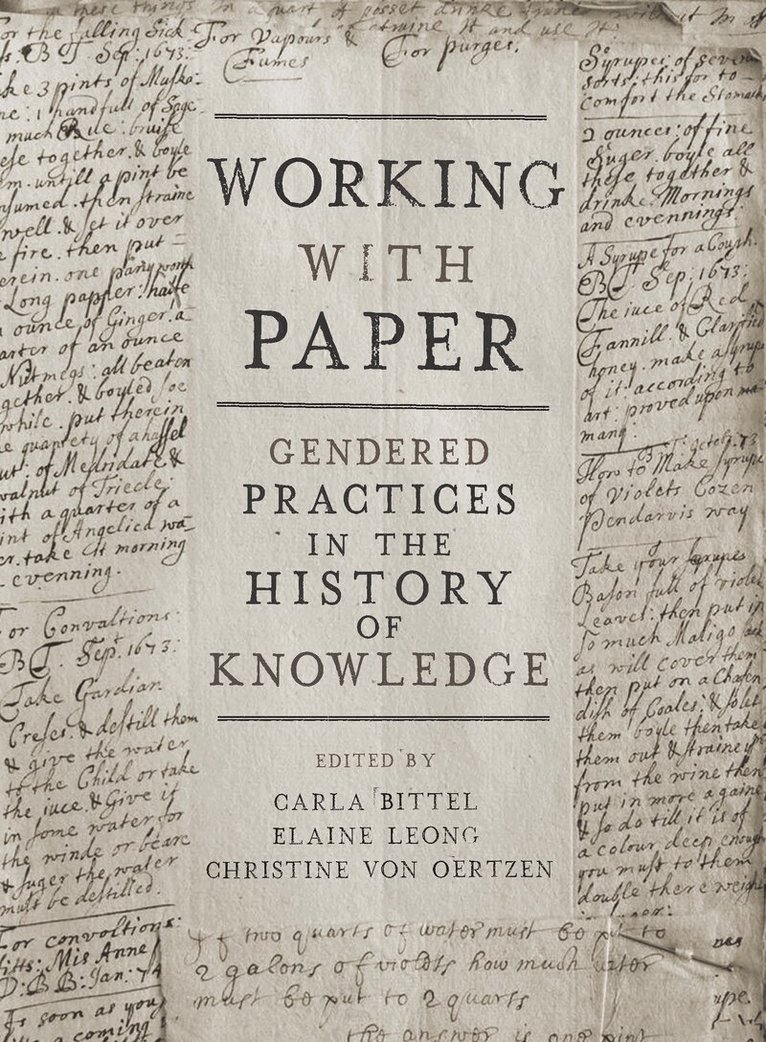
    Working with Paper

    Gendered Practices in the History of Knowledge

    AvCarla Bittel,Elaine Leong

    Inbunden, Engelska, 2019

    926 kr

    Beställningsvara. Skickas inom 5-8 vardagar. Fri frakt över 249 kr.

    Beskrivning

    Working with Paper builds on a growing interest in the materials of science by exploring the gendered uses and meanings of paper tools and technologies, considering how notions of gender impacted paper practices and in turn how paper may have structured knowledge about gender. Through a series of dynamic investigations covering Europe and North America and spanning the early modern period to the twentieth century, this volume breaks new ground by examining material histories of paper and the gendered worlds that made them. Contributors explore diverse uses of paper—from healing to phrenological analysis to model making to data processing—which often occurred in highly gendered, yet seemingly divergent spaces, such as laboratories and kitchens, court rooms and boutiques, ladies’ chambers and artisanal workshops, foundling houses and colonial hospitals, and college gymnasiums and state office buildings. Together, they reveal how notions of masculinity and femininity became embedded in and expressed through the materials of daily life. Working with Paper uncovers the intricate negotiations of power and difference underlying epistemic practices, forging a material history of knowledge in which quotidian and scholarly practices are intimately linked.

    Produktinformation

    • Utgivningsdatum:2019-06-25
    • Mått:152 x 229 x 27 mm
    • Vikt:604 g
    • Format:Inbunden
    • Språk:Engelska
    • Antal sidor:320
    • Förlag:University of Pittsburgh Press
    • ISBN:9780822945598

    Utforska kategorier

    • Europas historia inom Historia och arkeologi
    • Amerikas historia inom Historia och arkeologi
    • Naturvetenskapens historia inom Naturvetenskap och teknik

    Mer om författaren

    Carla Bittel (Editor) Carla Bittel is associate professor of history at Loyola Marymount University in Los Angeles.Elaine Leong (Editor) Elaine Leong is lecturer in history at University College London.Christine von Oertzen (Editor) Christine von Oertzen is senior research scholar in Department II at the Max Planck Institute for the History of Science in Berlin.

    Recensioner i media

    An important and instructive book that shows both the possibilities and the limits of a gender-sensitive perspective on knowledge and its paper medium in history.