• Fri frakt över 249 kr
  • •
  • Snabba leveranser
  • •
  • Billiga böcker
Kundservice

Du är på sajten för privatpersoner.

Företag, bibliotek eller offentlig verksamhet?

Du handlar på classic.bokus.com, där alla dina funktioner finns intakta.
Till classic.bokus.com
Bokus logotyp. Gå till startsidan.
  • Erbjudanden
  • Nyheter
  • Student
  • Topplistor
  • Barn & ungdom
  • Bokus Play
  • E-böcker
  • Pocketböcker
  • Spel & pussel

10% rabatt på allt med kod: NYSTART10 →

Sidfot

Mina sidor

    Hjälp

    • Kundservice
    • Vanliga frågor och svar
    • Frakt och leverans
    • Retur vid ångerrätt
    • Reklamera vara
    • Betalning
    • Köpvillkor
    • Allmänna villkor
    • Information om webbplatsens tillgänglighet

    Om Bokus

    • Om oss
    • Pressrum
    • För studenter
    • För företag
    • För bibliotek och offentlig verksamhet
    • För leverantörer
    • Hållbarhet

    Populärt

    • Aktuella erbjudanden
    • Presentkort
    • Studentlitteratur
    • Nya böcker
    • Topplistor
    • Signerade böcker
    • Engelska böcker

    Inspiration

    • Boktips
    • BookTok
    • Populära bokserier
    • Barnbokskaraktärer
    • Populära författare
    Logotyp för Bokus
    Följ oss på Facebook (extern länk)Följ oss på Instagram (extern länk)Följ oss på YouTube (extern länk)Följ oss på TikTok (extern länk)
    bokus @ CookiesAnpassa cookiesIntegritetspolicyKöpvillkor
    Till Citymail hemsida (extern länk)Till Budbee hemsida (extern länk)Till Postnord hemsida (extern länk)Till Schenker hemsida (extern länk)Till Early Bird hemsida (extern länk)Till Walleys hemsida (extern länk)
    1. Naturvetenskap och teknik
    2. Matematik och naturvetenskap
    3. Naturvetenskap:allmänt
    4. Naturvetenskapens historia

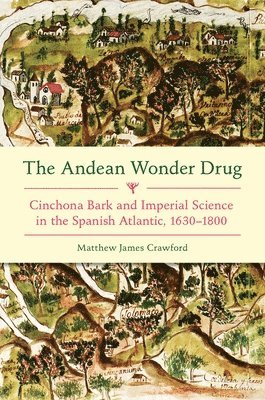
    Andean Wonder Drug

    Cinchona Bark and Imperial Science in the Spanish Atlantic, 1630-1800

    AvMatthew James Crawford

    Häftad, Engelska, 2026

    Del i serien University of Pittsburgh Press

    493 kr

    Beställningsvara. Skickas inom 5-8 vardagar. Fri frakt över 249 kr.

    Fler format och utgåvor

    Inbunden

    857 kr

    Beskrivning

    In the eighteenth century, malaria was a prevalent and deadly disease, and the only effective treatment was found in the Andean forests of Spanish America: a medicinal bark harvested from cinchona trees that would later give rise to the antimalarial drug quinine. In 1751, the Spanish Crown asserted control over the production and distribution of this medicament by establishing a royal reserve of “fever trees” in Quito. Through this pilot project, the Crown pursued a new vision of imperialism informed by science and invigorated through commerce. But ultimately this project failed, much like the broader imperial reforms that it represented. Drawing on extensive archival research, Matthew James Crawford explains why and shows how indigenous healers, laborers, merchants, colonial officials, and creole elites contested European science and thwarted imperial reform by asserting their authority to speak for the natural world. The Andean Wonder Drug uses the story of cinchona bark to demonstrate how the imperial politics of knowledge in the Spanish Atlantic ultimately undermined efforts to transform European science into a tool of empire.

    Produktinformation

    • Utgivningsdatum:2026-01-13
    • Mått:152 x 229 x 17 mm
    • Vikt:403 g
    • Format:Häftad
    • Språk:Engelska
    • Serie:University of Pittsburgh Press
    • Antal sidor:336
    • Förlag:University of Pittsburgh Press
    • ISBN:9780822968146

    Utforska kategorier

    • Naturvetenskapens historia inom Naturvetenskap och teknik

    Mer om författaren

    Matthew James Crawford is associate professor in the Department of History at Kent State University.

    Recensioner i media

    The Andean Wonder Drug in question is quina, the lifesaving bark of the cinchona tree, whose forests in Ecuador, Colombia, and Peru were supposedly squandered by the Spanish Crown; whose alkaloids were isolated as quinine by French pharmacists in 1820; and whose seeds were replanted in Asia by late nineteenth-century British and Dutch agents of science, profit, and empire. Or so the story is often told. Matthew James Crawford's book offers a forceful rewriting of its history.