Häftad, Engelska, 2012
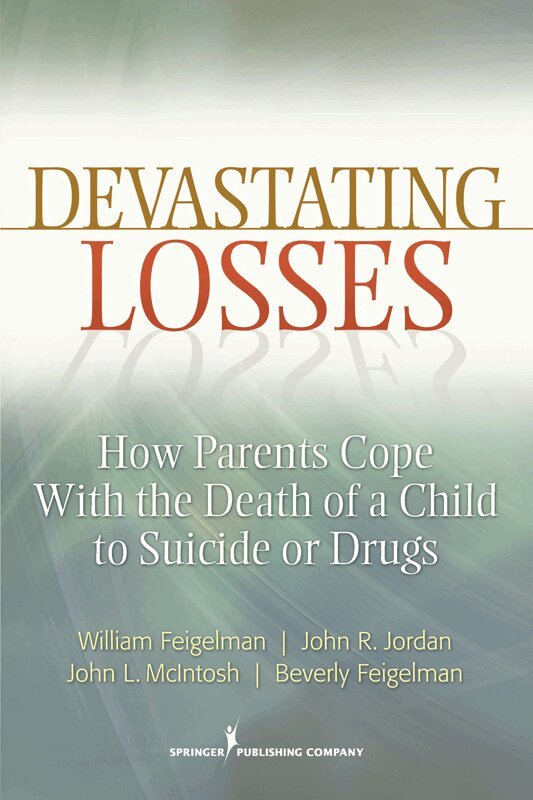
Devastating Losses
Av William Feigelman, John Jordan, John McIntosh, Beverly Feigelman
715 kr
Beställningsvara. Skickas inom 5-8 vardagar. Fri frakt över 249 kr.
Beskrivning
Based on my forty year career in grief counseling, I give this work an unqualified recommendation for both professionals who care for grieving parents as well as for parents who are trying to understand their own losses or those of relatives or friends."--Gerald Corey, EdD, ABPP; in Illness, Crisis, and LossThis notable book provides new and substantive research data and perspective about how parents cope with the devastation that follows the death of a child to suicide or drugs...It greatly enriches our understanding to offer appropriate response for the healing journey of traumatically bereaved parents."--The Forum: The Newsletter of the Association for Death Education and Counseling (ADEC)[The] Feigelmans initiated the broadest and most conclusive survey data collection project regarding parent survivors. The result is the most current and comprehensive understanding of parent suicide survivors to date, with survivors ranging from the newly bereaved to those whose loss was well over a decade ago. This fact alone would ensure Devastating Loss's designation as an essential resource for mental health professionals, suicide survivors, and grief experts around the world. However, there is additional value in this work which is far greater than just the data collection."--American Association of SuicidologyIn addition to tugging on my heartstrings, Devastating Losses: How Parents Cope with the Death of a Child to Suicide or Drugs captivated my clinical quest for knowledge. The authors combined personal stories of survivors who lost children to suicide or drug related deaths with a profundity of solid quantitative research and clinical experience."--The Professional Counselor (TPC) JournalFinally, a thorough and elaborate American study has appeared on the grief and mourning process of bereaved parents who experienced the loss of a child to suicide or a drug overdose."--LAVA[This] reader experienced surprise in reading the book. It was not surprising that these experts did a good job; after all, they are experts writing on a topic they know well. Rather, it is the personal element, not often seen amidst so much data. The book is like a recipe for chicken salad that includes prunes, an unexpected combination that works quite well."--Death Studies"Grounded equally in solid clinical practice and uniquely relevant research, and tragically leavened by the personal bereavement of two of the book's authors, Devastating Losses sheds new and compassionate light on the experience of a child's death to traumatic causes." Robert A. Neimeyer, PhDEditor, Death StudiesThe book is important for its contributions to knowledge of a complex and illusive subject, and alsoóperhaps as importantlyóa model for personal growth in the context of loss through learning and connection."--Clinical Social Work JournalThis volume is a pioneering and long overdue work, a study not only of grieving parents who lost a child to suicide but also of parents whose children succumbed to drug overdoses. The authors have done a masterful job of blending their quantitative research findings and the anguished voices of parents attending survivor support groups to create a rich and very engaging book.Michael F Myers, MDCo-Author, "Touched by Suicide: Hope and Healing after Loss""I recommend this book for its impressive scope of data and thoughtful analysis. This resource will also be of value to those coping with the devastating loss of a family member or loved one."Edward K. (Ted) RynearsonClinical Professor of Psychiatry, University of WashingtonDirector, Violent Death Bereavement SocietyAuthor, Retelling Violent Death, and Editor, Violent Death: Resilience and Intervention Beyond the CrisisThis book fills a critical gap in our scientific understanding of the grief response of parents who have lost a child to traumatic death and the psychotherapeutic strategies that best facilitate healing. It is based on the results of the largest study ever conducted of parents surviving a child's traumatic death or suicide. The book was conceived by William and Beverly Feigelman following their own devastating loss of a son, and written from the perspective of their experiences as both suicide-survivor support group participants and facilitators. It intertwines data, insight, and critical learning gathered from research with the voices of the 575 survivors who participated in the study. The text emphasizes the sociological underpinnings of survivors' grief and provides data that vividly documents their critical need for emotional support. It explains how bereavement difficulties can be exacerbated by stigmatization, and by the failure of significant others to provide expected support. Also explored in depth are the ways in which couples adapt to the traumatic loss of a child and how this can bring them closer or render their relationship irreparable. Findings suggest that with time and peer support affiliations, most traumatically bereaved parents ultimately demonstrate resilience and find meaningful new roles for themselves, helping the newly bereaved or engaging in other humanitarian acts. Key Features: Offers researchers, clinicians, and parent-survivors current information on how parents adapt initially and over time after the traumatic loss of a child Presents data culled from the largest survey ever conducted (575 individuals) of parents surviving a child's suicide or other traumatic death Investigates the ways in which stigmatization complicates and prolongs the grieving process Addresses the tremendous value of support groups in the healing process Explores how married couples are affected by the traumatic loss of their child
Produktinformation
- Utgivningsdatum: 2012-06-20
- Mått: 152 x 229 x 26 mm
- Vikt: 542 g
- Format: Häftad
- Språk: Engelska
- Antal sidor: 360
- Förlag: Springer Publishing Co Inc
- ISBN: 9780826107466
Utforska kategorier
Betyg & recensioner
0 recensioner
Inga recensioner tillgängliga.