• Fri frakt över 249 kr
  • •
  • Snabba leveranser
  • •
  • Billiga böcker
Kundservice

Du är på sajten för privatpersoner.

Företag, bibliotek eller offentlig verksamhet?

Du handlar på classic.bokus.com, där alla dina funktioner finns intakta.
Till classic.bokus.com
Bokus logotyp. Gå till startsidan.
  • Erbjudanden
  • Nyheter
  • Student
  • Topplistor
  • Barn & ungdom
  • Bokus Play
  • E-böcker
  • Pocketböcker
  • Spel & pussel

10% rabatt på allt med kod: NYSTART10 →

Sidfot

Mina sidor

    Hjälp

    • Kundservice
    • Vanliga frågor och svar
    • Frakt och leverans
    • Retur vid ångerrätt
    • Reklamera vara
    • Betalning
    • Köpvillkor
    • Allmänna villkor
    • Information om webbplatsens tillgänglighet

    Om Bokus

    • Om oss
    • Pressrum
    • För studenter
    • För företag
    • För bibliotek och offentlig verksamhet
    • För leverantörer
    • Hållbarhet

    Populärt

    • Aktuella erbjudanden
    • Presentkort
    • Studentlitteratur
    • Nya böcker
    • Topplistor
    • Signerade böcker
    • Engelska böcker

    Inspiration

    • Boktips
    • BookTok
    • Populära bokserier
    • Barnbokskaraktärer
    • Populära författare
    Logotyp för Bokus
    Följ oss på Facebook (extern länk)Följ oss på Instagram (extern länk)Följ oss på YouTube (extern länk)Följ oss på TikTok (extern länk)
    bokus @ CookiesAnpassa cookiesIntegritetspolicyKöpvillkor
    Till Citymail hemsida (extern länk)Till Budbee hemsida (extern länk)Till Postnord hemsida (extern länk)Till Schenker hemsida (extern länk)Till Early Bird hemsida (extern länk)Till Walleys hemsida (extern länk)
    1. Psykologi och pedagogik
    2. Pedagogik
    3. Högskola och universitet

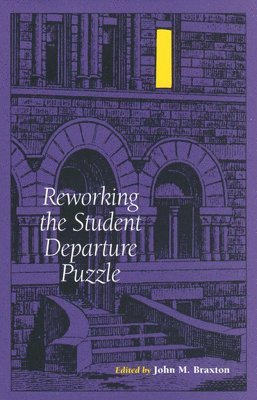
    Reworking the Student Departure Puzzle

    AvJohn M. Braxton

    Inbunden, Engelska, 2000

    Del i serien Vanderbilt Issues in Higher Education

    1 118 kr

    Beställningsvara. Skickas inom 5-8 vardagar. Fri frakt över 249 kr.

    Beskrivning

    More than a quarter of the students who enter four-year institutions and half of those who enter two-year schools depart at the end of their first year. This phenomenon is known as the ""departure puzzle,"" and for years, the most important body of work on student retention has come from sociologist Vincent Tinto. In Reworking the Student Departure Puzzle, leading scholars of the college student experience - including Tinto himself - reevaluate Tinto's interactionalist perspective, which holds that students unable to connect with either the academic or social subsystems of their institutions are likely to leave. Recent critiques of this theory have indicated the need for either its serious revision or the development of a new theory altogether. The contributors to this volume offer a variety of both theoretical and methodological perspectives on student departure, with additional chapters covering minority student retention, the link between college choice and student persistence, and the effect of the classroom experience on the student's choice. The recommendations made here will not only reinvigorate research on this important topic but will also lead administrators to better mana

    Produktinformation

    • Utgivningsdatum:2000-11-27
    • Mått:152 x 229 x 29 mm
    • Vikt:454 g
    • Format:Inbunden
    • Språk:Engelska
    • Serie:Vanderbilt Issues in Higher Education
    • Antal sidor:264
    • Förlag:Vanderbilt University Press
    • ISBN:9780826513083

    Utforska kategorier

    • Högskola och universitet inom Psykologi och pedagogik
    • Utbildningsstrategier och utbildningspolitik inom Psykologi och pedagogik

    Mer om författaren

    John M. Braxton is associate professor in the Department of Leadership and Organizations at Vanderbilt University's Peabody College and editor of the series Vanderbilt Issues in Higher Education, in which this volume appears. His many books include Faculty Misconduct in Collegiate Teaching.

    Recensioner i media

    By choosing to rework and examine college student retention, the authors have chosen to bravely confront, revise, and augment the venerated Tinto Interactionist Theory. Unafraid to challenge an icon of higher education that has been well-respected for over twenty-five years, the authors provide new theories and directions more appropriate to the diverse college students found on the campuses of the twenty-first century. --Linda Serra Hagedorn, Center for Higher Education Policy Analysis, University of Southern California