• Fri frakt över 249 kr
  • •
  • Snabba leveranser
  • •
  • Billiga böcker
Kundservice

Du är på sajten för privatpersoner.

Företag, bibliotek eller offentlig verksamhet?

Du handlar på classic.bokus.com, där alla dina funktioner finns intakta.
Till classic.bokus.com
Bokus logotyp. Gå till startsidan.
  • Erbjudanden
  • Nyheter
  • Student
  • Topplistor
  • Barn & ungdom
  • Bokus Play
  • E-böcker
  • Pocketböcker
  • Spel & pussel

10% rabatt på allt med kod: NYSTART10 →

Sidfot

Mina sidor

    Hjälp

    • Kundservice
    • Vanliga frågor och svar
    • Frakt och leverans
    • Retur vid ångerrätt
    • Reklamera vara
    • Betalning
    • Köpvillkor
    • Allmänna villkor
    • Information om webbplatsens tillgänglighet

    Om Bokus

    • Om oss
    • Pressrum
    • För studenter
    • För företag
    • För bibliotek och offentlig verksamhet
    • För leverantörer
    • Hållbarhet

    Populärt

    • Aktuella erbjudanden
    • Presentkort
    • Studentlitteratur
    • Nya böcker
    • Topplistor
    • Signerade böcker
    • Engelska böcker

    Inspiration

    • Boktips
    • BookTok
    • Populära bokserier
    • Barnbokskaraktärer
    • Populära författare
    Logotyp för Bokus
    Följ oss på Facebook (extern länk)Följ oss på Instagram (extern länk)Följ oss på YouTube (extern länk)Följ oss på TikTok (extern länk)
    bokus @ CookiesAnpassa cookiesIntegritetspolicyKöpvillkor
    Till Citymail hemsida (extern länk)Till Budbee hemsida (extern länk)Till Postnord hemsida (extern länk)Till Schenker hemsida (extern länk)Till Early Bird hemsida (extern länk)Till Walleys hemsida (extern länk)
    1. Kultur
    2. Fotoböcker
    3. Fotoutrustning och fototeknik

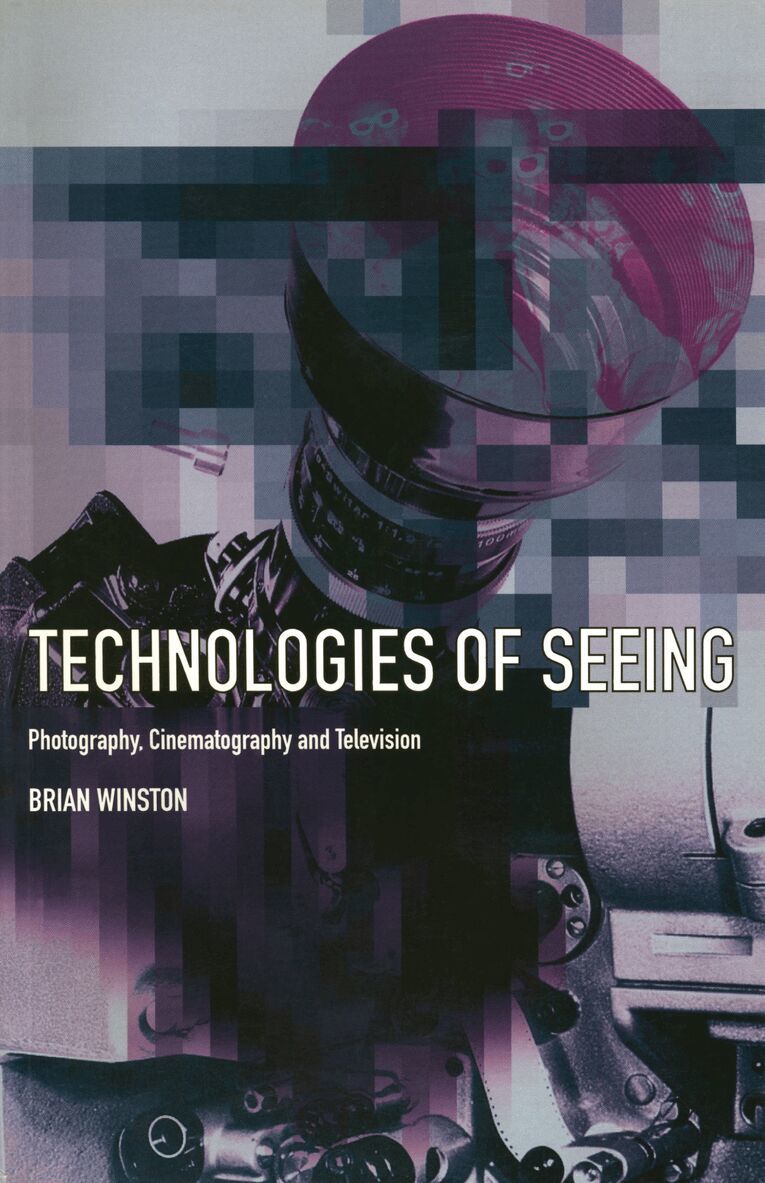
    Technologies of Seeing

    Photography, Cinema and Television

    AvBrian Winston

    Inbunden, Engelska, 1996

    1 559 kr

    Beställningsvara. Skickas inom 5-8 vardagar. Fri frakt över 249 kr.

    Fler format och utgåvor

    E-bok

    1 767 kr

    E-bok

    1 762 kr

    Beskrivning

    This text examines the complex forces pushing and constraining technological developments in cinema. It contests the view that technological advance is simply the result of scientific progress. Rather, the author argues that social forces control the media technology agenda at every stage.

    Produktinformation

    • Utgivningsdatum:1996-10-01
    • Mått:158 x 238 x 16 mm
    • Vikt:420 g
    • Format:Inbunden
    • Språk:Engelska
    • Antal sidor:152
    • Förlag:Bloomsbury Publishing PLC
    • ISBN:9780851706016

    Utforska kategorier

    • Fotoutrustning och fototeknik inom Kultur
    • Film inom Kultur

    Mer om författaren

    Brian Winston was a leading figure in British media studies. He was Professor of Communications and Lincoln Chair at the University of Lincoln, UK. He held senior academic posts at UK National Film and Television School, New York University, Pennsylvania State University, the University of Wales (Cardiff), and Westminster University. He authored and edited over 20 books, including Claiming the Real: The Documentary Film Revisited (British Film Institute, 1995), Technologies of Seeing: Photography, Cinema and Television (British Film Institute, 1996), Fires Were Started- (BFI Film Classics, 1999), and A Right to Offend (Bloomsbury Academic, 2012).

    Innehållsförteckning

    • Contents.- Preface viii.- INTRODUCTION: NECESSITIES AND CONSTRAINTS 1 A Pattern of Technological Change On Technological Determinism Modelling Technological Change.- CHAPTER 1: THE CASE OF THE CINEMA 10.- The 'Invention' of the Cinema: Accelerators and Brakes: Great Men Invent the Cinema Errors and Omissions The Edison Patent Battles The Context for Cinema: Realism and Illusionism The Context for Cinema: Narrative The Context for Cinema: The Mass Audience Towards a Structural Account of the Making of Cinema.- CHAPTER 2: THE CASE OF COLOUR FILM 39 White Skin and Colour Film: The Ideology of the Apparatus On Ideological Innocence 'Natural' Colour 'Inventing' Colour Film Reproducing Colour Colour in Motion The Meaning of Colour 'Pleasing Flesh Tones'.- CHAPTER 3: THE CASE OF 16MM FILM 58 From Home Movies to Cinéma Vérité: Looking for a Need: The Standard of the Art: Edison's Strategy The Emergence of 16mm: Kodak's Strategy Avoiding the Amateur (1): The Newsreels Avoiding the Amateur (2): The Documentary Movement Avoiding the Amateur (3): The Radicals and The Ethnographers Suppressing 16mm's Potential Supervening Necessity: Stage 1 – World War II Supervening Necessity: Stage 2 – TV News Supervening Necessity: Stage 3 – 'A Breath of Fresh Air for Documentary The Rise and Fall of 16mm.- CHAPTER 4: THE CASE OF HDTV 88 Lights, Camera, Inaction: Hollywood and Technology One from the Heart: Coppola's Strategy Social Demands of Post-Industrial Societies: NHK's Strategy Broadcasters Must Maintain Faith: The Engineer's Strategy We're Behind Japan – Again: The Media's Strategy 35mm Quality at 16mm Production Prices: Sony's Strategy Give Me One Good Reason to Change: Hollywood's Strategies They Could Not See the Sound: Hollywood's Strategies (1) Techni colour: Hollywood's Strategies (2) Too Grainy for Projection: Hollywood's Strategies (3) A Man and His Dream: Coppola's Strategy Revisited The Five-Year Syndrome: The Technophiles' Strategy.- CHAPTER 5: THE CASE OF THE THIRD DIMENSION 109 Where is Holography?: Necessities and Constraints From the Stereoptician to Bwana Devil From the Interference Hypothesis to the Interferometer Holography as a 'Time-Based Medium' Notes 119.