Brian Winston – författare
Visar alla böcker från författaren Brian Winston. Handla med fri frakt och snabb leverans.
46 produkter
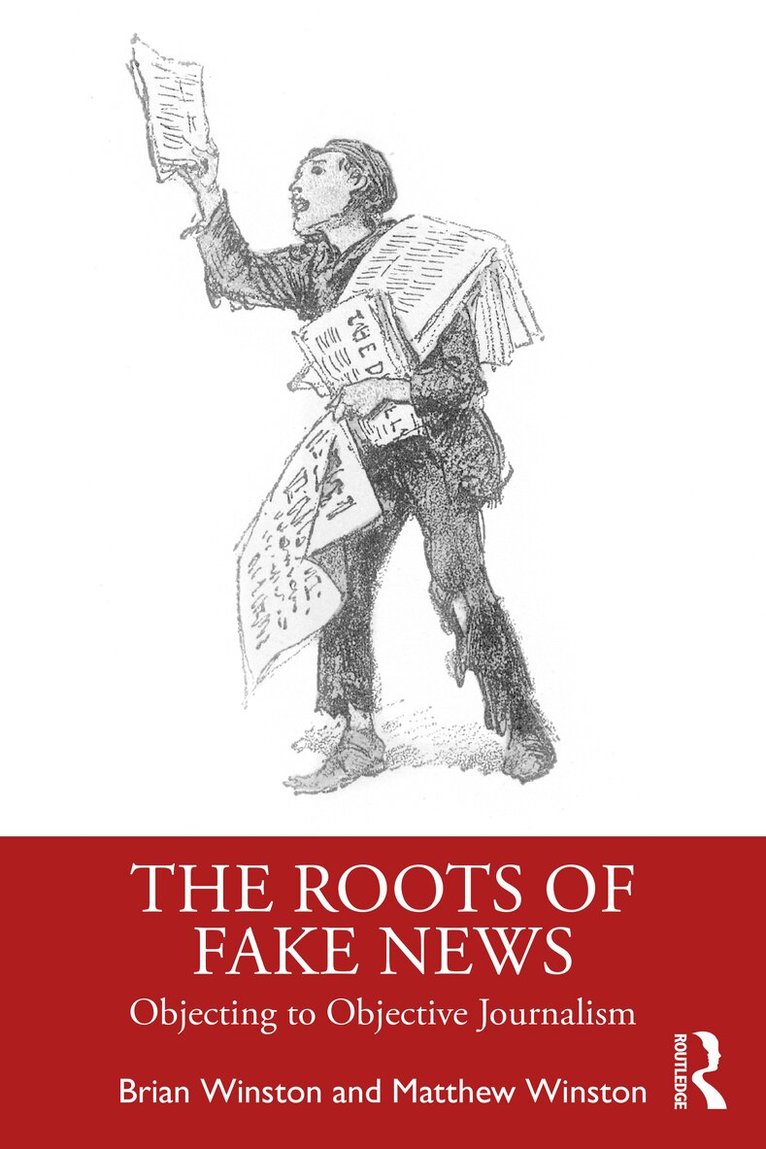
Roots of Fake News
Objecting to Objective Journalism
Av Brian Winston, Matthew Winston
Inbunden, 2020
2512 kr
Lägg i varukorg
The Roots of Fake News argues that ‘fake news’ is not a problem caused by the power of the internet, or by the failure of good journalism to assert itself. Rather, it is within the news’s ideological foundations – professionalism, neutrality, and most especially objectivity – that the true roots of …
Roots of Fake News
Objecting to Objective Journalism
Av Brian Winston, Matthew Winston
Häftad, 2020
633 kr
Lägg i varukorg
The Roots of Fake News argues that ‘fake news’ is not a problem caused by the power of the internet, or by the failure of good journalism to assert itself. Rather, it is within the news’s ideological foundations – professionalism, neutrality, and most especially objectivity – that the true roots of …
Media,Technology and Society
A History: From the Telegraph to the Internet
Inbunden, 1998
2133 kr
Lägg i varukorg
Challenging the popular myth of a present-day 'information revolution', Media Technology and Society is essential reading for anyone interested in the social impact of technological change. Winston argues that the development of new media forms, from the telegraph and the telephone to computers, …
Media Technology and Society
A History From the Printing Press to the Superhighway
Häftad, 1998
652 kr
Lägg i varukorg
Challenging the popular myth of a present-day 'information revolution', Media Technology and Society is essential reading for anyone interested in the social impact of technological change. Winston argues that the development of new media forms, from the telegraph and the telephone to computers, …
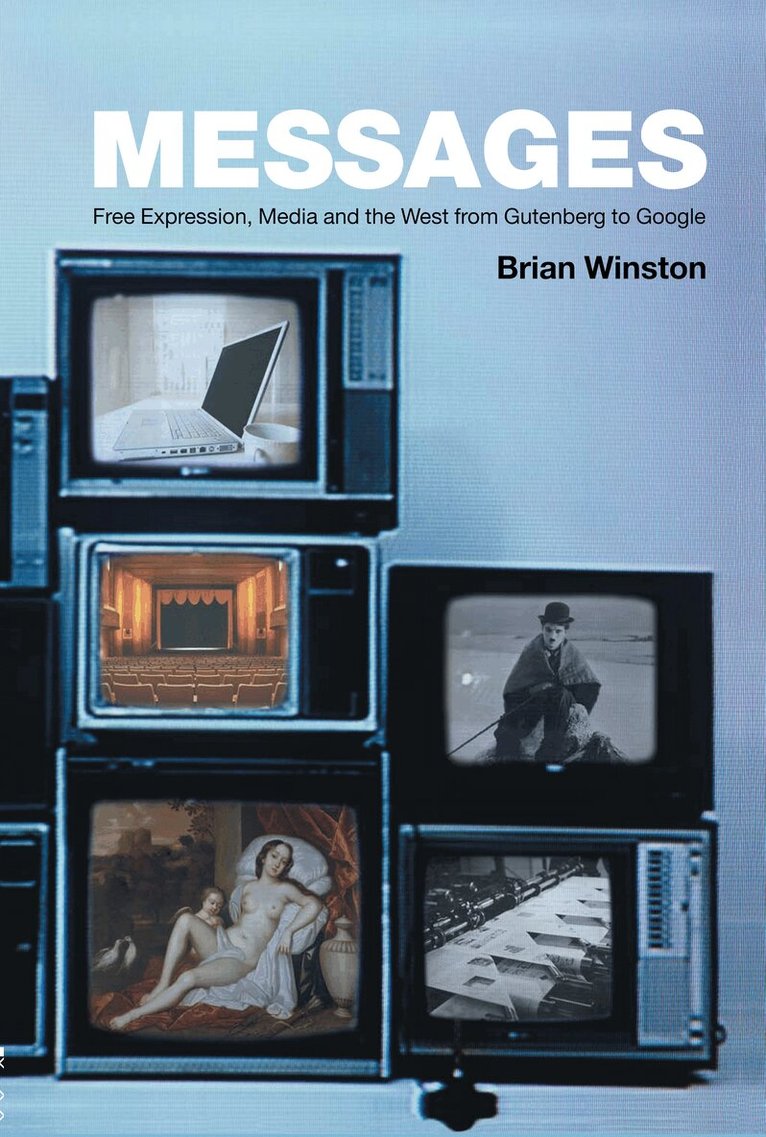
Messages
Free Expression, Media and the West from Gutenberg to Google
Inbunden, 2005
2476 kr
Lägg i varukorg
Easy to read, and highly topical, Messages writes a history of mass communication in Europe and its outreaches, as a search for the origins of media forms from print and stage, to photography, film and broadcasting.Arguing that the development of the mass media has been an essential engine driving …
Messages
Free Expression, Media and the West from Gutenberg to Google
Häftad, 2005
610 kr
Lägg i varukorg
Easy to read, and highly topical, Messages writes a history of mass communication in Europe and its outreaches, as a search for the origins of media forms from print and stage, to photography, film and broadcasting.Arguing that the development of the mass media has been an essential engine driving …
Bad News (Routledge Revivals)
Av Peter Beharrell, Howard Davis m. fl.
Inbunden, 2009
1261 kr
Lägg i varukorg
It is a commonly held belief that television news in Britain, on whatever channel, is more objective, more trustworthy, more neutral than press reporting. The illusion is exploded in this controversial study by the Glasgow University Media Group, originally published in 1976.The authors undertook …
More Bad News (Routledge Revivals)
Av Peter Beharrell, Howard Davis m. fl.
Inbunden, 2009
3864 kr
Lägg i varukorg
First published in 1980, More Bad News is the Second Volume in the research findings of the Glasgow University Media Group. It develops the analytic findings and methods of the first volume Bad News through a series of Case Studies of Television News Coverage, and argues that much of what passes as …
Bad News (Routledge Revivals)
Av Peter Beharrell, Howard Davis m. fl.
Häftad, 2009
327 kr
Lägg i varukorg
It is a commonly held belief that television news in Britain, on whatever channel, is more objective, more trustworthy, more neutral than press reporting. The illusion is exploded in this controversial study by the Glasgow University Media Group, originally published in 1976.The authors undertook …
More Bad News (Routledge Revivals)
Av Peter Beharrell, Howard Davis m. fl.
Häftad, 2009
735 kr
Lägg i varukorg
First published in 1980, More Bad News is the Second Volume in the research findings of the Glasgow University Media Group. It develops the analytic findings and methods of the first volume Bad News through a series of Case Studies of Television News Coverage, and argues that much of what passes as …
Bad News - Volumes 1 and 2 (Routledge Revivals)
Av Peter Beharrell, Howard Davis m. fl.
2009
3611 kr
Lägg i varukorg
It is a commonly held belief that television news in Britain, on whatever channel, is more objective, more trustworthy, more neutral than press reporting. The illusion is exploded in this controversial 2-volume study by the Glasgow University Media Group, originally published in 1976 and 1980.
Roots of Fake News
Objecting to Objective Journalism
Av Matthew Winston, Brian Winston
E-bok, 2020
745 kr
Lägg i varukorg
The Roots of Fake News argues that ‘fake news’ is not a problem caused by the power of the internet, or by the failure of good journalism to assert itself. Rather, it is within the news’s ideological foundations – professionalism, neutrality, and most especially objectivity – that the …
Roots of Fake News
Objecting to Objective Journalism
Av Matthew Winston, Brian Winston
E-bok, 2020
745 kr
Lägg i varukorg
The Roots of Fake News argues that ‘fake news’ is not a problem caused by the power of the internet, or by the failure of good journalism to assert itself. Rather, it is within the news’s ideological foundations – professionalism, neutrality, and most especially objectivity – that the …
Technologies of Seeing
Photography, Cinema and Television
Inbunden, 1996
1593 kr
Lägg i varukorg
This text examines the complex forces pushing and constraining technological developments in cinema. It contests the view that technological advance is simply the result of scientific progress. Rather, the author argues that social forces control the media technology agenda at every stage.
Lies, Damn Lies and Documentaries
Häftad, 2000
473 kr
Lägg i varukorg
Despite its centrality to the daily lives of a variety of journalists, the topic of ethics is relatively unexplored. This work provides a comprehensive treatment of the subject. The book looks at crisis of confidence in public service broadcasting and the controversy surrounding docusoaps to …
Messages
Free Expression, Media and the West from Gutenberg to Google
E-bok, 2006
712 kr
Lägg i varukorg
Easy to read, and highly topical, Messages writes a history of mass communication in Europe and its outreaches, as a search for the origins of media forms from print and stage, to photography, film and broadcasting. Arguing that the development of the mass media has been an essential engine driving …
Messages
Free Expression, Media and the West from Gutenberg to Google
E-bok, 2006
712 kr
Lägg i varukorg
Easy to read, and highly topical, Messages writes a history of mass communication in Europe and its outreaches, as a search for the origins of media forms from print and stage, to photography, film and broadcasting. Arguing that the development of the mass media has been an essential engine driving …
Media,Technology and Society
A History: From the Telegraph to the Internet
E-bok, 2002
831 kr
Lägg i varukorg
Challenging the popular myth of a present-day ''information revolution'', Media Technology and Society is essential reading for anyone interested in the social impact of technological change. Winston argues that the development of new media forms, from the telegraph and the telephone to computers, …
Media,Technology and Society
A History: From the Telegraph to the Internet
E-bok, 2002
831 kr
Lägg i varukorg
Challenging the popular myth of a present-day ''information revolution'', Media Technology and Society is essential reading for anyone interested in the social impact of technological change. Winston argues that the development of new media forms, from the telegraph and the telephone to computers, …
More Bad News (Routledge Revivals)
Av Brian Winston, Paul Walton m. fl.
E-bok, 2009
847 kr
Lägg i varukorg
First published in 1980, More Bad News is the Second Volume in the research findings of the Glasgow University Media Group. It develops the analytic findings and methods of the first volume Bad News through a series of Case Studies of Television News Coverage, and argues that much of what passes as …
More Bad News (Routledge Revivals)
Av Brian Winston, Paul Walton m. fl.
E-bok, 2009
866 kr
Lägg i varukorg
First published in 1980, More Bad News is the Second Volume in the research findings of the Glasgow University Media Group. It develops the analytic findings and methods of the first volume Bad News through a series of Case Studies of Television News Coverage, and argues that much of what passes as …
Bad News (Routledge Revivals)
Av Brian Winston, Paul Walton m. fl.
E-bok, 2009
373 kr
Lägg i varukorg
It is a commonly held belief that television news in Britain, on whatever channel, is more objective, more trustworthy, more neutral than press reporting. The illusion is exploded in this controversial study by the Glasgow University Media Group, originally published in 1976. The authors undertook …
Bad News (Routledge Revivals)
Av Brian Winston, Paul Walton m. fl.
E-bok, 2009
373 kr
Lägg i varukorg
It is a commonly held belief that television news in Britain, on whatever channel, is more objective, more trustworthy, more neutral than press reporting. The illusion is exploded in this controversial study by the Glasgow University Media Group, originally published in 1976. The authors undertook …
Media Technology and Society
A History From the Printing Press to the Superhighway
Inbunden, 2015
2524 kr
Lägg i varukorg
Challenging the popular myth of a present-day 'information revolution', Media Technology and Society is essential reading for anyone interested in the social impact of technological change. Winston argues that the development of new media forms, from the telegraph and the telephone to computers, …
Misunderstanding Media
Inbunden, 2016
2137 kr
Lägg i varukorg
The 1980s saw constant reports of an information revolution. This book, first published in 1986, challenges this view. It argues that the information revolution is an illusion, a rhetorical gambit, an expression of profound historical ignorance, and a movement dedicated to purveying …
Misunderstanding Media
Häftad, 2018
459 kr
Lägg i varukorg
The 1980s saw constant reports of an information revolution. This book, first published in 1986, challenges this view. It argues that the information revolution is an illusion, a rhetorical gambit, an expression of profound historical ignorance, and a movement dedicated to purveying …
Misunderstanding Media
E-bok, 2016
537 kr
Lägg i varukorg
The 1980s saw constant reports of an information revolution. This book, first published in 1986, challenges this view. It argues that the information revolution is an illusion, a rhetorical gambit, an expression of profound historical ignorance, and a movement dedicated to purveying …
Misunderstanding Media
E-bok, 2016
537 kr
Lägg i varukorg
The 1980s saw constant reports of an information revolution. This book, first published in 1986, challenges this view. It argues that the information revolution is an illusion, a rhetorical gambit, an expression of profound historical ignorance, and a movement dedicated to purveying …
Act of Documenting
Documentary Film in the 21st Century
Av Brian Winston, Gail Vanstone m. fl.
Inbunden, 2017
2264 kr
Lägg i varukorg
Documentary has never attracted such audiences, never been produced with such ease from so many corners of the globe, never embraced such variety of expression. The very distinctions between the filmed, the filmer and the spectator are being dissolved. The Act of Documenting addresses what this …
Act of Documenting
Documentary Film in the 21st Century
Av Brian Winston, Gail Vanstone m. fl.
Häftad, 2017
502 kr
Lägg i varukorg
Documentary has never attracted such audiences, never been produced with such ease from so many corners of the globe, never embraced such variety of expression. The very distinctions between the filmed, the filmer and the spectator are being dissolved. The Act of Documenting addresses what this …