• Fri frakt över 249 kr
  • •
  • Snabba leveranser
  • •
  • Billiga böcker
Kundservice

Du är på sajten för privatpersoner.

Företag, bibliotek eller offentlig verksamhet?

Du handlar på classic.bokus.com, där alla dina funktioner finns intakta.
Till classic.bokus.com
Bokus logotyp. Gå till startsidan.
  • Erbjudanden
  • Nyheter
  • Student
  • Topplistor
  • Barn & ungdom
  • Bokus Play
  • E-böcker
  • Pocketböcker
  • Spel & pussel

10% rabatt på allt med kod NYSTART10 →

Sidfot

Mina sidor

    Hjälp

    • Kundservice
    • Vanliga frågor och svar
    • Frakt och leverans
    • Retur vid ångerrätt
    • Reklamera vara
    • Betalning
    • Köpvillkor
    • Allmänna villkor
    • Information om webbplatsens tillgänglighet

    Om Bokus

    • Om oss
    • Pressrum
    • För studenter
    • För företag
    • För bibliotek och offentlig verksamhet
    • För leverantörer
    • Hållbarhet

    Populärt

    • Aktuella erbjudanden
    • Presentkort
    • Studentlitteratur
    • Nya böcker
    • Topplistor
    • Signerade böcker
    • Engelska böcker

    Inspiration

    • Boktips
    • BookTok
    • Populära bokserier
    • Barnbokskaraktärer
    • Populära författare
    Logotyp för Bokus
    Följ oss på Facebook (extern länk)Följ oss på Instagram (extern länk)Följ oss på YouTube (extern länk)Följ oss på TikTok (extern länk)
    bokus @ CookiesAnpassa cookiesIntegritetspolicyKöpvillkor
    Till Citymail hemsida (extern länk)Till Budbee hemsida (extern länk)Till Postnord hemsida (extern länk)Till Schenker hemsida (extern länk)Till Early Bird hemsida (extern länk)Till Walleys hemsida (extern länk)
    1. Samhälle och politik
    2. Sociologi och antropologi
    3. Antropologi

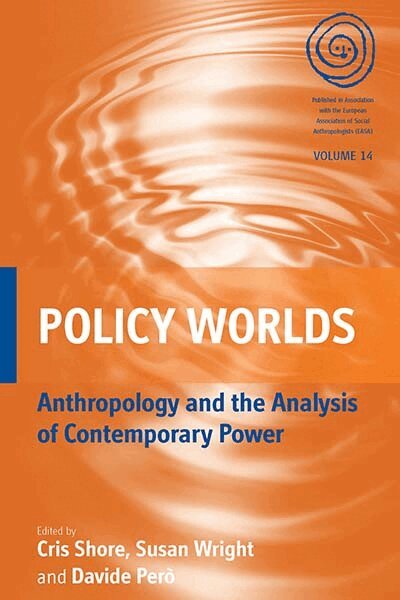
    Policy Worlds

    Anthropology and the Analysis of Contemporary Power

    AvCris Shore,Susan Wright

    Inbunden, Engelska, 2011

    Del i serien EASA Series

    1 861 kr

    Beställningsvara. Skickas inom 5-8 vardagar. Fri frakt över 249 kr.

    Beskrivning

    There are few areas of society today that remain outside the ambit of policy processes, and likewise policy making has progressively reached into the structure and fabric of everyday life. An instrument of modern government, policy and its processes provide an analytical window into systems of governance themselves, opening up ways to study power and the construction of regimes of truth. This volume argues that policies are not simply coercive, constraining or confined to static texts; rather, they are productive, continually contested and able to create new social and semantic spaces and new sets of relations. Anthropologists do not stand outside or above systems of governance but are themselves subject to the rhetoric and rationalities of policy. The analyses of policy worlds presented by the contributors to this volume open up new possibilities for understanding systems of knowledge and power and the positioning of academics within them.

    Produktinformation

    • Utgivningsdatum:2011-04-01
    • Mått:152 x 229 x 23 mm
    • Vikt:640 g
    • Format:Inbunden
    • Språk:Engelska
    • Serie:EASA Series
    • Antal sidor:348
    • Förlag:Berghahn Books
    • ISBN:9780857451163

    Utforska kategorier

    • Antropologi inom Samhälle och politik
    • Statsvetenskap och politisk teori inom Samhälle och politik

    Mer om författaren

    Cris Shore is Professor of Social Anthropology at the University of Auckland, New Zealand.

    Recensioner i media

    “The editors break new ground in offering policy as one lifeline to anthropologists struggling to give shape to multi-sited ethnography…This book achieves what it sets out to do. These accounts show that policy is good to think with, that theories of  governmentality should encompass contestation to be convincing, and that ‘policy’ deserves further study.” · Journal of the Royal Anthropological Institute“The book offers both unsettling and highly inspirational reading material, especially for academics emerging from the world’s metropolises. It raises issues that are frequently overlooked and which represent unavoidable starting points for those doing anthropology today in the Antipodes and elsewhere.” · Social Anthropologie/Anthropologie sociale“This volume offers an indispensable point of reference for any methodological and theoretical planning and execution of cultural- and social-anthropological research into the fields of politics and policy.” · H-Soz-u-Kult“The value of the very idea of focusing on policy processes rather than on politics lies in that it is at the level of policy that a more comprehensive light can be shed on the always less ‘local’ and always more multifarious, subtle, flexible and dissimulating ways in which contemporary power shapes our worlds. This is why, after reading this book,... one recognizes the bounded coherence of its highly dissimilar contexts and ethnographic stories.” · Ethnic and Racial Studies“The currency of this book adds to the validity of argument being made by applied anthropology’s advocates and supports their case in the ongoing applied/theoretical divide…Policy Worlds is a valuable addition to this emerging field of anthropology.” · Anthropological Forum: A Journal of Social Anthropology and Comparative Sociology“An outstanding contribution to the anthropological understanding of public policy… A very polished, coherent project, ably edited.” · Susan Greenhalgh, University of California, Irvine“The volume represents an emergent subfield of anthropology coming of age in some ways; it will teach very well indeed and will certainly prove an invaluable book to think with and through… I was consistently impressed by the quality, coherence, and interest of the articles in themselves. Each was substantively fascinating, methodologically thought-provoking, and clearly linked to the others.” · Don Brenneis, University of California, Santa Cruz

    Innehållsförteckning

    • IntroductionChapter 1. Conceptualising Policy: Technologies of Governance and the Politics of VisibilityCris Shore and Susan WrightSection I: Studying Policy: Methods, Paradigms, PerspectivesIntroductionSusan WrightChapter 2. Illuminating the Apparatus: Steps toward a Nonlocal Ethnography of Global GovernanceGreg Feldman, University of British ColumbiaChapter 3. Politics and Ethics: Ethnographies of Expert Knowledge and Professional IdentitiesDavid Mosse, SOAS, LondonChapter 4. Peopling Policy: on Conflicting Subjectivities of Fee-Paying StudentsGritt B. Nielsen, Aarhus UniversityChapter 5. Studying through”: a Strategy for Studying Political Transformations. Or Sex, Lies and British PoliticsSusan Wright and Sue Reinhold (North BerkeleyInvestment Partners)Chapter 6. What was Neo-liberalism and what Comes Next? The Transformation of  Citizenship in the Law-and-Order StateSusan Hyatt, Indiana University-Purdue University IndianapolisSection II: Studying Governance: Policy as a Window onto the Modern StateIntroductionCris ShoreChapter 7. Intimate Knowledge and the Politics of Policy Convergence: The World Bank and Social Security Reform in MexicoTara Schwegler, University of ChicagoChapter 8. Shadow Governing: What the Neocon Core Reveals About Power and Influence in AmericaJanine Wedel, George Mason UniversityChapter 9. Espionage, Policy and the Art of Government: The British Secret Services and the War on IraqCris ShoreChapter 10. The (Un)making of Policy in the Shadow of the World Bank: Infrastructure Development, Urban Resettlement and the Cunning State in IndiaShalini Randeriaand Ciara Grunder, University of ZurichChapter 11. Sweden’s National Pension System as a Political TechnologyAnette Nyqvist, Stockholm UniversitySection III: Subjects of Policy: Construction and Contestation Introduction   Davide PeròChapter 12. The Case of Scanzano: Raison d’Etat and the Reasons for RebellionDorothy Louise Zinn, Università degli Studi della BasilicataChapter 13. Migrants’ Practices of Citizenship and Policy ChangeDavide PeròChapter 14. Integration Policy and Ethnic Minority AssociationsClarissa Kugelberg Upsala UniversityChapter 15. The Elephant in the Room. Multi-stakeholder Dialogue on Agricultural Biotechnology in the Food and Agriculture OrganisationBirgit Müller, LAIOS-CNRS ParisAfterwordChapter 16. A policy ethnographer’s reading of policy anthropologyDvora Yanow, Vrije UniversityNotes on ContributorsEndsIndex