• Fri frakt över 249 kr
  • •
  • Snabba leveranser
  • •
  • Billiga böcker
Kundservice

Du är på sajten för privatpersoner.

Företag, bibliotek eller offentlig verksamhet?

Du handlar på classic.bokus.com, där alla dina funktioner finns intakta.
Till classic.bokus.com
Bokus logotyp. Gå till startsidan.
  • Erbjudanden
  • Nyheter
  • Student
  • Topplistor
  • Barn & ungdom
  • Bokus Play
  • E-böcker
  • Pocketböcker
  • Spel & pussel

10% rabatt på allt med kod: NYSTART10 →

Sidfot

Mina sidor

    Hjälp

    • Kundservice
    • Vanliga frågor och svar
    • Frakt och leverans
    • Retur vid ångerrätt
    • Reklamera vara
    • Betalning
    • Köpvillkor
    • Allmänna villkor
    • Information om webbplatsens tillgänglighet

    Om Bokus

    • Om oss
    • Pressrum
    • För studenter
    • För företag
    • För bibliotek och offentlig verksamhet
    • För leverantörer
    • Hållbarhet

    Populärt

    • Aktuella erbjudanden
    • Presentkort
    • Studentlitteratur
    • Nya böcker
    • Topplistor
    • Signerade böcker
    • Engelska böcker

    Inspiration

    • Boktips
    • BookTok
    • Populära bokserier
    • Barnbokskaraktärer
    • Populära författare
    Logotyp för Bokus
    Följ oss på Facebook (extern länk)Följ oss på Instagram (extern länk)Följ oss på YouTube (extern länk)Följ oss på TikTok (extern länk)
    bokus @ CookiesAnpassa cookiesIntegritetspolicyKöpvillkor
    Till Citymail hemsida (extern länk)Till Budbee hemsida (extern länk)Till Postnord hemsida (extern länk)Till Schenker hemsida (extern länk)Till Early Bird hemsida (extern länk)Till Walleys hemsida (extern länk)
    1. Samhälle och politik
    2. Politik och statsskick
    3. Politiska ideologier och rörelser
    4. Marxism och kommunism

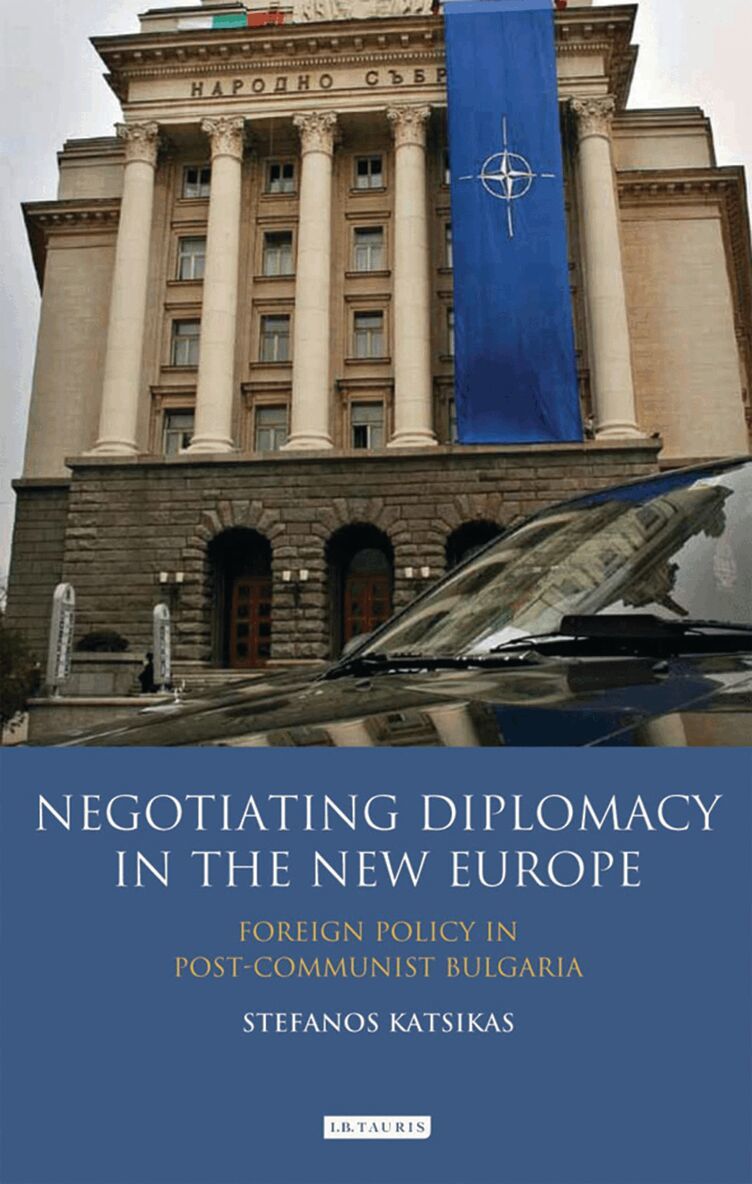
    Negotiating Diplomacy in the New Europe

    Foreign Policy in Post-Communist Bulgaria

    AvStefanos Katsikas

    E-bok
    PDF, Engelska, 2011

    2 113 kr

    Läs direkt i Bokus Reader – eller ladda ned till din enhet (PDF kräver ofta zoom och scroll på små skärmar).

    Fler format och utgåvor

    Inbunden

    1 950 kr

    Beskrivning

    Bulgaria has faced previously unimaginable pressures over the last two decades, as it struggles to adapt to a post-Communist landscape and to reform both state and society in the wake of the fall of the Soviet Union, while facing the challenge of increased efforts by NATO and the EU to expand into this region. In Negotiating Diplomacy in the New Europe, Stefanos Katsikas sheds new light on the mechanisms and factors which have influenced the making and shaping of Bulgarian foreign policy, examining the extent to which both domestic factors and the international environment have affected its trajectory.Following the promulgation of Gorbachev's now-famous policies of glasnost and perestroika, and the fall from power of the Bulgarian Communist Party - led at the time by Todor Zhivkov - many have directly attributed Bulgaria's changes in foreign policy to the processes of democratization witnessed throughout Eastern Europe. However, although this was to some extent the case, the commonalities shared with the country's foreign policy during the Cold War era leave in question the extent to which the effects of democratization alone suffice to explain Sofia's post-communist diplomatic and strategic policies. By analysing the influencing factors of Bulgaria's foreign policy since 1989, Katsikas considers factors such as domestic policies, as well as the effects of EU and NATO efforts to expand their influence and membership.Rich in primary sources, including personal interviews with key protagonists who have dominated foreign policy-making in both communist and post-communist Bulgaria, Negotiating Diplomacy in the New Europe examines the shift of foreign relations not only within the context of post-Cold War democratization, but also the country's integration into wider Euro-Atlantic frameworks. It thus holds invaluable analysis for researchers of Europe's post-communist international relations, as well as those interested in the processes of democratization and those of foreign policy formation.

    Produktinformation

    • Utgivningsdatum:2011-10-30
    • Språk:Engelska
    • Antal sidor:288
    • Filformat:PDF
    • Kopieringsskydd:LCP
    • ISBN:9780857720887
    • Förlag:Bloomsbury Publishing PLC

    Utforska kategorier

    • Marxism och kommunism inom Samhälle och politik
    • Socialism och vänsterideologier inom Samhälle och politik
    • Centralt styre och förvaltning inom Samhälle och politik

    Innehållsförteckning

    • Transliteration of the Bulgarian alphabet in EnglishAcknowledgementsAbbreviationsIntroductionPost-Cold War Era, 'New Europe' and Bulgarian Diplomacy'New Europe' as a ConceptBulgarian Foreign Policy in the 'New Europe'Relations with RussiaRegime Change and Bulgarian DiplomacyThe Structure of the BookChapter I (Foreign Policy in the 1980s)Ideological Principles of Foreign PolicyForeign Policy MechanismsRelations with States from Outside the RegionBulgaria's Relations with the USSRBulgaria's Relations with the WestRelations with Pro-Soviet States of the Third WorldBulgaria's Relations in the BalkansEfforts at Multilateral CooperationBilateral Relationsa. Intra-bloc Regional Issuesb.Nationalism1.Bulgarian Turks2.Bulgarian Macedoniansc.Territorial Issuesd.Economic IssuesConclusionChapter II (From a People's to a Liberal Democracy)IntroductionForeign Policy MechanismsConstitutional AnomaliesThe Role of Personality in Foreign Policy MakingThe Presidencies of Pet?r Stoianov and Georgi P?rvanovForeign Policy Agendas of the Bulgarian Political PartiesForeign Policy Agenda of the BSPForeign Policy Agenda of the UDFForeign Policy Agenda of the NMSII/NMSPForeign Policy Agenda of he CEDBForeign Policy Agenda of the AtakaIndependent Research Policy InstitutesEvolution of Think-tanks in BulgariaMinorities and Foreign Policy MakingThe Foreign Policy Agenda of the MRFOther Minorities1.Foreign Policy Agenda of the IMRO2.Foreign Policy Agenda of UMO-IlindenPublic Opinion and Foreign Policy MakingConclusionChapter III (EU Accession and Bulgarian Foreign Policy Making)IntroductionFrom Westernization to 'Europeanization'Bulgaria's Accession to the EUThe Association Agreement of December 1992Bulgaria's Candidacy for EU MembershipIn Search for an EU Patron StateThe B?lgarski Velikden InitiativeInternational Events against EU Accession ProcessPost-Communist Europeanization and Foreign Policy MechanismsDemocratic ConditionalityForeign Policy MechanismsThe Role of the Foreign Policy Constitutional ActorsThe President of the RepublicThe Ministry of Foreign AffairsThe Council of European IntegrationThe Chief Negotiator for EU AffairsThe Ministry of European AffairsThe Coordination CouncilThe Core Negotiations TeamThe National Assembly of the Republic of Bulgaria The Role of Non-party Actors in Foreign Policy MakingConclusionChapter IV (EU Accession Process and Bulgaria's Foreign Relations)IntroductionRelations with International OrganisationsBulgaria's Relations with NATOBulgaria's Relations with the IMFDemocratic Conditionality and Inter-state RelationsRelations with Developing States in Africa, the Middle East and Latin AmericaBulgaria's Relations with the USABulgaria's Relations with the Russian FederationConclusionChapter V (Accession to the Euro-Atlantic Structures and Bulgaria's Balkan Policy (-ies))IntroductionPost-Cold War Balkan PolicyReasons for Sofia's Post-Cold War Balkan PolicyPost-1989 Security Vacuum and Bulgarian Balkan PolicyPost-1989 Territorial Policy towards its BalkansBulgaria's Minority PoliciesSofia's Diplomatic Activity Since 1989ConclusionConcluding ChapterBibliographyAppendix