• Fri frakt över 249 kr
  • •
  • Snabba leveranser
  • •
  • Billiga böcker
Kundservice

Du är på sajten för privatpersoner.

Företag, bibliotek eller offentlig verksamhet?

Du handlar på classic.bokus.com, där alla dina funktioner finns intakta.
Till classic.bokus.com
Bokus logotyp. Gå till startsidan.
  • Erbjudanden
  • Student
  • Topplistor
  • Barn & ungdom
  • Bokus Play
  • E-böcker
  • Ljudböcker
  • Pocketböcker
  • Spel och pussel

Pocketfynda! Hundratals böcker för 49 kr/st →

Sidfot

Mina sidor

    Hjälp

    • Kundservice
    • Vanliga frågor och svar
    • Frakt och leverans
    • Retur vid ångerrätt
    • Reklamera vara
    • Betalning
    • Köpvillkor
    • Allmänna villkor
    • Information om webbplatsens tillgänglighet

    Om Bokus

    • Om oss
    • Pressrum
    • För studenter
    • För företag
    • För bibliotek och offentlig verksamhet
    • För leverantörer
    • Hållbarhet

    Populärt

    • Aktuella erbjudanden
    • Presentkort
    • Studentlitteratur
    • Nya böcker
    • Topplistor
    • Signerade böcker
    • Engelska böcker

    Inspiration

    • Boktips
    • BookTok
    • Barnbokskaraktärer
    • Populära författare
    Logotyp för Bokus
    Följ oss på Facebook (extern länk)Följ oss på Instagram (extern länk)Följ oss på YouTube (extern länk)Följ oss på TikTok (extern länk)
    bokus @ CookiesAnpassa cookiesIntegritetspolicyKöpvillkor
    Till Citymail hemsida (extern länk)Till Budbee hemsida (extern länk)Till Postnord hemsida (extern länk)Till Schenker hemsida (extern länk)Till Early Bird hemsida (extern länk)Till Walleys hemsida (extern länk)
    1. Naturvetenskap och teknik
    2. Geovetenskap
    3. Geovetenskap

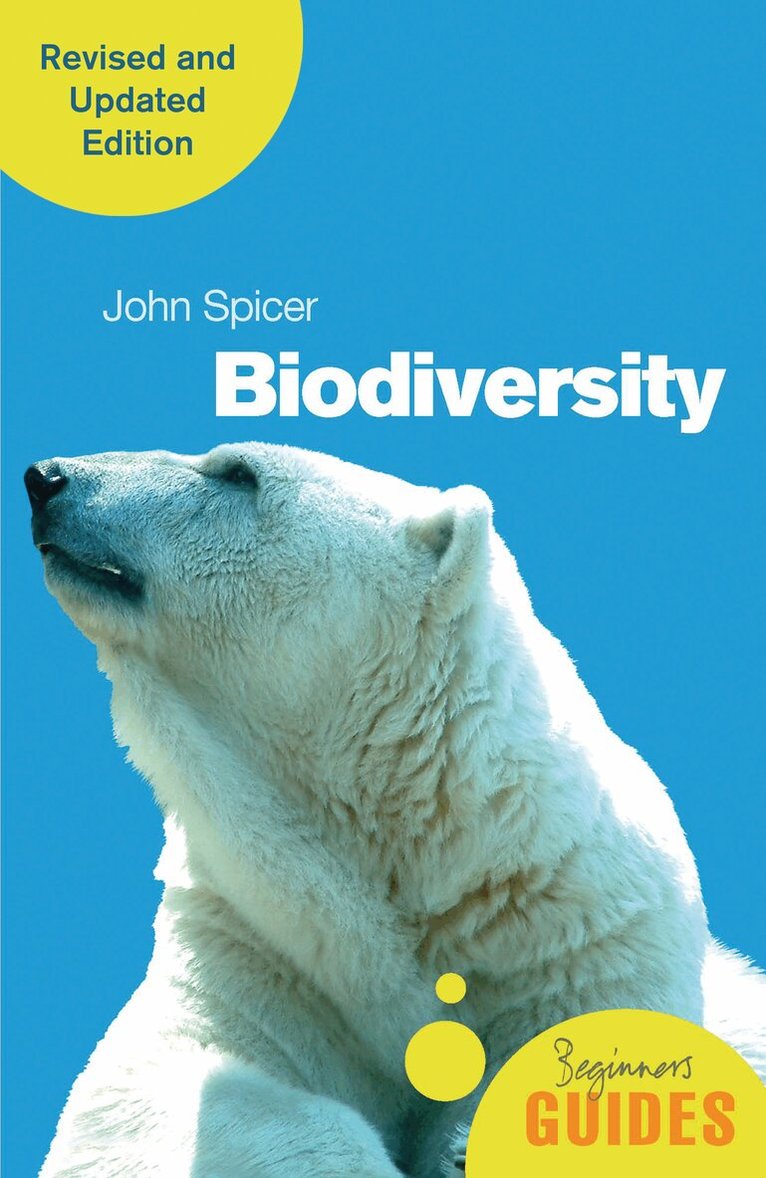
    Biodiversity

    A Beginner's Guide (revised and updated edition)

    AvJohn Spicer

    Häftad, Engelska, 2021

    Del i serien Beginner's Guides

    109 kr

    Skickas . Fri frakt över 249 kr.

    Fler format och utgåvor

    E-bok

    72 kr

    E-bok

    72 kr

    Häftad

    Tillf. slut

    Beskrivning

    Our future is closely tied to that of the variety of life on Earth, and yet there is no greater threat to it than us. From population explosions and habitat destruction to climate change and mass extinctions, John Spicer explores the causes and consequences of our biodiversity crisis. In this revised and updated edition, he examines how grave the situation has become over the past decade and outlines what we must do now to protect and preserve not just nature’s wonders but the essential services that biodiversity provides for us, seemingly for nothing.

    Produktinformation

    • Utgivningsdatum:2021-05-06
    • Mått:129 x 198 x 16 mm
    • Vikt:206 g
    • Format:Häftad
    • Språk:Engelska
    • Serie:Beginner's Guides
    • Antal sidor:272
    • Förlag:Oneworld Publications
    • ISBN:9780861540174

    Utforska kategorier

    • Geovetenskap inom Naturvetenskap och teknik
    • Geovetenskap inom Naturvetenskap och teknik
    • Miljövetenskap och miljöpolitik inom Naturvetenskap och teknik

    Mer om författaren

    John Spicer is Professor of Marine Zoology at the University of Plymouth. He is co-author of the bestselling textbooks Biodiversity: An Introduction and The Invertebrates.

    Recensioner i media

    ‘If you have any doubts about the meaning of the term biodiversity or its importance to the world, here is a book that explains it in an interesting and accessible way and challenges us to protect it better.’

    Innehållsförteckning

    • 1  The pandemic of wounded biodiversityBiodiversity – what was that again?A long, leisurely trip to La JollaDirections 2  Teeming boisterous lifeThe big pictureThe volleyball on Mission Beach‘A rose by any other name’…what’s a species?Morphological speciesIdentifying species without ever seeing themBiological speciesEvolutionary speciesNaming speciesHow many living species…and what are they?1) To the nearest approximation (almost) every organism is an arthropod…?2) Greenery: The Plantae3) Fungi: Mushrooms, moulds and yeasts – The Fungi4) Mollusca: Shell life5) Chordata: Animals with backbones…mostly6) Protozoa or Protista?7) Nematoda: The roundworm that’s the fly in the ointment?8) Bacteria and Archaea: Microbial lifeRemaining animal groupingsViruses: All the world’s a phage… or nearlyNew speciesPlanting and growing the ‘tree of life’The great chain of beingLinnaeus’s hierarchical classificationInfluence of evolutionary ideasChatton’s two-domain ideaWhittaker’s five-kingdom approachWoese and the three-domain modelA new twist to the three-domain model…and when is a tree a bush?Designs on lifeThe phylum and the BauplanMost phyla are not very species richAn unequal distribution of life 3  Where on Earth is biodiversity?From Berkeley, south to the Sea of CortezMore is moreBack to Bird RockThe species–area relationshipThose who go down to the sea in shipsHotspots: A tale of two definitionsBig-scale biodiversity: Biogeographical and political regionsOn landSeaBiodiversity by countryLatitude for life?The landThe seaGenetic diversity and latitudeWhy is there a latitudinal gradient?AltitudeLessons from the tops of Scottish mountainsBiodiversity takes the hump with altitudeMountains as islands?Aerial plankton and organisms in flightDepthThe short-lived azoic theoryOut of our depthA journey to the centre of the EarthStaying close to homeCongruence: The holy grail of diversity? 4  A world that was old when we came into it: Diversity, deep time and extinctionOne every twenty minutes?A life in the year of…Precambrian – before life?A schoolgirl changes our understanding of life before life – but no one believes herThe garden of EdiacaraA world of chemical energy, not driven by sunlight?How familiar is the Ediacaran fauna?Explosive CambrianCambrian formsArchaeocyatha: The only extinct phylum?Why diversify now?Cambrian explosion or short fuse?Cambrian biodiversity: Good designs… or just lucky?How a small quarry in British Columbia changed our understanding of biodiversity‘It’s a Wonderful Life’To concludePost-Cambrian: Tinkering with successful designs?Palaeozoic – ‘first life’Middle and modern lifeThe present – not set in stoneBeginnings of evolution: The origin of speciesEnd of evolution: ExtinctionThe ‘big five’Causes of extinctionExtinctions as routine events in the history of lifeEarly humans and biodiversityExtinctions post-1600sProving extinction?The Red Data BookOther takes on extinctionTo conclude 5  Swept away and changedThreatening behaviourLiving beyond our meansTop five direct (or proximate) causes of biodiversity loss1) Habitat loss and degradation2) Direct exploitationHome economicsFood, glorious foodIndustrial materialsMedicine sans frontiersEcotourismControlling the natural world3) Climate change4) Introduced speciesThe domino effect: Extinction cascadesSome light relief: Complete elimination of biodiversity by extraterrestrial meansThe ultimate cause of biodiversity loss: You and meOnce upon a time there were two people…now look how manyNot just population size but where people liveNot just population size but what people doIt’s the poor that do the sufferingTo conclude 6  Are the most beautiful things the most useless?‘…and for everything else there’s Mastercard’Costing a small planetUse now, pay when?What bees do for free is expensiveCosting the Earth – literallyHow Biosphere 1 works – as oneEarth, the Goldilocks planet – just rightLovelock’s Gaia hypothesisCritiques of GaiaHow bits of Biosphere 1 workBuild your own biosphere: Not-so-silent runningThe home marine aquariumMysteries and hazardsValuable for what, and to whom?Keeping options openBequest and bequeathalFull-on philosophers and laid-back religion?Value bestowed, not intrinsicIntrinsic valueValued as an object of worship or through kinshipA creator gives biodiversity valueTo conclude 7  Our greatest hazard and our only hope?Saving private landAntecedentsOh, RioLarge brushstrokesLouder than wordsArks in parksOut of place – but aliveBuzzword for the twenty-first centuryResponses to RioMillennium AssessmentAichi (2010) and ‘Pathway for Humanity’ (2015)Strategic plan for biodiversity and Aichi biodiversity targets‘Pathway for Humanity’: UN Sustainable Development Goals (2015)Global Assessment Report on Biodiversity and Ecosystem Services (2019)AichiTarget 11: Increasing protected areasGoal 16: Nagoya protocol in forceSustainability goalsNo room for the individual?Epilogue 8  No one is too small to make a difference Going further: Suggestions for wider readingIndex