• Fri frakt över 249 kr
  • •
  • Snabba leveranser
  • •
  • Billiga böcker
Kundservice

Du är på sajten för privatpersoner.

Företag, bibliotek eller offentlig verksamhet?

Du handlar på classic.bokus.com, där alla dina funktioner finns intakta.
Till classic.bokus.com
Bokus logotyp. Gå till startsidan.
  • Erbjudanden
  • Student
  • Topplistor
  • Barn & ungdom
  • Bokus Play
  • E-böcker
  • Ljudböcker
  • Pocketböcker
  • Spel och pussel

Pocketfynda! Hundratals böcker för 49 kr/st →

Sidfot

Mina sidor

    Hjälp

    • Kundservice
    • Vanliga frågor och svar
    • Frakt och leverans
    • Retur vid ångerrätt
    • Reklamera vara
    • Betalning
    • Köpvillkor
    • Allmänna villkor
    • Information om webbplatsens tillgänglighet

    Om Bokus

    • Om oss
    • Pressrum
    • För studenter
    • För företag
    • För bibliotek och offentlig verksamhet
    • För leverantörer
    • Hållbarhet

    Populärt

    • Aktuella erbjudanden
    • Presentkort
    • Studentlitteratur
    • Nya böcker
    • Topplistor
    • Signerade böcker
    • Engelska böcker

    Inspiration

    • Boktips
    • BookTok
    • Barnbokskaraktärer
    • Populära författare
    Logotyp för Bokus
    Följ oss på Facebook (extern länk)Följ oss på Instagram (extern länk)Följ oss på YouTube (extern länk)Följ oss på TikTok (extern länk)
    bokus @ CookiesAnpassa cookiesIntegritetspolicyKöpvillkor
    Till Citymail hemsida (extern länk)Till Budbee hemsida (extern länk)Till Postnord hemsida (extern länk)Till Schenker hemsida (extern länk)Till Early Bird hemsida (extern länk)Till Walleys hemsida (extern länk)
    1. Psykologi och pedagogik
    2. Psykologi
    3. Barnpsykologi och utvecklingspsykologi

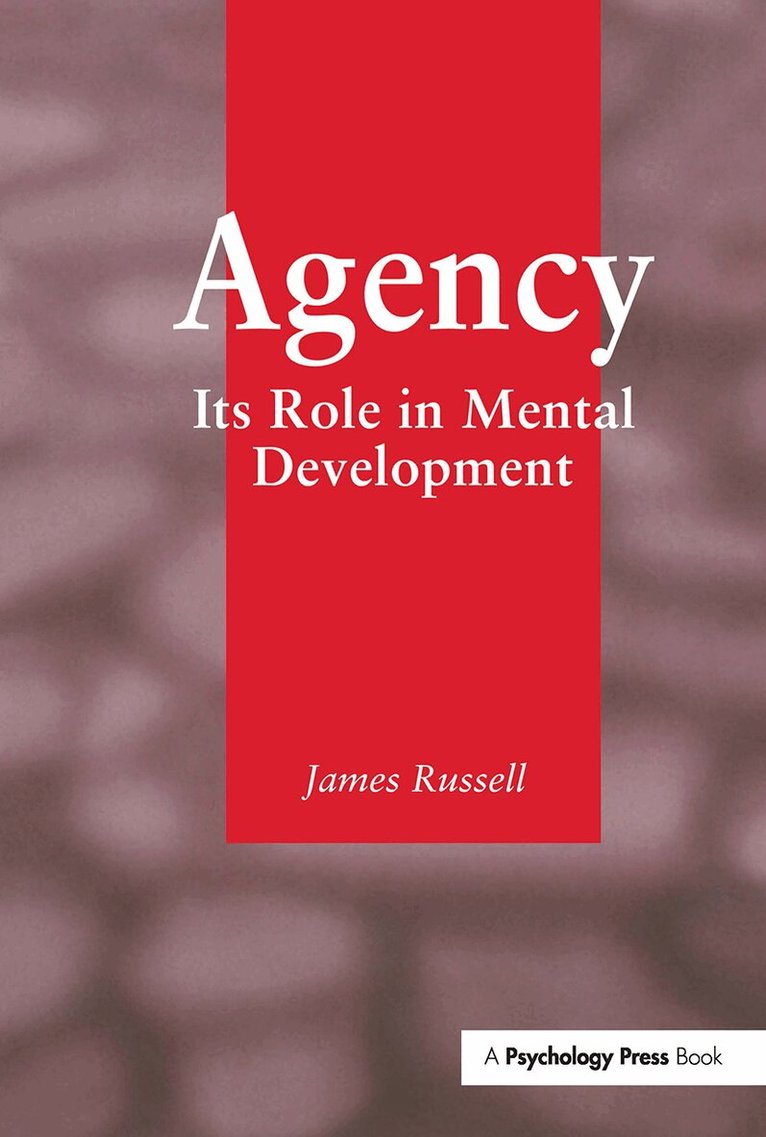
    Agency

    Its Role In Mental Development

    AvJames Russell

    Inbunden, Engelska, 1996

    2 410 kr

    Beställningsvara. Skickas inom 10-15 vardagar. Fri frakt över 249 kr.

    Fler format och utgåvor

    E-bok

    973 kr

    E-bok

    973 kr

    Häftad

    817 kr

    Beskrivning

    The idea behind this book is that developing a conception of the physical world and a conception of mind is impossible without the exercise of agency, meaning "the power to alter at will one's perceptual inputs". The thesis is derived from a philosphical account of the role of agency in knowledge.; The book is divided into three parts. In Part One, the author argues that "purely representational" theories of mind and of mental development have been overvalued, thereby clearing the ground for the book's central thesis. In Part Two, he proposes that, because objective experience depends upon the experience of agency, the development of the "object concept" in human infants is grounded in the development of executive-attentional capacities. In Part Three, an analysis of the links between agency and self-awareness generates an original theory of the nature of certain stage-like transitions in mental functioning and of the relationship between executive and mentalizing defects in autism.; The book should be of interest to students and researchers in cognitive- developmental psychology, to philosophers of mind, and to anybody with an interest in cognitive science.

    Produktinformation

    • Utgivningsdatum:1996-01-31
    • Mått:156 x 234 x 24 mm
    • Vikt:640 g
    • Format:Inbunden
    • Språk:Engelska
    • Antal sidor:336
    • Förlag:Taylor & Francis Ltd
    • ISBN:9780863772283

    Utforska kategorier

    • Barnpsykologi och utvecklingspsykologi inom Psykologi och pedagogik
    • Kognitiv psykologi inom Psykologi och pedagogik
    • Filosofiska discipliner inom Filosofi och religion

    Innehållsförteckning

    • Part 1 Symbols, Models and Connections. Symbol-Processing and "the language of thought". Mental Models. Connectionism. Why Connectionism is the Representational Theory Best Places to Model Action. "Working from the Outside in". Part 2 Knowledge of Objects Self-world Dualism and the Waterdown Piaget. The Four Features and the Experience of Agency. What the Four Features Give Us. Self-locating Thought and "Externatlity". Search, Dishabituation and "Representation Permanance" in Infancy. Answering Some Objections. Some Empirical Issues. Computational Modelling of Object Permanence. Part 3 Action and Our Knowledge of Minds. Mental Unity. Bodily- awareness, Selfhood and Ownership. Agency and the Acquisition of a "Theory of Mind". "Executive" Versus "Theory-theory" Accounts of Developmental Transitions - the 6-7 transition and the 3-4 Tranistion. Autism, Executive Dysfunctions and "Mind Blindness".