• Fri frakt över 249 kr
  • •
  • Snabba leveranser
  • •
  • Billiga böcker
Kundservice

Du är på sajten för privatpersoner.

Företag, bibliotek eller offentlig verksamhet?

Du handlar på classic.bokus.com, där alla dina funktioner finns intakta.
Till classic.bokus.com
Bokus logotyp. Gå till startsidan.
  • Erbjudanden
  • Student
  • Topplistor
  • Barn & ungdom
  • Bokus Play
  • E-böcker
  • Ljudböcker
  • Pocketböcker
  • Spel och pussel

Pocketfynda! Hundratals böcker för 49 kr/st →

Sidfot

Mina sidor

    Hjälp

    • Kundservice
    • Vanliga frågor och svar
    • Frakt och leverans
    • Retur vid ångerrätt
    • Reklamera vara
    • Betalning
    • Köpvillkor
    • Allmänna villkor
    • Information om webbplatsens tillgänglighet

    Om Bokus

    • Om oss
    • Pressrum
    • För studenter
    • För företag
    • För bibliotek och offentlig verksamhet
    • För leverantörer
    • Hållbarhet

    Populärt

    • Aktuella erbjudanden
    • Presentkort
    • Studentlitteratur
    • Nya böcker
    • Topplistor
    • Signerade böcker
    • Engelska böcker

    Inspiration

    • Boktips
    • BookTok
    • Barnbokskaraktärer
    • Populära författare
    Logotyp för Bokus
    Följ oss på Facebook (extern länk)Följ oss på Instagram (extern länk)Följ oss på YouTube (extern länk)Följ oss på TikTok (extern länk)
    bokus @ CookiesAnpassa cookiesIntegritetspolicyKöpvillkor
    Till Citymail hemsida (extern länk)Till Budbee hemsida (extern länk)Till Postnord hemsida (extern länk)Till Schenker hemsida (extern länk)Till Early Bird hemsida (extern länk)Till Walleys hemsida (extern länk)
    1. Samhälle och politik
    2. Samhälle och kultur
    3. Kultur och medier
    4. Kulturvetenskap

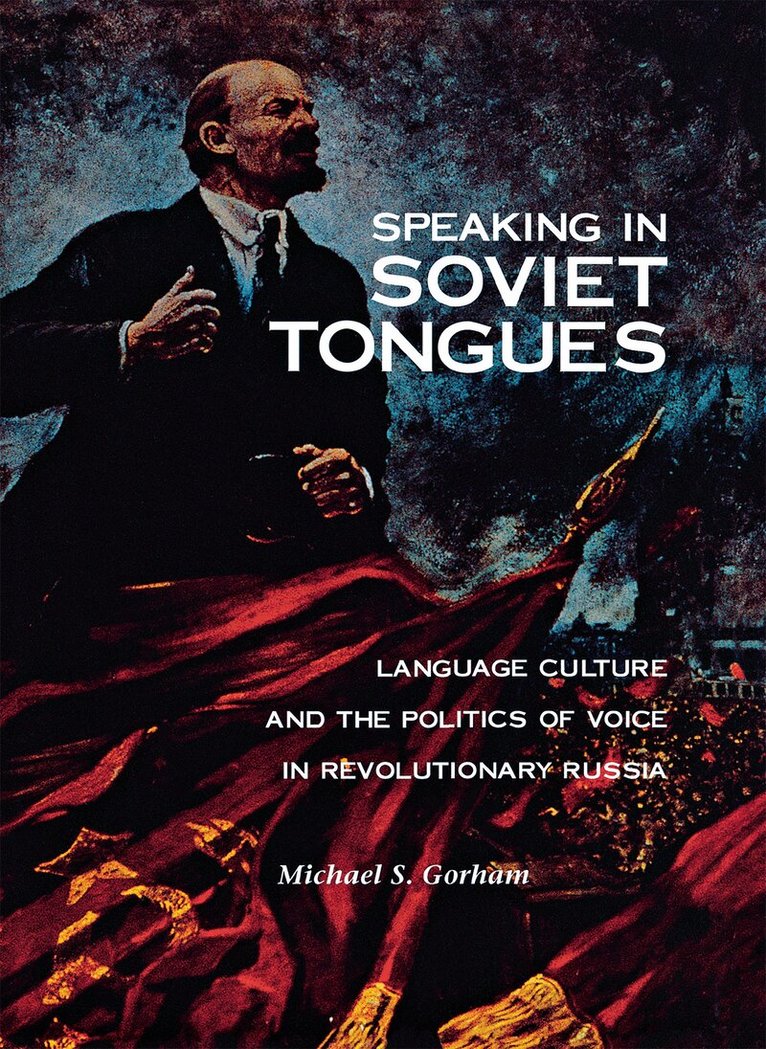
    Speaking in Soviet Tongues

    Language Culture and the Politics of Voice in Revolutionary Russia

    AvMichael S. Gorham

    Inbunden, Engelska, 2003

    Del i serien NIU Series in Slavic, East European, and Eurasian Studies

    520 kr

    Beställningsvara. Skickas inom 10-15 vardagar. Fri frakt över 249 kr.

    Beskrivning

    From the classical dialogues of Plato to current political correctness, manipulating language to advance a particular set of values and ideas has been a time-honored practice. During times of radical social and political change, the terms of debate themselves become sharply contested: how people reject, redefine, and reappropriate key words and phrases gives important symbolic shape to their vision of the future. Especially in cataclysmic times, who one is or wants to be is defined by how one writes and speaks. The language culture of early Soviet Russia marked just such a tenuous state of symbolic affairs. Partly out of necessity, partly in the spirit of change, Bolshevik revolutionaries cast off old verbal models of identity and authority and replaced them with a cacophony of new words, phrases, and communicative contexts intended to define and help legitimatize the new Soviet order. Pitched to an audience composed largely of semiliterate peasants, however, the new Bolshevik message often fell on deaf ears. Embraced by numerous sympathetic and newly empowered citizens, the voice of Bolshevism also evoked a variety of less desirable reactions, ranging from confusion and willful subversion to total disregard. Indeed, the earliest years of Bolshevik rule produced a communication gap that held little promise for the makings of a proletarian dictatorship. This gap drew the attention of language authorities-most notably Maxim Gorky-and gave rise to a society-wide debate over the appropriate voice of the new Soviet state and its citizenry. Drawing from history, literature, and sociology, Gorham offers the first comprehensive, interdisciplinary analysis of this critical debate, demonstrating how language ideologies and practices were invented, contested, and redefined. Speaking in Soviet Tongues shows how early Soviet language culture gave rise to unparalleled verbal creativity and utopian imagination while sowing the seeds for perhaps the most notorious forms of Orwellian "newspeak" known to the modern era.

    Produktinformation

    • Utgivningsdatum:2003-06-02
    • Mått:152 x 229 x 25 mm
    • Vikt:907 g
    • Format:Inbunden
    • Språk:Engelska
    • Serie:NIU Series in Slavic, East European, and Eurasian Studies
    • Antal sidor:277
    • Förlag:Cornell University Press
    • ISBN:9780875803135

    Utforska kategorier

    • Kulturvetenskap inom Samhälle och politik
    • Europas historia inom Historia och arkeologi
    • Språkvetenskap och lingvistik inom Språk och ordböcker

    Mer om författaren

    Michael S. Gorham is Professor of Russian Studies in the Department of Languages, Literatures and Cultures at the University of Florida.

    Recensioner i media

    "A first-rate book that explains, better than anything else in print, the origins and inner workings of the Stalinist language culture. Gorham breaks new ground, writing with zest and elegance as he tells a fascinating story."—Victoria Bonnell, University of California"A rare thing indeed, a wholly original work of scholarship. Gorham's work is truly outstanding."-James von Geldern, Macalester College

    Innehållsförteckning

    • Table of ContentsIntroduction 1. The Contours of the Communication Gap 2. The Revolutionary Voice and the Resurrection of Meaning 3. Awkward Ambiguities of the Soviet Vox Populi 4. Models of Proletarian Language Acquisition 5. The Cleansing Authority of the Russian National Voice 6. Canonization of the Party-State Voice 7. Narrating the Party State Epilogue: The Politics of Voice at the Margins of Soviet History Notes Select Bibliography Index