• Fri frakt över 249 kr
  • •
  • Snabba leveranser
  • •
  • Billiga böcker
Kundservice

Du är på sajten för privatpersoner.

Företag, bibliotek eller offentlig verksamhet?

Du handlar på classic.bokus.com, där alla dina funktioner finns intakta.
Till classic.bokus.com
Bokus logotyp. Gå till startsidan.
  • Erbjudanden
  • Nyheter
  • Student
  • Topplistor
  • Barn & ungdom
  • Bokus Play
  • E-böcker
  • Pocketböcker
  • Spel & pussel

10% rabatt på allt med kod: NYSTART10 →

Sidfot

Mina sidor

    Hjälp

    • Kundservice
    • Vanliga frågor och svar
    • Frakt och leverans
    • Retur vid ångerrätt
    • Reklamera vara
    • Betalning
    • Köpvillkor
    • Allmänna villkor
    • Information om webbplatsens tillgänglighet

    Om Bokus

    • Om oss
    • Pressrum
    • För studenter
    • För företag
    • För bibliotek och offentlig verksamhet
    • För leverantörer
    • Hållbarhet

    Populärt

    • Aktuella erbjudanden
    • Presentkort
    • Studentlitteratur
    • Nya böcker
    • Topplistor
    • Signerade böcker
    • Engelska böcker

    Inspiration

    • Boktips
    • BookTok
    • Populära bokserier
    • Barnbokskaraktärer
    • Populära författare
    Logotyp för Bokus
    Följ oss på Facebook (extern länk)Följ oss på Instagram (extern länk)Följ oss på YouTube (extern länk)Följ oss på TikTok (extern länk)
    bokus @ CookiesAnpassa cookiesIntegritetspolicyKöpvillkor
    Till Citymail hemsida (extern länk)Till Budbee hemsida (extern länk)Till Postnord hemsida (extern länk)Till Schenker hemsida (extern länk)Till Early Bird hemsida (extern länk)Till Walleys hemsida (extern länk)
    1. Samhälle och politik
    2. Samhälle och kultur
    3. Kultur och medier
    4. Referensverk och tvärvetenskap

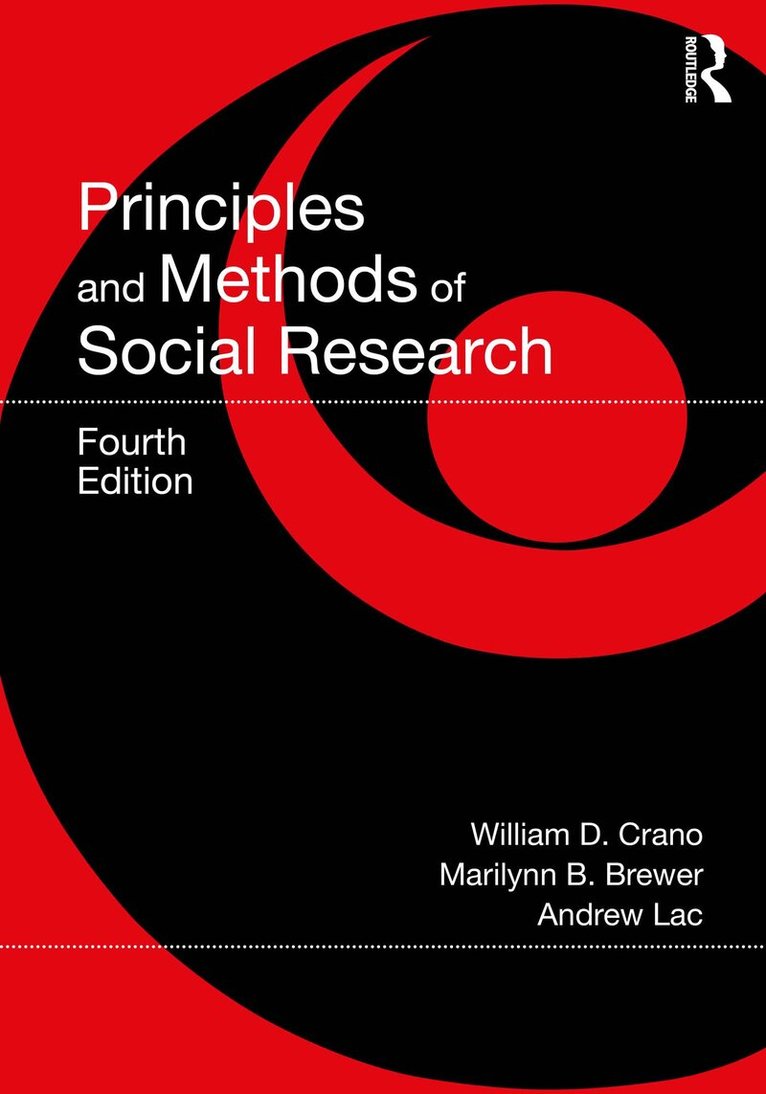
    Principles and Methods of Social Research

    AvWilliam D. Crano,Marilynn B. Brewer

    E-bok
    Engelska, 2023

    1 548 kr

    Läs direkt i Bokus Reader – eller ladda ned till din enhet

    Fler format och utgåvor

    E-bok

    1 548 kr

    Häftad

    1 304 kr

    Inbunden

    2 123 kr

    Inbunden

    Tillf. slut

    Häftad

    Tillf. slut

    Beskrivning

    Through a multi-methodology approach, Principles and Methods of Social Research, Fourth Edition covers the latest research techniques and designs and guides readers toward the design and conduct of social research from the ground up. Applauded for its comprehensive coverage, the breadth and depth of content of this new edition is unparalleled.Explained with updated applied examples useful to the social, behavioral, educational, and organizational sciences, the methods described are relevant to contemporary researchers. The underlying logic and mechanics of experimental, quasi-experimental, and non-experimental research strategies are discussed in detail. Introductory chapters cover topics such as validity and reliability furnish readers with a firm understanding of foundational concepts. The book has chapters dedicated to sampling, interviewing, questionnaire design, stimulus scaling, observational methods, content analysis, implicit measures, dyadic and group methods, and meta-analysis to cover these essential methodologies. Notable features include an emphasis on understanding the principles that govern the use of a method to facilitate the researcher’s choice of the best technique for a given situation; use of the laboratory experiment as a touchstone to describe and evaluate field experiments, correlational designs, quasi experiments, evaluation studies, and survey designs; and coverage of the ethics of social research including the power a researcher wields and tips on how to use it responsibly.The new edition features:Increased attention to the distinction between conceptual replication and exact replication and how each contributes to cumulative scienceUpdated research examples that clarify the operation of various research design operationsMore learning tools including more explanation of the basic concepts, more research examples, and more tables and figures, such as additional illustrations to include internet content like social mediaExtensive revisions and expansions of all chaptersA fuller discussion of the dangers of unethical treatment to research participantsPrinciples and Methods of Social Research, Fourth Edition is intended for graduate or advanced undergraduate courses in research methods in psychology, communication, sociology, education, public health, and marketing, and further appeals to researchers in various fields of social research, such as social psychology and communication.

    Produktinformation

    • Utgivningsdatum:2023-07-11
    • Språk:Engelska
    • Filformat:EPUB
    • Kopieringsskydd:LCP
    • ISBN:9781000896893
    • Förlag:Taylor & Francis Ltd
    • Upplaga:4

    Utforska kategorier

    • Referensverk och tvärvetenskap inom Samhälle och politik
    • Sociologi inom Samhälle och politik
    • Psykologisk metod inom Psykologi och pedagogik

    Mer om författaren

    William D. Crano is the Oskamp Distinguished Chair of Psychology and Director of the Health Psychology and Prevention Science Institute at Claremont Graduate University.Marilynn B. Brewer is Professor Emeritus, Ohio State University.Andrew Lac is an Associate Professor of Psychology at the University of Colorado Colorado Springs.

    Innehållsförteckning

    • Acknowledgements and DedicationPrefacePart IIntroduction to Social Research MethodsChapter 1. Basic ConceptsScience and Daily LifeFrom Theory, Concept, or Idea to OperationRole of Theory in Scientific InquiryConclusion and OverviewReferencesChapter 2. Internal and External ValidityCausationDistinguishing Internal and External ValidityBasic Issues of Internal ValidityBasic Issues of External ValidityConclusionReferencesChapter 3. Measurement ReliabilityClassical Measurement TheoryContemporary Measurement TheoryConclusionReferencesChapter 4. Measurement ValidityTypes of Measurement ValidityThe Multitrait-Multimethod MatrixThreats to Measurement ValidityConclusionReferencesPart II. Research Design Strategies: Experiments, Quasi-Experiments, and NonexperimentsChapter 5. Designing Experiments: Variations on the BasicsBasic Variations in Experimental DesignExpanding the Number of Experimental TreatmentsBlock Designs: Incorporating a Nonexperimental FactorRepeated Measure Designs and CounterbalancingConclusionReferencesChapter 6. Constructing Laboratory ExperimentsSteps for Constructing an ExperimentTypes of Experimental ManipulationsManipulation and Attention ChecksAssignment of Participants to Conditions: Randomization ProceduresRealism and Engagement in an ExperimentRole-Playing Simulations and Analogue ExperimentsConclusionReferencesChapter 7. External Validity of Laboratory ExperimentsGeneralizability Across ParticipantsExperimenter Expectancy and BiasThree Faces of External ValidityConclusionReferencesChapter 8. Conducting Experiments Outside the LaboratoryResearch Settings and Issues of ValidityConstructing a Field ExperimentThe Internet as a Site for Experimental ResearchConclusionReferencesChapter 9. Quasi-Experiments and Applied ResearchQuasi-experimental Methods in Applied ContextsQuasi-experimental DesignsThe Use of Archival Data in Longitudinal ResearchConclusionReferencesChapter 10. Nonexperimental Research: Correlational DesignBivariate Correlation and RegressionMultiple RegressionUsing Regression to Test MediationUses and Misuses of Correlational AnalysisConclusionReferencesChapter 11. Advanced Multivariate Correlational DesignMultilevel ModelsStructural Equation ModelsModeling Longitudinal DataConclusionReferencesPart IIIData Collecting MethodsChapter 12. Survey Studies: Design and SamplingSelection vs. AssignmentCensus and Survey BasicsRandom SamplingNonrandom SamplingOther Sampling IssuesTypes of Survey StudiesMissing DataConclusionReferencesChapter 13. Systematic Observational MethodsThree Aspects of NaturalismObserver Involvement in the Naturalistic SettingCoding ObservationsConclusionReferencesChapter 14. Content AnalysisContent Analysis BasicsConducting a Content AnalysisSummary of the General ParadigmRepresentative ExamplesConclusionReferencesChapter 15. InterviewingModes of AdministrationDeveloping the InterviewConducting the InterviewGroup Interviews and Focus GroupsConclusionReferencesChapter 16. Construction of Questionnaires and Rating ScalesQuestionnairesConstructing Rating ScalesConclusionReferencesChapter 17. Scaling Stimuli: Social PsychophysicsScaling StimuliStimulus Scaling TechniquesMultidimensional Scaling ModelsConclusionReferencesChapter 18. Indirect and Implicit Measures of Cognition and AffectIndirect MeasuresInformation Processing: Attention and MemoryPriming: Processing Without Awareness or IntentSocial PsychophysiologyConclusionReferencesChapter 19. Methods for Assessing Dyads and GroupsDyadic DesignsDesigns to Study Group StructuresDesigns to Study Multiple GroupsMeasuring Group Process and OutcomesConclusionReferencesPart IVConcluding PerspectivesChapter 20. Synthesizing Research Results: Meta-AnalysisReplicability of FindingsMeta-AnalysisStages in the Meta-Analysis ProcessInterpreting the Meta-AnalysisConclusionReferencesChapter 21. Social Responsibility and Ethics in Social ResearchEthics of Research PracticesThe Regulatory Context of Research Involving Human ParticipantsEthics of Data ReportingEthical Issues Related to the Products of Scientific ResearchConclusionReferencesGlossary